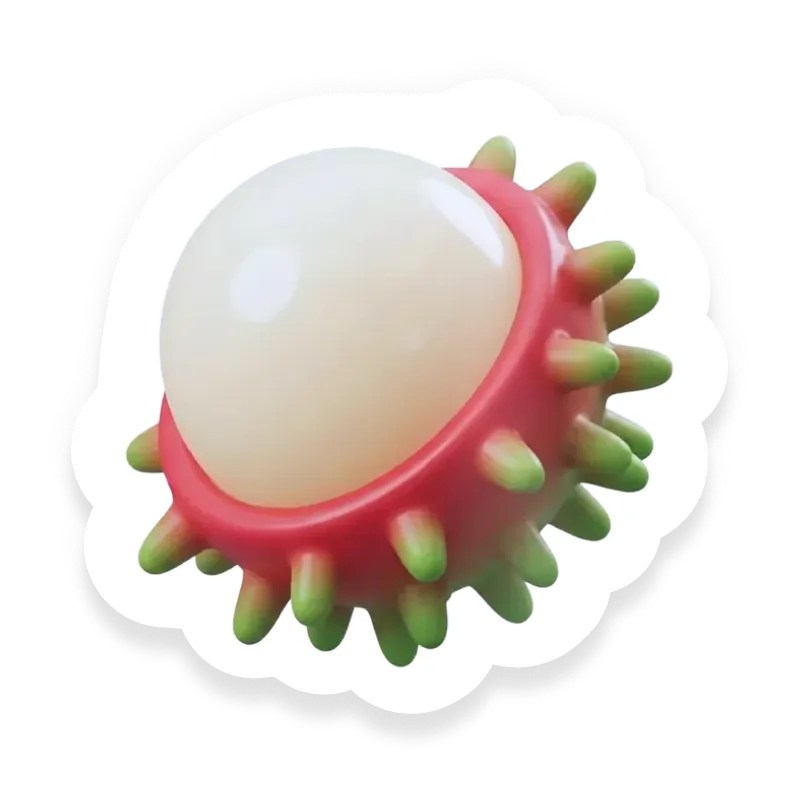
Rambutan
Fruit
Is Rambutan Safe for Babies?
Yes, rambutan can be introduced around 6 months old, but ensure the flesh is peeled, seed removed, and cut into small, manageable pieces for safety.
Yes, but there are some things to know
At a Glance
Rambutan has water and fiber that add bulk to stool and help ease bowel movements. Its dietary fiber content also feeds friendly gut bacteria and supports healthy digestion.
How Do You Serve Rambutan?
- 1Peel and remove the seed: Make a small slit in the skin, peel away the hairy shell, then split the fruit and discard the hard inner seed.
- 2Achieve a safe texture: Finely mince the translucent pulp until it is very soft and in tiny pieces, or mash it until smooth so there are no firm chunks.
- 3Mix into a scoopable base for safer feeding: Fold the minced or mashed rambutan into congee, mashed plantain (or banana), or plain yogurt to create a cohesive, scoopable spoonful; check the temperature before serving.
- 4Start small and watch for reactions: Avoid processed sweetened rambutan and offer only a small taste at first, then wait 48–72 hours and watch for hives or swelling, persistent vomiting, or breathing changes — seek medical care if any occur.
Is Rambutan a Common Allergen?
Rambutan is not a common major allergen (it is not a nut, dairy, egg, soy, gluten, fish or shellfish). However, rare IgE‑mediated reactions — including a published case of anaphylaxis — have been reported, and some people with pollen‑related oral allergy syndrome or fruit allergies can react to rambutan (it’s related to lychee/longan). If your child has known fruit allergies, pollen sensitization, or a history of severe food allergy, introduce rambutan cautiously (small amount, watch closely) and seek medical care for any hives, swelling, difficulty breathing, or other severe symptoms.
What Nutrients Does Rambutan Have?
Rambutan is rich in vitamin C and contains good amounts of fiber, zinc, vitamin E, and polyphenols. For babies, vitamin C helps with iron absorption and supports immune, skin, and bone health, while the fiber and polyphenols support digestion and a healthy gut microbiome. Avoid seeds and peel (both choking hazards and potentially toxic in large amounts) and limit canned rambutan due to added sugars; introduce small amounts initially to watch for oral allergy symptoms. There’s no common risk of nutrient excess from typical serving sizes, but offer in moderation as part of varied foods.
Is Rambutan a Choking Hazard?
Elevated Choking Risk
Rambutan can be a choking risk because its flesh is chewy, firm, and slippery, and both the peel and the inner seed can obstruct a baby’s airway. Remove the peel and seed before offering and be extra vigilant since pieces can slip in the mouth. Always stay within arm’s reach and supervise closely while your baby is eating rambutan.
Have More Questions?
Yes. Rambutan can be introduced to babies around 6 months old once they are ready for solids. Ensure the fruit is peeled and the seed removed before serving to avoid choking hazards.
Yes. Canned rambutan is safe for babies if rinsed to reduce added sugars and served in small, age-appropriate pieces. Fresh is preferable when available and prepared properly.
It depends. Rambutan is healthy for babies as it provides vitamin C, fiber, zinc, and vitamin E, all of which support immune health and digestion. Serve in small, manageable pieces.
Yes. While not a common allergen, some children may have sensitivities. Introduce small amounts gradually and watch for any allergic reactions.
Yes. The chewy, slippery flesh and the seed pose choking risks for babies. Always peel, seed, and cut the fruit into small pieces before serving.
Is Rambutan safe for your baby?
Get personalized guidance on introducing Rambutan — with prep tips, allergen alerts, and age-specific serving ideas.
Sources
- A Critical Review on Tropical Fruits Seeds as Prospective Sources of Nutritional and Bioactive Compounds for Functional Foods Development: A Case of Indonesian Exotic Fruits doi.org
- Metabolite Profiling of Rambutan (Nephelium lappaceum L.) Seeds Using UPLC-qTOF-MS/MS and Senomorphic Effects in Aged Human Dermal Fibroblasts doi.org
- Anaphylaxis after initial ingestion of rambutan, a tropical fruit doi.org
- Glyceraldehyde-3-phosphate dehydrogenase as a major allergen in rambutan-induced anaphylaxis doi.org
- Beneficial Effects of Dietary Polyphenols on Gut Microbiota and Strategies to Improve Delivery Efficiency doi.org
- Functional and nutritional properties of selected Amazon fruits: A review doi.org
- Comparative content of total polyphenols and dietary fiber in tropical fruits and persimmon doi.org
- Oral Allergy Syndrome (Beyond the Basics) - UpToDate uptodate.com
What Other Fruit Can Babies Eat?
See all →



Backed by Science
Data you can trust.
Every food, guideline, and recommendation in Tummi is sourced from leading health institutions and peer-reviewed research.
 Centers for Disease Control and Prevention
Developmental milestones, nutrition guidelines, and allergen introduction timelines.
 American Academy of Pediatrics
Evidence-based feeding recommendations from the leading pediatric authority.
 National Institutes of Health
Peer-reviewed research on infant nutrition, allergies, and food safety.