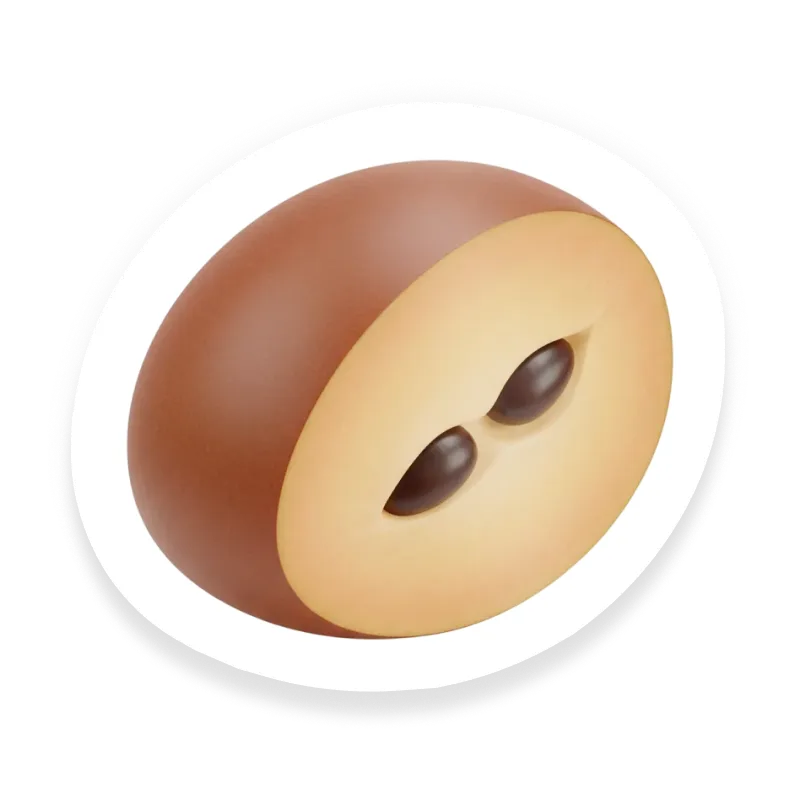
Sapodilla
Fruit
Is Sapodilla Safe for Babies?
Yes, babies can eat sapodilla starting around 6 months, when they are ready to begin solids, ensuring it's ripe, peeled, and void of seeds.
Yes, but there are some things to know
At a Glance
Sapodilla contains iron and copper plus vitamin C, so it helps the body make healthy blood. Eating it adds fiber and a vitamin C boost that improves iron absorption.
Sapodilla is high in fiber, so a single serving helps add bulk and ease bowel movements. It’s also rich in antioxidants, including vitamin C, which supports gut lining and overall health.
How Do You Serve Sapodilla?
- 1Peel and remove the large seed completely, then cut ripe sapodilla into finger-length spears or small wedges so baby can grasp and take small bites.
- 2Cut pieces about 2–3 cm wide (fingertip thickness) and offer only very soft, ripe fruit — choking risk if pieces are too firm.
- 3If pieces are slippery, lightly coat with finely ground nuts (only if no allergy), coconut flakes, or roll in mashed banana; alternatively mash or puree and stir into porridge or yogurt for scoopable textures.
- 4Always supervise during eating and introduce sapodilla on its own first to watch for any reaction; discard any pieces with seeds or fibrous strands.
Is Sapodilla a Common Allergen?
Sapodilla is not a common food allergen, but rare IgE‑mediated reactions and cases of oral allergy syndrome have been reported. People with pollen allergies or latex‑fruit cross‑reactivity could be at slightly higher risk. For infants and young children remove and discard seeds (they’re a choking hazard and may be toxic) and introduce small amounts while watching for any hives, swelling, vomiting, or breathing difficulty. If a reaction occurs, seek medical care promptly.
What Nutrients Does Sapodilla Have?
Sapodilla is energy-dense and supplies carbohydrates for baby’s activity plus fiber, vitamin C, folate, iron, potassium, magnesium, and vitamin B6 — nutrients that support digestion, immune function and neurodevelopment and help form healthy red blood cells. Vitamin C helps non-heme iron absorption, so the fruit’s vitamin C content boosts iron uptake; its fiber and fluid content also aid bowel regularity. Serve in age-appropriate portions (watch natural sugars and avoid sweetened canned versions), always remove seeds (choking/toxicity risk), and introduce small amounts to screen for rare oral-allergy reactions.
Is Sapodilla a Choking Hazard?
High Choking Risk
Ripe sapodilla is generally low risk for choking when the hard seeds are fully removed, but the seeds and unripe, firm fruit can be dangerous. Always remove seeds completely and keep baby within arm’s reach during meals so you can intervene quickly if needed. Know the signs of choking and have a plan for choking first aid before offering sapodilla.
Have More Questions?
Yes. Sapodilla is safe for babies when seeds are removed and it is served in an age-appropriate, mashed or pureed form.
Yes. You can store leftover sapodilla in an airtight container in the refrigerator for up to 24 hours, but it’s best served fresh for optimal taste and nutrition.
It depends. Organic sapodilla may be fresher and free from pesticides, but conventional fruit is also safe; just ensure proper washing and handling.
Yes. Combining sapodilla with other fruits like banana or mango can create varied flavors and textures, making it more appealing and nutritious for your baby.
It depends. Portion sizes should start small—about 1-2 teaspoons—and gradually increase as your baby shows interest and tolerates the food.
Is Sapodilla safe for your baby?
Get personalized guidance on introducing Sapodilla — with prep tips, allergen alerts, and age-specific serving ideas.
Sources
- Acute toxicity of seeds of the sapodilla (Achras sapota L.) doi.org
- Characterization and gene cloning of an acidic thaumatin-like protein (TLP 1), an allergen from sapodilla fruit doi.org
- Identification and characterization of a basic thaumatin-like protein (TLP 2) as an allergen in sapodilla plum doi.org
- Oral allergy syndrome doi.org
What Other Fruit Can Babies Eat?
See all →

Backed by Science
Data you can trust.
Every food, guideline, and recommendation in Tummi is sourced from leading health institutions and peer-reviewed research.
 Centers for Disease Control and Prevention
Developmental milestones, nutrition guidelines, and allergen introduction timelines.
 American Academy of Pediatrics
Evidence-based feeding recommendations from the leading pediatric authority.
 National Institutes of Health
Peer-reviewed research on infant nutrition, allergies, and food safety.