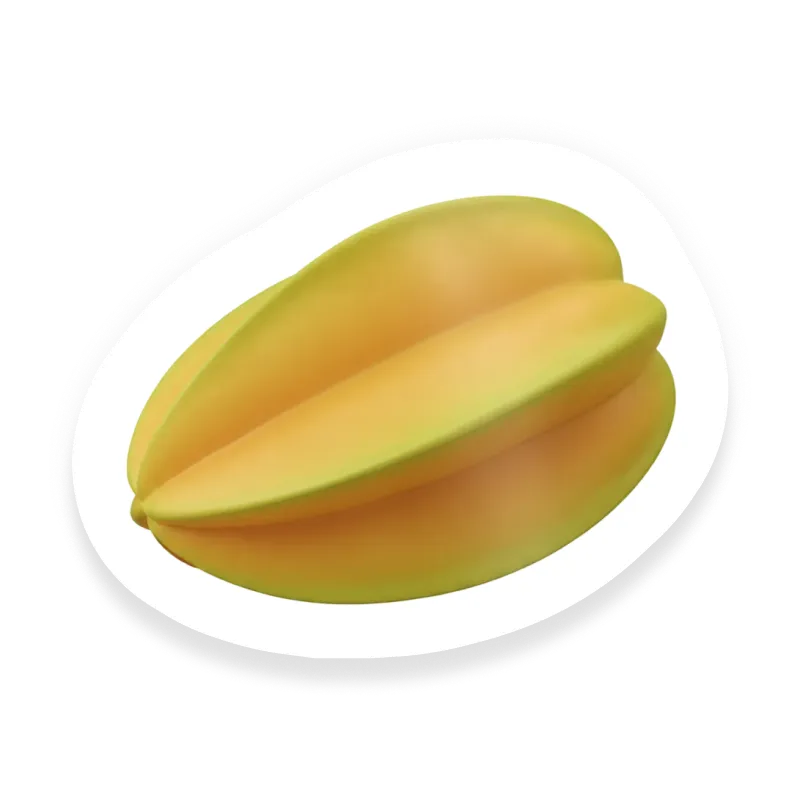
Star Fruit (Carambola)
Fruit
Is Star Fruit (Carambola) Safe for Babies?
Yes, babies can eat star fruit from around 6 months of age, when they are ready to start solids, provided it's prepared appropriately.
Yes, but there are some things to know
At a Glance
Star fruit is high in fiber, which helps soften stool and keeps bowels moving. Its pectin and vitamin C feed friendly gut bacteria and support regular digestion.
How Do You Serve Star Fruit (Carambola)?
- 1Cut fruit crosswise into thick star slices (about 1–2 cm) so each piece keeps its star shape and is easy for little hands to grasp.
- 2Remove all seeds and decide about the skin: if the raw skin is firm, peel it; if soft and smooth, you can leave it on. Steam until very soft if you choose to cook it—alternative methods: simmer or roast briefly.
- 3For firmer raw fruit, peel and cook until very soft, then mash slightly or offer thick, soft star sections for baby-led self-feeding.
- 4Always stay within arm’s reach and supervise during meals, introduce the fruit alone at first and watch for any allergic reactions or unusual symptoms.
Is Star Fruit (Carambola) a Common Allergen?
Star fruit (carambola) is not a common major food allergen like peanuts, tree nuts, dairy, eggs, soy, fish, shellfish, sesame, or gluten, but it can cause allergic-type reactions in sensitized people. More importantly, it contains caramboxin and high oxalate levels that can produce severe neurotoxic and kidney-related effects in people with impaired renal function—those with kidney disease should avoid it entirely. If introducing to a child with known fruit allergies or prior reactions, go slowly, watch for hives, swelling, vomiting, or breathing difficulty, and seek emergency care for severe symptoms. For most healthy children without allergies or kidney problems, small amounts are generally safe, but check with your pediatrician if you have concerns.
What Nutrients Does Star Fruit (Carambola) Have?
Star fruit supplies easily digested carbohydrates, fluid, and fiber, along with vitamin C, potassium, and antioxidants that support immune function, iron absorption, hydration, and growth. These nutrients make it a healthy occasional addition to a baby’s diet, but star fruit can be high in oxalates and may cause problems for children with kidney disease or interact with certain medications, so avoid large or frequent servings and consult a pediatrician if concerns exist. Offer ripe, peeled, de-seeded star fruit in age-appropriate textures and small portions.
Is Star Fruit (Carambola) a Choking Hazard?
Moderate Choking Risk
Star fruit can be a choking risk because it’s often firm and slippery—especially when underripe—making pieces harder for babies to manage. Always supervise baby closely during meals and stay within an arm’s reach so you can intervene quickly if needed. Caregivers should learn basic choking first aid and rescue maneuvers before introducing new foods.
Have More Questions?
Yes. Star fruit can be stored in the refrigerator for up to a week if kept in a plastic bag or container, but it’s best to consume it fresh for optimal flavor and safety.
Yes, you can freeze pureed star fruit in an airtight container for up to 3 months, which is convenient for meal prep and reducing waste.
It depends. Organic star fruit may be free of pesticides, but conventional options are also safe; choose according to your preference and budget.
Yes, combining star fruit with other fruits like bananas or berries can create varied flavors and textures, making it more appealing and nutritious for babies.
Portion sizes vary, but generally, start with 1-2 small slices or 1-2 tablespoons of puree, and gradually increase based on your baby’s appetite and tolerance.
Is Star Fruit (Carambola) safe for your baby?
Get personalized guidance on introducing Star Fruit (Carambola) — with prep tips, allergen alerts, and age-specific serving ideas.
Sources
- Nutritional and medicinal properties of Star fruit (Averrhoa carambola): A review doi.org
- Dietary oxalate and kidney stone formation doi.org
- Nutritional, Medicinal and Toxicological Attributes of Star-Fruits (Averrhoa carambola L.): A Review doi.org
- Mechanisms of star fruit (Averrhoa carambola) toxicity: A mini-review doi.org
- Star fruit: simultaneous neurotoxic and nephrotoxic effects in people with previously normal renal function doi.org
- Inhibition of human liver cytochrome P450 by star fruit juice doi.org
- Potent inhibition by star fruit of human cytochrome P450 3A (CYP3A) activity doi.org
- A case of oral allergy syndrome due to star fruit sensitized from atopic hands doi.org
What Other Fruit Can Babies Eat?
See all →



Backed by Science
Data you can trust.
Every food, guideline, and recommendation in Tummi is sourced from leading health institutions and peer-reviewed research.
 Centers for Disease Control and Prevention
Developmental milestones, nutrition guidelines, and allergen introduction timelines.
 American Academy of Pediatrics
Evidence-based feeding recommendations from the leading pediatric authority.
 National Institutes of Health
Peer-reviewed research on infant nutrition, allergies, and food safety.