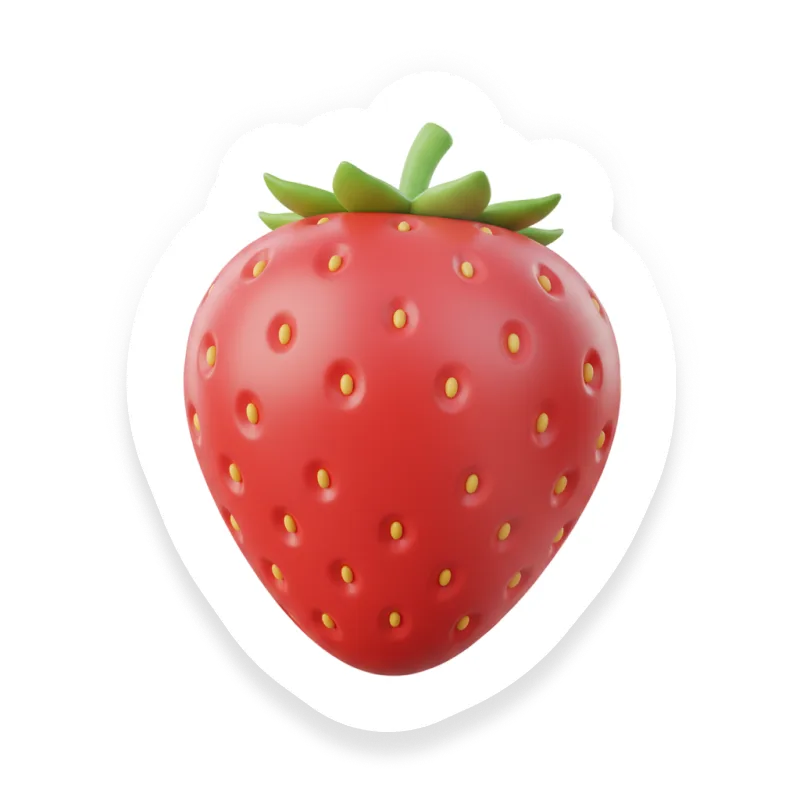
Strawberry
Fruit
Is Strawberry Safe for Babies?
Yes, strawberries can be introduced around 6 months of age once your baby is ready for solids, ensuring they are properly prepared and appropriately sized.
Yes, but there are some things to know
At a Glance
Strawberries are high in fiber, which helps soften stool and keeps bowel movements regular. They also contain vitamin C and plant polyphenols that feed good bacteria in the gut and support healthy digestion.
How Do You Serve Strawberry?
- 1Choose very ripe, soft, large strawberries and remove the stem and leaves before serving.
- 2If a whole berry would fit entirely in the child’s mouth, cut it lengthwise, slice into thin wedges, or mash it. Never offer a whole berry.
- 3Mash or cook very small berries until they are clearly soft; check by pressing gently between your thumb and forefinger.
- 4Trim the pointed tip if it could form a firm plug, and discard any berry that becomes too small or hard to handle safely.
- 5Serve plain and always supervise closely while the child is eating.
Is Strawberry a Common Allergen?
Strawberries are not a common major allergen, but some children can react. Oral allergy syndrome (itching/tingling in the mouth) is the most typical response, especially in kids with pollen allergies; hives, swelling, or rarely severe reactions can occur. Watch for reactions after first exposures and be cautious with processed strawberry products (may contain dairy, nuts, or cross-contaminants). If your child has known pollen or severe food allergies, consult your pediatrician or allergist before introducing strawberries.
What Nutrients Does Strawberry Have?
Strawberries are especially high in vitamin C and also provide folate, potassium, fiber, manganese, small amounts of B vitamins and vitamin K, plus polyphenol antioxidants—nutrients that support immune and skin health, iron absorption, brain development, electrolyte balance, and healthy stooling. Vitamin C is particularly useful because it helps babies absorb non‑heme iron from other foods, and the fruit’s fiber and high water content make strawberries poop‑friendly. Typical serving sizes are safe, but large amounts may worsen diaper rash due to acidity and (in pollen‑allergic children) trigger oral allergy syndrome; nutrients like vitamin C won’t overload a baby at normal portions.
Is Strawberry a Choking Hazard?
Low Choking Risk
Strawberries can pose a choking risk because their shape and texture may block an infant’s airway, especially if pieces are small or the fruit is firm. When introducing strawberries, stay within arm’s reach, watch closely for any gagging or signs of choking, and be prepared to intervene quickly if the baby struggles. Know infant choking first-aid steps and seek emergency help if the child cannot breathe or becomes unresponsive.
Have More Questions?
Yes. Strawberries can be introduced to babies around 6 months old once they are ready for solids, but always ensure they are prepared appropriately for safety.
Yes. Strawberries are healthy for babies, providing essential vitamins, minerals, fiber, and antioxidants that support overall growth and development.
No. Strawberries are not considered a common allergen, but some babies may experience a mild skin reaction or oral allergy symptoms, especially if they have pollen sensitivities.
Yes. Whole or firm strawberries can pose a choking risk for babies, especially if not prepared safely; always serve in age-appropriate forms.
It depends on the ripeness and preparation. Soft, ripe strawberries cut into small pieces are generally safe, but always supervise your baby while eating to prevent choking.
Is Strawberry safe for your baby?
Get personalized guidance on introducing Strawberry — with prep tips, allergen alerts, and age-specific serving ideas.
Sources
- Overall dietary polyphenol intake in a bowl of strawberries: The influence of Fragaria spp. in nutritional studies doi.org
- Allergy to Strawberry in Children From the Mediterranean Area: Is It Really Allergy? doi.org
- Oral allergy syndrome doi.org
- Food allergies resulting from immunological cross-reactivity with inhalant allergens doi.org
- Clinical cross-reactivity among foods of the Rosaceae family doi.org
What Other Fruit Can Babies Eat?
See all →



Backed by Science
Data you can trust.
Every food, guideline, and recommendation in Tummi is sourced from leading health institutions and peer-reviewed research.
 Centers for Disease Control and Prevention
Developmental milestones, nutrition guidelines, and allergen introduction timelines.
 American Academy of Pediatrics
Evidence-based feeding recommendations from the leading pediatric authority.
 National Institutes of Health
Peer-reviewed research on infant nutrition, allergies, and food safety.