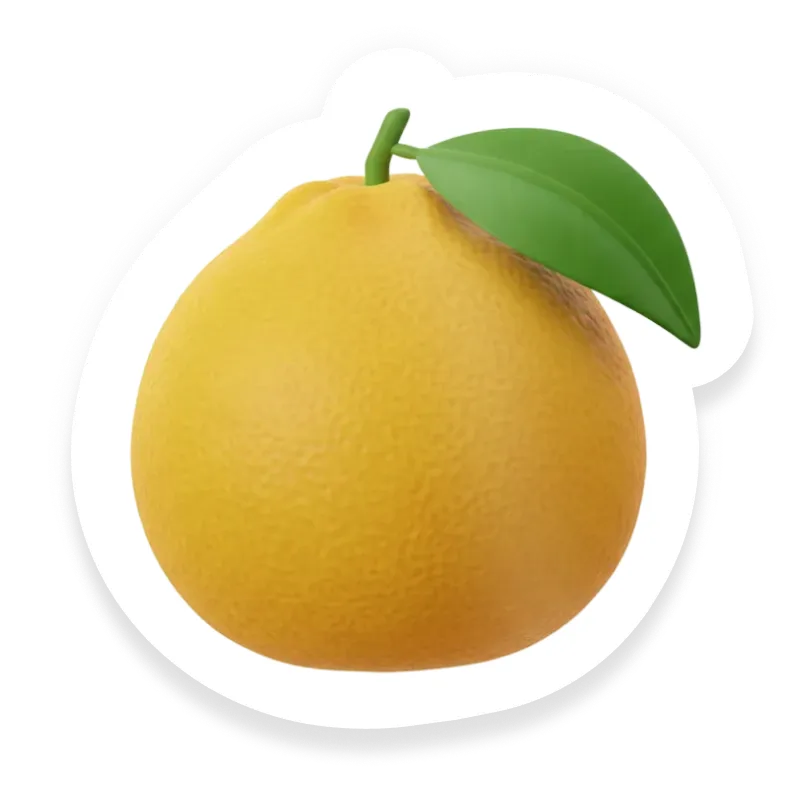
Yuzu
Fruit
Is Yuzu Safe for Babies?
Yes, yuzu can be introduced around 6 months of age when babies start solids, but serve in small amounts and observe for sensitivities due to its acidity.
Yes, but there are some things to know
How Do You Serve Yuzu?
- 1Use very small amounts of fresh yuzu juice or a light sprinkle of finely grated zest to add bright tartness to purees, marinades, or cooked vegetables.
- 2Do not give yuzu juice as a drink; it's too acidic and can irritate a baby’s mouth and stomach.
- 3Offer a supervised taste using a wedge with all seeds removed—wipe away juice from the face immediately and discard any stained clothing or diaper.
- 4Protect skin by applying a thin barrier (petroleum jelly or baby-safe ointment) around the mouth and diaper area before tasting, and wait 48–72 hours after first offering to watch for any reactions.
Is Yuzu a Common Allergen?
Yuzu is a citrus fruit and is not a common major allergen (no nuts, dairy, eggs, shellfish, fish, peanuts, soy, sesame, or gluten). However, children with citrus allergies or pollen-related oral allergy syndrome may experience mouth or throat itching, skin reactions, or digestive upset after eating yuzu; avoid if known citrus allergy. Be cautious with concentrated yuzu products (juices, oils, condiments) and processed foods—always check labels for added ingredients or cross-contamination warnings.
What Nutrients Does Yuzu Have?
Yuzu is high in vitamin C, which supports immune function and helps with iron absorption from plant-based foods, and its peel contains antioxidant and anti-inflammatory compounds (e.g., hesperidin, limonene). It provides small amounts of soluble fiber and pectin, but is usually eaten in tiny quantities so digestive effects are minimal. Because yuzu is highly acidic and concentrated, avoid giving it as a drink to infants, introduce only small amounts when starting solids, and minimize direct skin contact to reduce the risk of irritation or phytophotodermatitis.
Is Yuzu a Choking Hazard?
Low Choking Risk
Yuzu itself isn’t usually a choking hazard since it’s most often used for its juice, but citrus segments (especially with their membranes) and seeds can pose a risk for babies and young children. Remove seeds and be aware that the membrane around segments can be a choking concern; always supervise closely and stay within arm’s reach when offering any citrus wedge.
Have More Questions?
Yes. While yuzu is often consumed in small amounts, it provides a good source of vitamin C for babies and can be a flavorful addition to their diet when introduced appropriately.
Not typically. Since yuzu is usually squeezed for its juice, it generally doesn't pose a choking risk, but citrus segments with seeds can be a hazard for babies and should be avoided or carefully prepared.
No. Yuzu is not a common allergen, but some babies with pollen allergies or oral allergy syndrome may react to citrus fruits like yuzu.
It depends. Yuzu is high in acid and may cause skin irritation or diaper rash if touched or ingested in excess, so it should be introduced cautiously in small quantities.
No. Yuzu juice shouldn't be given to babies as a beverage; small amounts can be used in cooking after they turn one year old, but it is best to wait until age two for juice consumption.
Is Yuzu safe for your baby?
Get personalized guidance on introducing Yuzu — with prep tips, allergen alerts, and age-specific serving ideas.
Sources
- The Chemistry and Pharmacology of Citrus Limonoids doi.org
- Comparative carotenoid compositions during maturation and their antioxidative capacities of three citrus varieties doi.org
- Yuzu and Hesperidin Ameliorate Blood-Brain Barrier Disruption during Hypoxia via Antioxidant Activity doi.org
- Citrus allergy from pollen to clinical symptoms doi.org
- Oral Allergy Syndrome: An Update for Stomatologists doi.org
- Allergic contact dermatitis resulting from sensitivity to citrus peel, geraniol, and citral doi.org
- Immunostimulatory effect of kumquat and its constituents doi.org
- Phytophotodermatitis: the other 'lime' disease doi.org
- Solvent extraction of pectin from key lime and calamansi lime doi.org
- Sugar in Infants, Children and Adolescents: A Position Paper of the ESPGHAN Committee on Nutrition doi.org
What Other Fruit Can Babies Eat?
See all →





Backed by Science
Data you can trust.
Every food, guideline, and recommendation in Tummi is sourced from leading health institutions and peer-reviewed research.
 Centers for Disease Control and Prevention
Developmental milestones, nutrition guidelines, and allergen introduction timelines.
 American Academy of Pediatrics
Evidence-based feeding recommendations from the leading pediatric authority.
 National Institutes of Health
Peer-reviewed research on infant nutrition, allergies, and food safety.