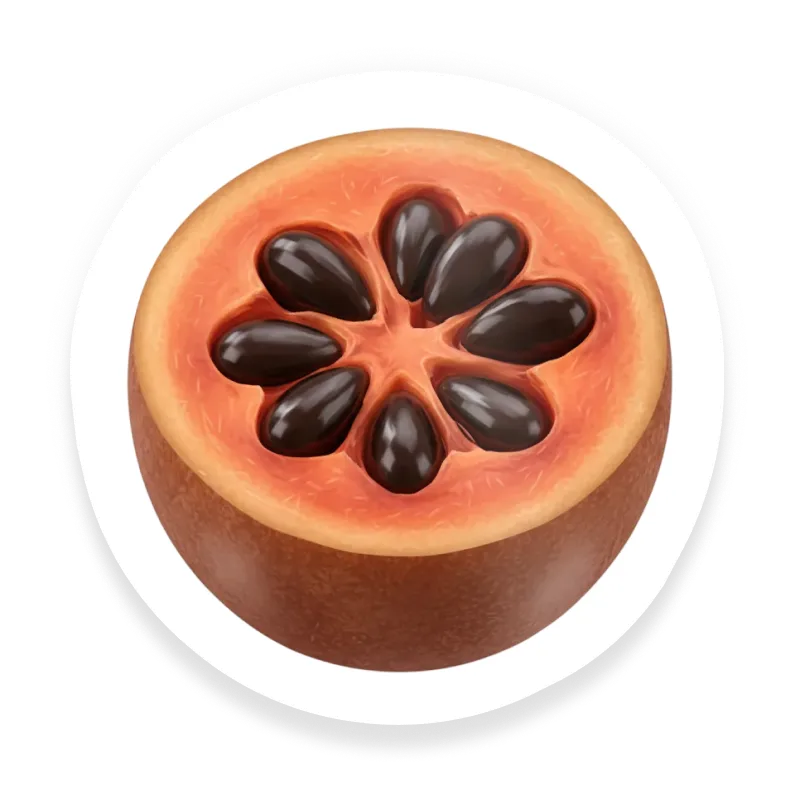
Zapote (Mamey Sapote)
Fruit
Is Zapote (Mamey Sapote) Safe for Babies?
Yes, babies can eat zapote around 6 months when they are ready to start solids, as it is allergen-free and easily digestible.
Yes, but there are some things to know
At a Glance
Zapote (mamey sapote) is high in fiber, and that fiber plus its water content helps soften stool and keep digestion moving. It also provides potassium and vitamins that feed healthy bacteria, supporting steady, regular bowel movements.
How Do You Serve Zapote (Mamey Sapote)?
- 1Choose a ripe fruit by feeling for slight softness when gently pressed and darker, fragrant skin.
- 2Peel and remove the large seed, then either mash the soft flesh or cut into firm, easy-to-grasp wedges for your baby to hold.
- 3If the fruit is slippery, lightly coat spears with finely ground nuts or shredded coconut to improve grip; if avoiding nuts, use crushed toasted oats or a thin smear of seed butter instead.
- 4Mix mashed zapote into warm cereal, yogurt, or cooked proteins to add creamy texture and flavor.
- 5Serve small portions and refrigerate leftovers in a sealed container for up to 24 hours.
Is Zapote (Mamey Sapote) a Common Allergen?
Mamey sapote (zapote) is not a common allergen, but rare IgE‑mediated allergic reactions have been reported. People with latex allergy can sometimes cross‑react to tropical fruits (latex–fruit syndrome), and unripe fruit latex contains proteolytic enzymes (e.g., papain) that may irritate skin or trigger reactions. Introduce cautiously in children with known fruit or latex allergies—offer a small test portion and watch for hives, swelling, vomiting, or breathing difficulty; seek medical care for severe reactions.
What Nutrients Does Zapote (Mamey Sapote) Have?
Zapote is nutrient-dense: it provides vitamin A and E, vitamin B6, omega‑3 fatty acids, antioxidants (flavonoids/phenols), fiber, and natural sugars, but it is not iron-rich. These nutrients support vision and immune health (vitamin A), cellular protection (antioxidants), neurological development (B6 and omega‑3s), and healthy digestion (fiber). Offer small amounts at first — the fruit’s natural sugars and fiber can cause loose stools or cramping if given in excess — and always remove the seed and skin before serving.
Is Zapote (Mamey Sapote) a Choking Hazard?
Low Choking Risk
Zapote isn’t usually a choking hazard if the large seed and skin are removed—those are the primary choking risks. Because the flesh can be slippery or variable in texture, stay within arm’s reach and closely supervise so you can intervene quickly if gagging or choking occurs. Be extra cautious with underripe or overly firm fruit and always ensure no seed fragments remain.
Have More Questions?
Yes. Zapote can be introduced to babies around 6 months when they start solids, as it is gentle and easily digestible.
Zapote is native to Central American rainforests and is now cultivated in tropical regions worldwide, including the Caribbean and Central America.
Yes. Zapote provides antioxidants, vitamins A and E, and fiber, supporting overall health and digestion in babies.
No, if the seed and skin are removed, as the seed can pose a choking hazard, but always supervise your baby during feeding.
No. Allergies to zapote are rare, but those sensitive to latex may experience irritation; introduce in small amounts and monitor for reactions.
Is Zapote (Mamey Sapote) safe for your baby?
Get personalized guidance on introducing Zapote (Mamey Sapote) — with prep tips, allergen alerts, and age-specific serving ideas.
Sources
What Other Fruit Can Babies Eat?
See all →




Backed by Science
Data you can trust.
Every food, guideline, and recommendation in Tummi is sourced from leading health institutions and peer-reviewed research.
 Centers for Disease Control and Prevention
Developmental milestones, nutrition guidelines, and allergen introduction timelines.
 American Academy of Pediatrics
Evidence-based feeding recommendations from the leading pediatric authority.
 National Institutes of Health
Peer-reviewed research on infant nutrition, allergies, and food safety.