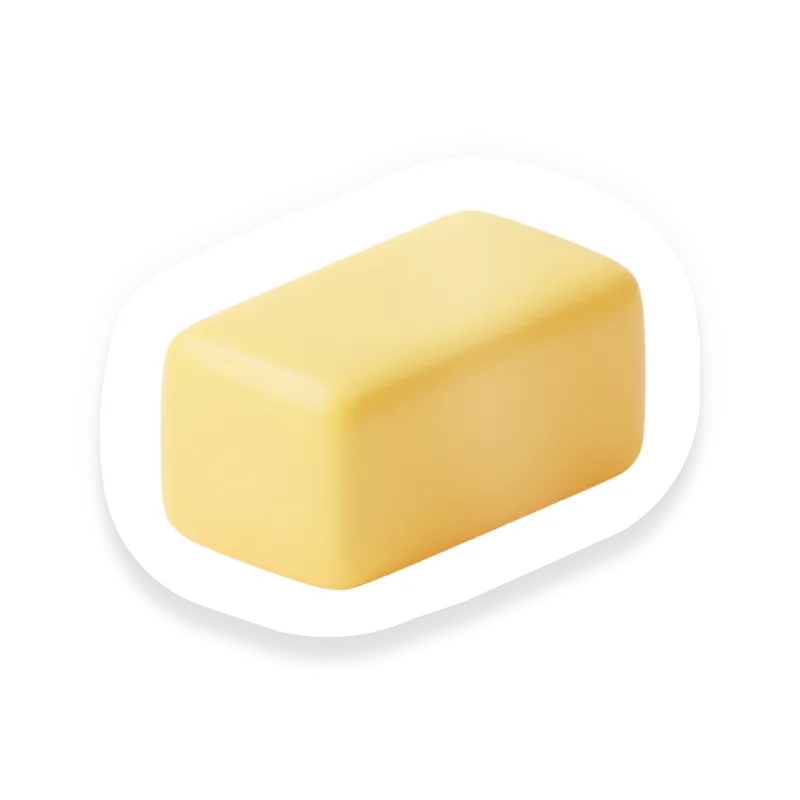
Butter
Dairy
Is Butter Safe for Babies?
Yes, butter can be introduced around 6 months of age as part of a balanced diet, after baby has started solids.
Yes, but there are some things to know
At a Glance
Butter provides concentrated energy and supplies fat soluble vitamins like vitamin A because it is made largely from milk fat. However, it can trigger allergic reactions in people with milk allergy because it may contain trace milk proteins such as casein and whey.
How Do You Serve Butter?
- 1Soften butter to room temperature and stir a small amount into mashed vegetables, porridge, or cooked fruits until completely smooth with no firm pieces.
- 2Use a thin, even spread on a strip of toast or half a bagel; spread evenly so there are no cold, chunky pats that could break off.
- 3Start with a very small amount (about a pea-sized portion) and increase slowly so the texture stays soft and easy to swallow.
- 4Prefer unsalted butter and avoid serving while very hot; if using salted butter, use even less.
Is Butter a Common Allergen?
Butter is a dairy product and contains milk proteins, so it should be avoided by children with a cow's milk allergy. Although butter contains very low lactose (it may be tolerated by some who are lactose intolerant), that does not make it safe for those with milk protein allergy—trace proteins can trigger reactions. Clarified butter/ghee may have reduced milk solids but can still pose a risk. Always read ingredient labels for milk or “may contain” warnings and check with your child’s allergist before offering butter.
What Nutrients Does Butter Have?
Butter is an energy‑dense source of fat (about 100 calories and ~11–12 g fat per tablespoon) that supplies saturated fat important for infant growth and fat‑soluble vitamins A, D, E and K; grass‑fed butter can contain slightly more omega‑3s. It has virtually no protein or carbohydrates, so use it to add calories and fat to mashed vegetables, porridge, or spreads rather than as a sole food. Choose unsalted butter to avoid excess sodium; small amounts are fine for most babies once solids begin, but introduce cautiously if you’re concerned about milk allergy and avoid giving very large amounts routinely.
Is Butter a Choking Hazard?
Very Low Choking Risk
Butter is generally a low choking risk, but like any food it can still be a hazard for some babies. When introducing it, stay close and be alert for signs of choking or difficulty breathing, and know basic infant choking first aid. If your baby cannot cough, cry, or breathe, call emergency services immediately.
Have More Questions?
Yes. Butter can be given to babies from around 6 months old, once they are ready to start solids, as a source of healthy fats and energy.
Yes. Butter contains healthy fats and vitamins that support baby’s growth and development, making it a nutritious addition when introduced appropriately.
Yes. Since butter is made from cow’s milk, it is considered a common allergen. Consult with a healthcare provider if your baby has known dairy allergies or sensitivities.
No. When served in appropriate amounts and textures, butter is not a choking hazard for babies, but always serve it in an age-appropriate manner.
Feel free to serve butter generously to babies and toddlers, as their fat needs are high and there is no specific restriction on its quantity.
Is Butter safe for your baby?
Get personalized guidance on introducing Butter — with prep tips, allergen alerts, and age-specific serving ideas.
Sources
- Breast Milk Lipids and Fatty Acids in Regulating Neonatal Intestinal Development and Protecting against Intestinal Injury (Nutrients, 2020) doi.org
- Is Butter Back? A Systematic Review and Meta-Analysis of Butter Consumption and Risk of Cardiovascular Disease, Diabetes, and Total Mortality (PLOS ONE, 2016) doi.org
- Saturated fat and cardiometabolic risk factors, coronary heart disease, stroke, and diabetes: a fresh look at the evidence (Lipids, 2010) doi.org
- Risk Assessment of Food Allergens. Part 1 – Review and validation of Codex Alimentarius priority allergen list through risk assessment (FAO/WHO, 2022) fao.org
- The epidemiology of milk allergy in US children (Annals of Allergy, Asthma & Immunology, 2013) doi.org
- The challenge of cow milk protein allergy (Small Ruminant Research, 2007) doi.org
- Food protein-induced enterocolitis syndrome and allergic proctocolitis (Allergy Asthma Proc., 2015) doi.org
- Fat and fatty acid requirements and recommendations for infants and children (Ann Nutr Metab, 2009) doi.org
- Dietary Guidelines for Americans, 2020-2025 dietaryguidelines.gov
What Other Dairy Can Babies Eat?
See all →
Backed by Science
Data you can trust.
Every food, guideline, and recommendation in Tummi is sourced from leading health institutions and peer-reviewed research.
 Centers for Disease Control and Prevention
Developmental milestones, nutrition guidelines, and allergen introduction timelines.
 American Academy of Pediatrics
Evidence-based feeding recommendations from the leading pediatric authority.
 National Institutes of Health
Peer-reviewed research on infant nutrition, allergies, and food safety.