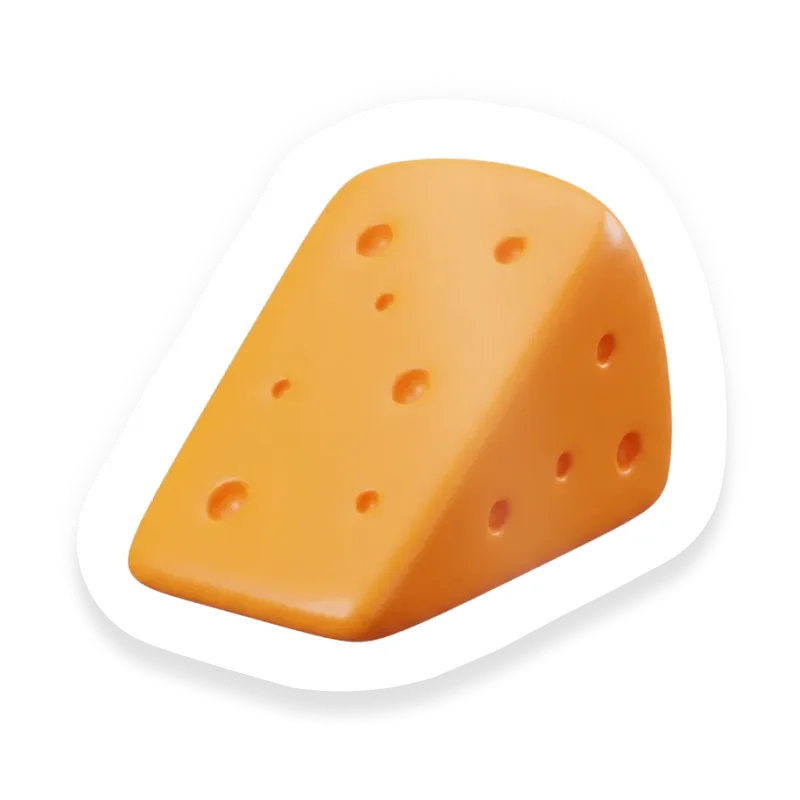
Colby Cheese
Dairy
Is Colby Cheese Safe for Babies?
Yes, babies can eat colby cheese starting around 6 months, if it is pasteurized and served in appropriate, manageable pieces.
Yes, but there are some things to know
At a Glance
Many people react to the milk proteins and lactose in cow’s milk cheeses like Colby, so it can cause allergic responses in sensitive individuals. It is rich in calcium and high in protein, giving bone-building minerals and amino acids that help support growth and muscle health.
How Do You Serve Colby Cheese?
- 1Offer very small tastes of pasteurized Colby — about pea-sized — to introduce flavor gradually.
- 2Cut cheese into long, thin flat strips (around 1/8 inch thick) so baby can grasp an edge and the pieces are less likely to cause choking.
- 3If warming or melting, use a light sprinkling of finely shredded Colby and stir until evenly softened; avoid large globs.
- 4Do not give cubes or big chunks; always have baby seated upright and supervised, and offer one small piece at a time.
Is Colby Cheese a Common Allergen?
Colby cheese is made from cow's milk and contains milk proteins—avoid for children with a milk (dairy) allergy. Lactose-intolerant individuals may tolerate small amounts depending on sensitivity, but this is different from an allergy. Always check packaging for 'may contain' or cross-contact statements, and consult the manufacturer or your child’s allergist if the allergy is severe.
What Nutrients Does Colby Cheese Have?
Colby cheese supplies protein, fat, calcium, zinc, selenium, and vitamins A and B12—nutrients that support growth, bone development, and brain function. It is not a meaningful source of iron, so pair with iron-rich foods. Because Colby can be high in sodium and saturated fat, offer small portions and limit frequency for infants and toddlers. Also choose pasteurized cheese and be cautious with milk allergy risk and additives like annatto.
Is Colby Cheese a Choking Hazard?
Low Choking Risk
Colby can be a choking hazard because its firm texture and tendency to become globby or stringy can make it difficult for young babies to manage in the mouth. Always stay within arm’s reach and closely supervise feeding so you can respond quickly if gagging or choking occurs. Be especially cautious for babies still learning to chew and for toddlers who are eating while moving around, as both increase choking risk.
Have More Questions?
Yes. While colby cheese can be introduced around 6 months of age, always serve it in small, manageable pieces and observe your baby during eating.
Yes. Leftover colby cheese can be stored in an airtight container in the fridge for up to a week, but ensure it is properly wrapped to prevent it from drying out or absorbing odors.
Yes. You can freeze grated or small portions of colby cheese, ideally in airtight containers or freezer bags, for up to 3-6 months, but note that freezing may alter texture slightly.
It depends. Organic colby cheese is made from milk from cows that are not given antibiotics or synthetic hormones, but both organic and conventional cheese can be safe; choose based on your preferences and availability.
Yes. Mixing small amounts of colby cheese with fruits, vegetables, or grains is a good way to introduce flavor combinations, as long as your baby can handle mixed textures and has no allergies.
Is Colby Cheese safe for your baby?
Get personalized guidance on introducing Colby Cheese — with prep tips, allergen alerts, and age-specific serving ideas.
Sources
- U.S. Food & Drug Administration — Dangers of Raw Milk fda.gov
- HealthyChildren.org — Choking Prevention healthychildren.org
What Other Dairy Can Babies Eat?
See all →
Backed by Science
Data you can trust.
Every food, guideline, and recommendation in Tummi is sourced from leading health institutions and peer-reviewed research.
 Centers for Disease Control and Prevention
Developmental milestones, nutrition guidelines, and allergen introduction timelines.
 American Academy of Pediatrics
Evidence-based feeding recommendations from the leading pediatric authority.
 National Institutes of Health
Peer-reviewed research on infant nutrition, allergies, and food safety.