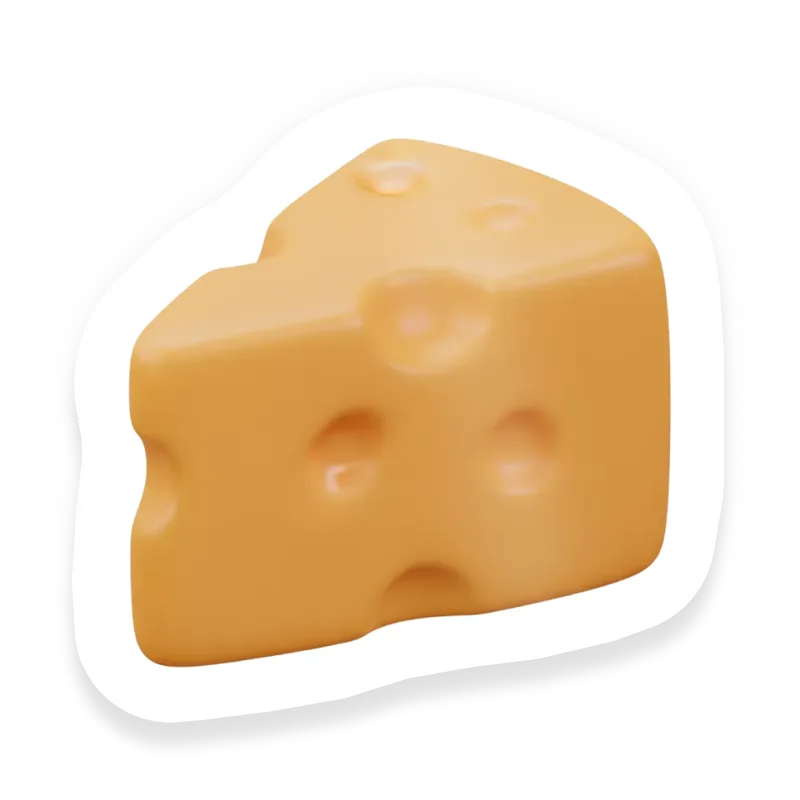
Cheddar Cheese
Dairy
Is Cheddar Cheese Safe for Babies?
Yes, pasteurized cheddar cheese can be given to babies around 6 months old, in small, manageable pieces to minimize choking risk.
Yes, but there are some things to know
At a Glance
Cheddar cheese contains milk proteins like casein and whey that can trigger allergic reactions in people with milk sensitivity. It is rich in calcium and supplies high-quality protein and vitamin B12 to support bone and muscle health.
How Do You Serve Cheddar Cheese?
- 1Offer only pasteurized cheddar in very small tastes as part of a varied diet; start with thin, long slices or very fine shreds to support self-feeding.
- 2Cut cheese into long, flat strips or thin slices to lower choking risk — avoid cubes or large chunks.
- 3If melting cheese (e.g., on vegetables), use a thin layer and sprinkle finely shredded cheddar sparingly so it melts evenly and doesn't form sticky, hard-to-manage globs.
- 4Supervise closely whenever cheese is offered. Watch for allergic reactions when introducing cheddar alone and observe for 2–3 days before adding other new foods.
Is Cheddar Cheese a Common Allergen?
Cheddar cheese contains milk proteins (casein and whey) and is a common dairy allergen—avoid for children with milk allergy. Lactose-intolerant children may also react with digestive symptoms, though reactions differ from true allergy. Always check labels for added ingredients or cross-contact warnings and consult your pediatrician if unsure.
What Nutrients Does Cheddar Cheese Have?
Cheddar is nutrient-dense for infants—providing protein, fat, calcium, zinc, selenium, and vitamins A and B12, which support growth, bone development, and brain function. Choose pasteurized cheddar and offer small amounts as part of a varied diet; cheddar can be high in sodium and saturated fat so limit portion size and frequency. If baby has suspected milk allergy, FPIES, or other concerns, consult a pediatrician or allergist before introducing dairy.
Is Cheddar Cheese a Choking Hazard?
Low Choking Risk
Cheddar can be a choking hazard because its firm texture and tendency to become globby make it difficult for young babies to manage in the mouth. Always stay within arm’s reach and closely supervise infants while they eat so you can respond immediately if gagging or choking occurs. Familiarize yourself with common choking hazards and basic infant choking/CPR response before introducing new textures.
Have More Questions?
Yes. Cheddar cheese can be stored in the refrigerator for several days once opened and should be wrapped or kept in an airtight container to maintain freshness.
Yes. You can freeze cheddar cheese wedges or scraps for up to 6 months; just wrap tightly to prevent freezer burn.
It depends. Organic versus conventional cheddar cheese varies mainly in farming practices, but both can be safe for babies if pasteurized and properly stored.
Yes. Combining cheddar with other foods, like fruits or whole grains, can introduce your baby to new flavors and textures, but ensure the pieces are manageable and safe.
It depends. Typical portion sizes for babies are small—about 1 to 2 teaspoons shredded or diced, served a few times per day, depending on their age and overall diet.
Is Cheddar Cheese safe for your baby?
Get personalized guidance on introducing Cheddar Cheese — with prep tips, allergen alerts, and age-specific serving ideas.
Sources
- Committee on Infectious Diseases; Committee on Nutrition; American Academy of Pediatrics. (2014). Consumption of raw or unpasteurized milk and milk products by pregnant women and children. Pediatrics, 133(1), 175-179 pediatrics.aappublications.org
- U. S. Food & Drug Administration. Dangers of raw milk. fda.gov
- Strazzullo P, Campanozzi A, Avallone S. (2012). Does salt intake in the first two years of life affect the development of cardiovascular disorders in adulthood? Nutr Metab Cardiovasc Dis. doi.org
- Soloway, R.A. (2013). Sodium: Too Much of a Good Thing. National Capital Poison Center. poison.org
- Liem D. G. (2017). Infants' and Children's Salt Taste Perception and Liking: A Review. Nutrients. doi.org
- Warren CM, Jhaveri S, Warrier MR, Smith B, & Gupta RS. (2013). The epidemiology of milk allergy in US children. Annals of Allergy, Asthma & Immunology. doi.org
- El-Agamy, E. (2007). The challenge of cow milk protein allergy. Small Ruminant Research. doi.org
- Comas-Basté O., Sánchez-Pérez S., Veciana-Nogués M.T., Latorre-Moratalla M., Vidal-Carou M. (2020). Histamine Intolerance: The Current State of the Art. Biomolecules. doi.org
- Nazar W., Plata-Nazar K., Sznurkowska K., Szlagatys-Sidorkiewicz A. (2021). Histamine Intolerance in Children: A Narrative Review. Nutrients. doi.org
- Nowak-Węgrzyn A. (2015). Food protein-induced enterocolitis syndrome and allergic proctocolitis. Allergy Asthma Proc. doi.org
- HealthyChildren.org. (2019). Health Issues: Choking Prevention. healthychildren.org
What Other Dairy Can Babies Eat?
See all →
Backed by Science
Data you can trust.
Every food, guideline, and recommendation in Tummi is sourced from leading health institutions and peer-reviewed research.
 Centers for Disease Control and Prevention
Developmental milestones, nutrition guidelines, and allergen introduction timelines.
 American Academy of Pediatrics
Evidence-based feeding recommendations from the leading pediatric authority.
 National Institutes of Health
Peer-reviewed research on infant nutrition, allergies, and food safety.