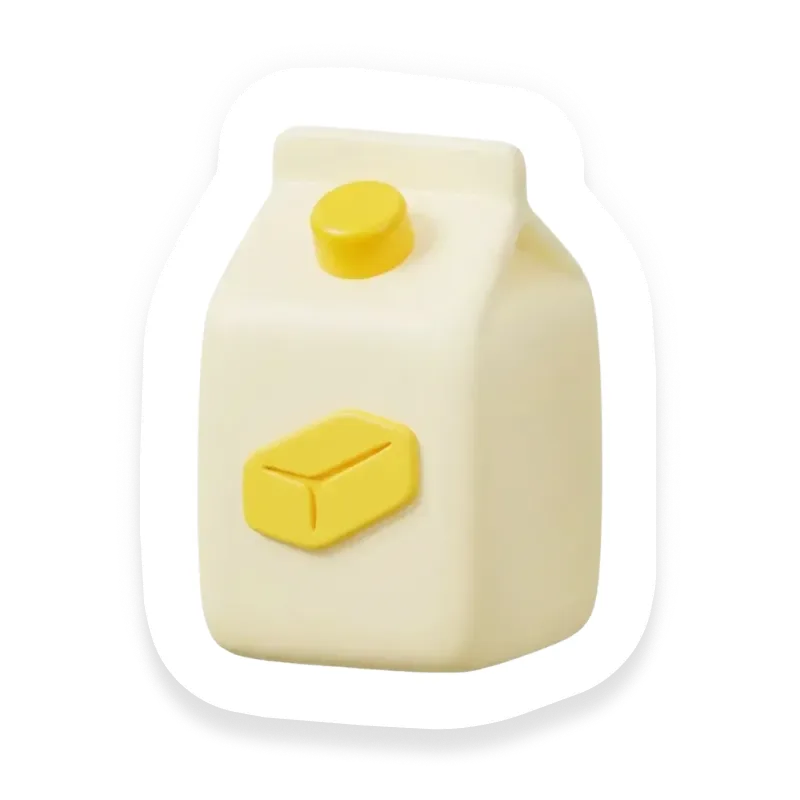
Buttermilk
Dairy
Is Buttermilk Safe for Babies?
Yes, buttermilk can be introduced in solids as early as pregnancy readiness, but serve it as a drink around 12 months; always choose pasteurized for safety.
Yes, but there are some things to know
At a Glance
Buttermilk is made from cow's milk and contains the milk proteins that can trigger allergic reactions in people who are sensitive. It also provides calcium and protein and live active cultures, which help build strong bones and aid digestion.
How Do You Serve Buttermilk?
- 1Use pasteurized buttermilk as an ingredient, not a drink — stir into batters for pancakes or muffins or replace part of the liquid in baked goods to add moisture and a mild tang.
- 2Mix into porridge, mashed vegetables, or purees to thin and smooth texture so your baby can chew and swallow more easily. Start small (about 1 tsp) and increase gradually while watching how your baby handles it.
- 3Blend into mild dips or simple marinades with finely chopped herbs (e.g., parsley or dill) to gently flavor and soften cooked meats or vegetables before serving.
- 4Because it’s made from cow’s milk, introduce it gradually and watch for signs of allergy or intolerance. Stop and call your pediatrician if you notice rash, vomiting, diarrhea, or breathing changes.
Is Buttermilk a Common Allergen?
Buttermilk is a dairy product made from milk and contains milk proteins and lactose. Do not give to children with a milk/dairy allergy — even cultured or low‑fat buttermilk can trigger reactions. Always check packaged ingredient labels (milk must be declared) and look for cross‑contact warnings if the child has a severe allergy.
What Nutrients Does Buttermilk Have?
Buttermilk supplies concentrated protein and fat for growth and is a good source of calcium, zinc, choline, omega‑3s, and vitamins A, B6, B12 and D—nutrients that support bone development, immune function, brain and eye development, and energy. Depending on how it’s made, it can also contain probiotics that may promote a healthy gut microbiome. It’s not iron‑rich, so it shouldn’t replace iron‑bearing foods, and because it’s made from cow’s milk it can trigger milk allergy in some babies. Avoid giving as a drink before 12 months; in older infants, too much dairy can displace breastmilk/formula or other nutrient‑rich foods.
Is Buttermilk a Choking Hazard?
Very Low Choking Risk
Buttermilk presents a low choking risk for babies, but any food can pose a choking danger. Always supervise babies closely during meals—stay within arm’s reach—and watch for signs of choking or persistent gagging. Be familiar with basic choking first-aid (infant/toddler rescue) before introducing new foods.
Have More Questions?
Yes, buttermilk can be introduced in solid foods once your baby is ready to start solids, typically around 6 months, but wait until about 12 months to serve it as a drink.
Yes, buttermilk is nutritious as part of solid foods and provides essential nutrients; however, it should not replace breast milk or formula as a main beverage until around 12 months.
Yes, but buttermilk is derived from cow's milk, which is a common allergen in children, so it should be introduced carefully and under medical guidance if allergy is suspected.
No, buttermilk does not pose a choking risk if served in age-appropriate forms and textures; always supervise your baby during eating.
There is no safe age to give raw, unpasteurized buttermilk to babies due to the risk of foodborne illnesses. Always choose pasteurized buttermilk for infants and toddlers.
Is Buttermilk safe for your baby?
Get personalized guidance on introducing Buttermilk — with prep tips, allergen alerts, and age-specific serving ideas.
Sources
- U.S. Food & Drug Administration — Dangers of raw milk fda.gov
- Committee on Infectious Diseases; Committee on Nutrition; American Academy of Pediatrics (2014) — Consumption of raw or unpasteurized milk and milk products pediatrics.aappublications.org
- Delplanque et al. (2015) — Lipid Quality in Infant Nutrition doi.org
- Lee et al. (2018) — Compositional Dynamics of the Milk Fat Globule doi.org
- Pietrzak-Fiećko & Kamelska-Sadowska (2020) — The Comparison of Nutritional Value of Human Milk with Other Mammals' Milk doi.org
- Kechagia et al. (2013) — Health benefits of probiotics: a review doi.org
- Dahiya & Nigam (2022) — Gut Microbiota and Probiotics doi.org
- Warren et al. (2013) — The epidemiology of milk allergy in US children doi.org
- El-Agamy (2007) — The challenge of cow milk protein allergy doi.org
- Nowak-Węgrzyn (2015) — Food protein-induced enterocolitis syndrome and allergic proctocolitis doi.org
- Centers for Disease Control and Prevention — Raw Milk Questions and Answers cdc.gov
What Other Dairy Can Babies Eat?
See all →
Backed by Science
Data you can trust.
Every food, guideline, and recommendation in Tummi is sourced from leading health institutions and peer-reviewed research.
 Centers for Disease Control and Prevention
Developmental milestones, nutrition guidelines, and allergen introduction timelines.
 American Academy of Pediatrics
Evidence-based feeding recommendations from the leading pediatric authority.
 National Institutes of Health
Peer-reviewed research on infant nutrition, allergies, and food safety.