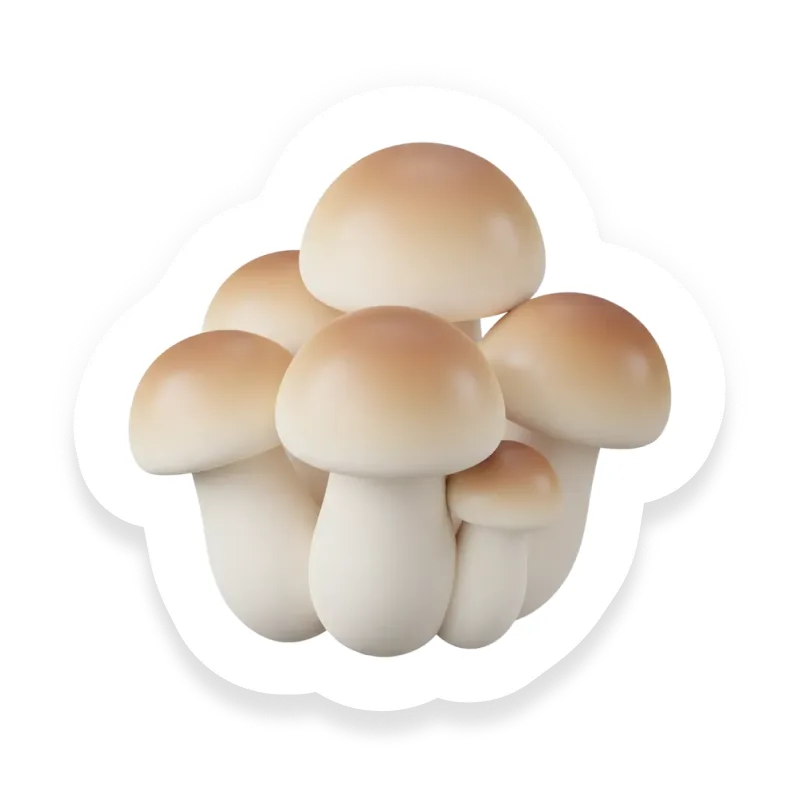
Beech Mushroom
Fungi
Is Beech Mushroom Safe for Babies?
Yes, beech mushrooms can be introduced to babies around 6 months old when they are ready for solids, preferably cooked and finely chopped.
Yes, but there are some things to know
At a Glance
Beech mushrooms are rich in fiber and contain mushroom polysaccharides (β‑glucans) that resist digestion and feed helpful gut microbes. Those compounds increase short‑chain fatty acids and support gut bacteria, which helps keep bowel movements regular.
How Do You Serve Beech Mushroom?
- 1Cook mushrooms until very soft, then finely chop caps and stems into very small pieces so they mash easily in the mouth.
- 2Stir the chopped mushrooms into scoopable or easy-to-grasp foods such as porridge, congee, mashed vegetables, soft noodles, or thin strips of scrambled egg.
- 3Serve foods spread out in small portions so the child can pick up manageable amounts rather than large clumps.
- 4Watch closely while eating, check the food is a soft texture and a safe temperature, and introduce new foods one at a time to monitor for reactions.
Is Beech Mushroom a Common Allergen?
Beech (buna‑shimeji) mushrooms are not one of the common top allergens, but edible mushrooms can cause allergic reactions in sensitive individuals and—rarely—anaphylaxis. People with known mushroom or mold (fungal) allergies may have cross‑reactivity and could react to beech mushrooms. Also note that cooking/processing can introduce common allergens (soy, dairy, gluten, nuts, sesame) via sauces or butter, so check ingredients. If a child has a known mushroom allergy or shows allergic symptoms after eating mushrooms, avoid them and seek medical advice.
What Nutrients Does Beech Mushroom Have?
Beech (shimeji) mushrooms are low-calorie and supply modest amounts of iron, B vitamins (niacin, riboflavin), potassium, protein, and dietary fiber, plus fungal prebiotics (beta‑glucans) that support the developing gut microbiome. For babies, they can help with stool consistency (fiber/prebiotics), contribute small amounts of iron for red blood cell health (but are not a primary iron source), and provide potassium and B vitamins important for growth and metabolism. Excess nutrient risk is low, though large servings may cause gas or digestive upset; avoid dried mushrooms preserved with sulfites if sensitive, and always serve fully cooked and appropriately sized to reduce choking risk.
Is Beech Mushroom a Choking Hazard?
High Choking Risk
Beech mushrooms can be a choking hazard because their chewy texture and firm stems are difficult for young babies to break down. They may be slippery or stringy, increasing the chance of gagging or airway obstruction in inexperienced eaters. Stay within arm’s reach and closely supervise babies during mealtime when offering beech mushrooms.
Have More Questions?
Yes. Beech mushrooms can be stored in the refrigerator for up to a week if kept in a paper bag or breathable container, maintaining freshness.
Yes. You can freeze cooked or raw beech mushrooms for up to 3 months to extend their shelf life, ensuring they are properly sealed and cooled before freezing.
It depends. Choosing organic beech mushrooms may reduce exposure to pesticides, but conventionally grown ones are also safe; wash thoroughly regardless of farming practices.
Yes. Beech mushrooms can be combined with other baby foods like rice, tofu, or vegetables to create varied, nutrient-rich meals tailored for babies.
Yes. Appropriate portion sizes for babies typically start small, such as a teaspoon or tablespoon, then gradually increase based on appetite and developmental readiness.
Is Beech Mushroom safe for your baby?
Get personalized guidance on introducing Beech Mushroom — with prep tips, allergen alerts, and age-specific serving ideas.
Sources
- America's Poison Centers — Food and mushroom poisoning poisoncenters.org
- CDC — Health Care Utilization and Outcomes Associated with Accidental Poisonous Mushroom Ingestions (MMWR, 2021) cdc.gov
- Koivikko A., Savolainen J. (1988). Mushroom allergy. Allergy. onlinelibrary.wiley.com
- Dauby PA, Whisman BA, Hagan L. (2002). Cross-reactivity between raw mushroom and molds. Ann Allergy Asthma Immunol. pubmed.ncbi.nlm.nih.gov
- Pravettoni V., Primavesi L., Piantanida M. (2014). Shiitake mushroom: A poorly known allergen. Int J Occup Med Environ Health. link.springer.com
- Gabriel MF et al. (2015). From respiratory sensitization to food allergy: Anaphylactic reaction after ingestion of mushrooms. Medical Mycology Case Reports. pmc.ncbi.nlm.nih.gov
- Branicka O., Rozłucka L., Gawlik R. (2021). A case of anaphylactic reaction following oyster mushroom inhalation. Int J Occup Med Environ Health. pubmed.ncbi.nlm.nih.gov
- Bruhn JN, Soderberg MD. (1991). Allergic contact dermatitis caused by mushrooms. Mycopathologia. link.springer.com
- Lee CG. (2009). Chitin, chitinases and chitinase-like proteins in allergic inflammation. Yonsei Med J. pmc.ncbi.nlm.nih.gov
- Kayode OS et al. (2020). Mushroom allergy: Case series. J Allergy Clin Immunol In Pract. pubmed.ncbi.nlm.nih.gov
- American Academy of Allergy Asthma & Immunology — Oral Allergy Syndrome (OAS) aaaai.org
- Kashyap RR, Kashyap RS. (2015). Oral Allergy Syndrome: An Update for Stomatologists. Journal of Allergy. onlinelibrary.wiley.com
- Cleveland Clinic — Sulfite sensitivity. my.clevelandclinic.org
- Jayachandran M., Xiao J., Xu B. (2017). A Critical Review on Health Promoting Benefits of Edible Mushrooms through Gut Microbiota. Int J Mol Sci. ncbi.nlm.nih.gov
- Quagliani D., Felt-Gunderson P. (2016). Closing America's Fiber Intake Gap. Am J Lifestyle Med. pmc.ncbi.nlm.nih.gov
What Other Fungi Can Babies Eat?
See all →
Backed by Science
Data you can trust.
Every food, guideline, and recommendation in Tummi is sourced from leading health institutions and peer-reviewed research.
 Centers for Disease Control and Prevention
Developmental milestones, nutrition guidelines, and allergen introduction timelines.
 American Academy of Pediatrics
Evidence-based feeding recommendations from the leading pediatric authority.
 National Institutes of Health
Peer-reviewed research on infant nutrition, allergies, and food safety.