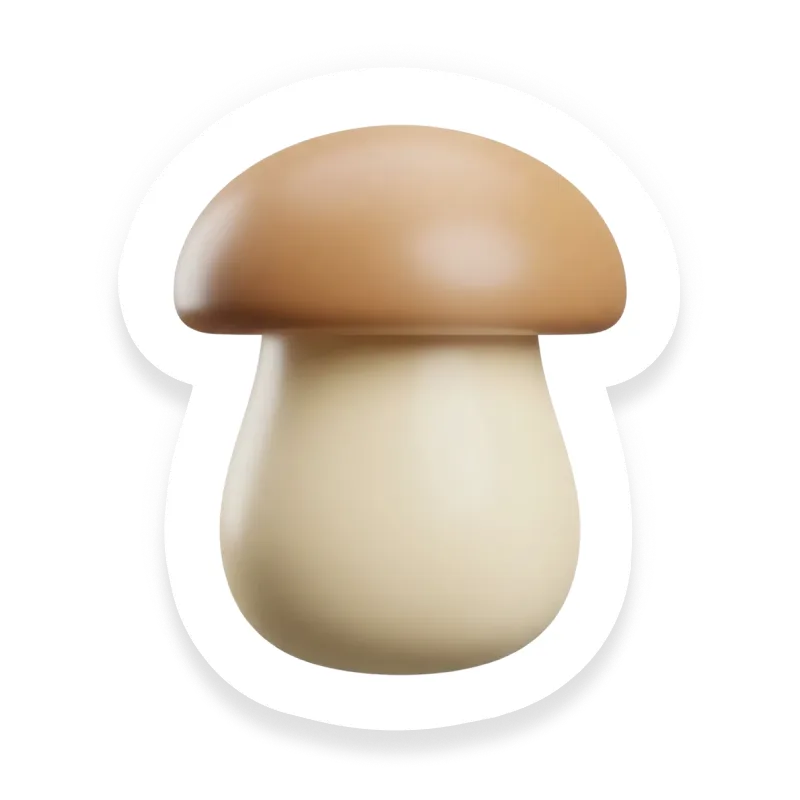
King Trumpet (King Oyster) Mushroom
Fungi
Is King Trumpet (King Oyster) Mushroom Safe for Babies?
Yes, babies can eat cooked king trumpet mushrooms from around 6 months, when starting solids, ensuring they are well-cooked and served in appropriate textures.
Yes, but there are some things to know
At a Glance
King oyster mushrooms are rich in fiber, which helps add bulk and soften stools. They also contain prebiotic beta-glucans that feed friendly gut bacteria and support regular digestion.
How Do You Serve King Trumpet (King Oyster) Mushroom?
- 1Finely chop cooked king trumpet mushroom and mix into scoopable or soft foods (congee, porridge, mashed vegetables, or scrambled eggs) so pieces are easy to pick up or scoop.
- 2For large mushrooms, halve lengthwise and slice the stem into thin strips about the width of two adult fingers pressed together; do not serve coin-shaped rounds that increase choking risk.
- 3Cook until very tender and mash lightly if needed so pieces are soft and not stringy. Coin-shaped slices increase choking risk—cut into short strips or small pieces instead.
- 4Serve small portions and supervise at arm’s reach, offering one small piece at a time and always checking temperature before giving to the child.
Is King Trumpet (King Oyster) Mushroom a Common Allergen?
King trumpet (king oyster) mushrooms are not common food allergens and reactions are rare, but they can trigger symptoms in people with a known mushroom or mold/fungal sensitivity. Case reports identify mushroom proteins as potential allergens, so avoid if your child has a diagnosed mushroom allergy. Also be aware that prepared or restaurant dishes may introduce other allergens (soy, gluten, dairy, nuts) through sauces or cross-contact—always check labels and ask about preparation. For any history of severe allergy or anaphylaxis, consult your pediatrician or allergist before serving.
What Nutrients Does King Trumpet (King Oyster) Mushroom Have?
King trumpet mushrooms are low in calories and provide fiber, modest protein, and B‑vitamins—especially vitamin B6, niacin and riboflavin—along with small amounts of zinc and iron; some cultivated/UV‑exposed varieties also contain vitamin D. For babies these nutrients support digestion (fiber), neurodevelopment and metabolism (B6 and other B‑vitamins), and immune and bone health (zinc, iron, vitamin D). They also contain antioxidants like ergothioneine, which may support cellular health. Too much is unlikely from normal servings, but powdered/processed forms can add excess sodium, mushrooms can rarely trigger allergies, and large amounts may cause GI upset—introduce gradually and watch for reactions.
Is King Trumpet (King Oyster) Mushroom a Choking Hazard?
Elevated Choking Risk
King trumpet mushrooms are quite firm, rubbery, and can be slippery when cooked, which increases their choking risk for babies. These textures can make the mushroom difficult for infants to chew and manage in the mouth. Always stay within arm’s reach and closely supervise your baby during meals, and be extra cautious if your child tends to overstuff or has immature chewing skills.
Have More Questions?
Yes. King trumpet mushrooms can be introduced to babies around 6 months old, once they are starting solids, but always ensure they are cooked thoroughly.
Yes. These mushrooms originated in the Mediterranean and are now cultivated globally. They are identified by their thick white stem and flat brown cap.
Yes. King trumpet mushrooms are nutritious for babies, providing vitamin B6, fiber, zinc, and vitamin D, which support development and immune health.
Yes. Due to their firm, slippery, and rubbery texture, finely chopping or pureeing is recommended to reduce choking hazards for babies.
No. Mushroom allergy is rare, but some sensitivity can occur. Always start with small amounts and observe for reactions; cooking may reduce allergenicity.
Is King Trumpet (King Oyster) Mushroom safe for your baby?
Get personalized guidance on introducing King Trumpet (King Oyster) Mushroom — with prep tips, allergen alerts, and age-specific serving ideas.
Sources
- Koivikko A., Savolainen J. (1988). Mushroom allergy. doi.org
- Dauby PA, Whisman BA, Hagan L. (2002). Cross-reactivity between raw mushroom and molds. doi.org
- Pravettoni V., Primavesi L., Piantanida M. (2014). Shiitake mushroom: A poorly known allergen. doi.org
- Gabriel MF et al. (2015). Anaphylactic reaction after ingestion of mushrooms (Agaricus bisporus). doi.org
- Branicka O., Rozłucka L., Gawlik R. (2021). Anaphylactic reaction following oyster mushroom inhalation. doi.org
- Lee CG. (2009). Chitin, chitinases and chitinase-like proteins in allergic inflammation. doi.org
- Kayode OS et al. (2020). Mushroom allergy: Case series. doi.org
- Jayachandran M., Xiao J., Xu B. (2017). Health benefits of edible mushrooms through gut microbiota. doi.org
- Quagliani D., Felt-Gunderson P. (2016). Closing America's Fiber Intake Gap. doi.org
What Other Fungi Can Babies Eat?
See all →
Backed by Science
Data you can trust.
Every food, guideline, and recommendation in Tummi is sourced from leading health institutions and peer-reviewed research.
 Centers for Disease Control and Prevention
Developmental milestones, nutrition guidelines, and allergen introduction timelines.
 American Academy of Pediatrics
Evidence-based feeding recommendations from the leading pediatric authority.
 National Institutes of Health
Peer-reviewed research on infant nutrition, allergies, and food safety.