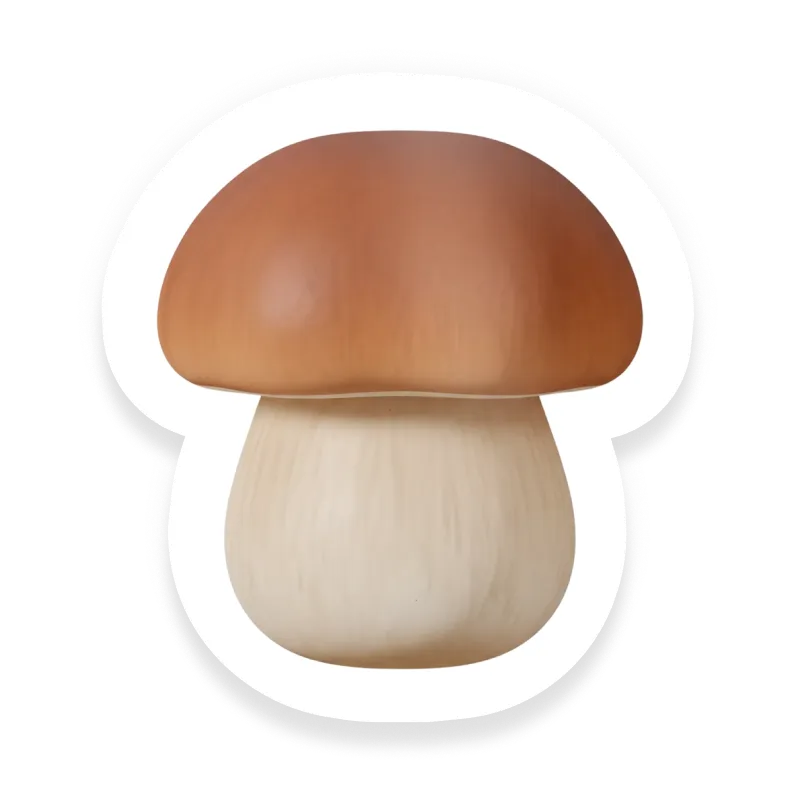
Porcini Mushroom
Fungi
Is Porcini Mushroom Safe for Babies?
Yes, porcini mushrooms can be introduced around 6 months of age once solids are started, ensuring they are cooked thoroughly and sourced safely.
Yes, but there are some things to know
At a Glance
Porcini mushrooms are rich in iron and B vitamins that help make hemoglobin and support steady energy. They also supply copper and antioxidants like ergothioneine, which help the body use minerals and protect cells.
Porcini mushrooms are rich in fiber, especially chitin and beta‑glucans that act as prebiotics to feed helpful microbes in the gut. Those fibers hold water and add stool bulk to help food move through the gut, and mushroom antioxidants support a healthy gut lining.
How Do You Serve Porcini Mushroom?
- 1Cook porcini until very tender; test tenderness by piercing with a fork so the flesh yields easily.
- 2For large caps, remove the stem and offer the cooked cap whole as a finger food that stays larger than the baby’s mouth.
- 3Finely mince or shred cooked porcini and fold into soft, scoopable foods like mashed vegetables, porridges, or yogurt, or mix into thin egg strips.
- 4Always fully cook and serve lukewarm; supervise closely and remove any piece that becomes small enough to choke on.
- 5Avoid adding salt or strong seasonings, and introduce mushrooms on their own at first to watch for any reaction.
Is Porcini Mushroom a Common Allergen?
Porcini are not one of the common top‑9 allergens, but mushrooms can trigger species-specific allergic reactions in some people (cross‑reactivity with other fungi is possible). Dried porcini products may contain naturally occurring or added sulfites—those with sulfite sensitivity or asthma should use caution. Wild porcini can be misidentified and sometimes mixed with poisonous species, so source from reputable suppliers and cook thoroughly. If a child develops hives, vomiting, breathing difficulty, or swelling after eating mushrooms, seek medical care immediately.
What Nutrients Does Porcini Mushroom Have?
Porcini are low-calorie but nutrient-dense: they provide modest iron (~1–1.2 mg/100 g), potassium (~235 mg/100 g), fiber, small amounts of protein, B‑vitamins and the antioxidant ergothioneine. For babies these nutrients can support iron status, gut health (fiber and prebiotic effects), and electrolyte balance, and antioxidants may help cellular resilience. Dried porcini concentrate nutrients and may contain sulfite preservatives; mushrooms contain chitin and rarely trigger allergic reactions. Serve cooked, finely chopped porcini in small amounts as part of a varied diet—overconsumption is unlikely to be toxic but may cause digestive upset or exposure to concentrated preservatives/heavy metals from foraged mushrooms.
Is Porcini Mushroom a Choking Hazard?
Elevated Choking Risk
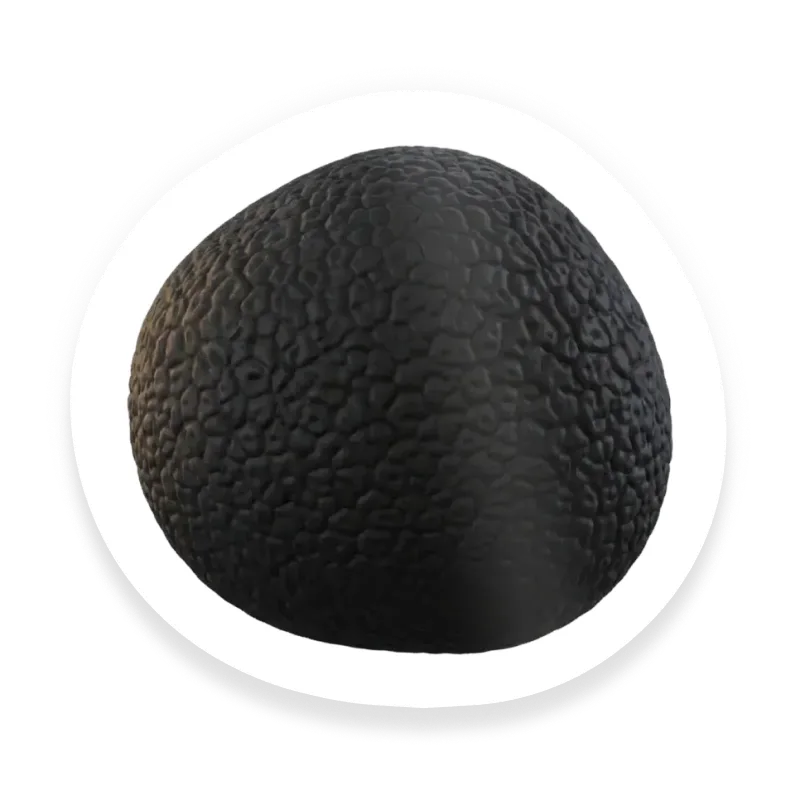
Porcini mushrooms can pose a choking risk for young babies because the cylindrical stems and chewy, slippery texture can be hard for inexperienced chewers to manage. Stay within arm’s reach and supervise closely during meals, watching for gagging or pieces that may be difficult to handle. If your baby struggles with the texture, pause and consult your pediatrician.
Have More Questions?
Yes. Porcini mushrooms can be introduced to babies around 6 months once they are ready for solids. Always ensure they are cooked thoroughly and prepared appropriately for young children.
Yes. Porcini mushrooms come from the wild, mostly growing in the northern hemisphere, and are known for their culinary and nutritional value. It is best to buy dried or fresh from reputable sources rather than foraging yourself.
Yes. They are nutritious for babies, providing fiber, iron, potassium, and calcium, which support various aspects of growth and development. Always serve them cooked and in appropriate textures for your child's age.
Yes. Due to their chewy and slippery texture, porcini stems can be a choking hazard for babies. Ensure they are finely chopped and cooked thoroughly before serving.
No. Mushroom allergy is uncommon. However, some individuals may react to chitin in mushrooms or to sulfites in dried varieties. Offer small amounts initially and observe for any adverse reactions.
Is Porcini Mushroom safe for your baby?
Get personalized guidance on introducing Porcini Mushroom — with prep tips, allergen alerts, and age-specific serving ideas.
Sources
- Ergothioneine as a Natural Antioxidant Against Oxidative Stress-Related Diseases (Fu & Shen, 2022) frontiersin.org
- Health Care Utilization and Outcomes Associated with Accidental Poisonous Mushroom Ingestion (CDC MMWR, 2021) cdc.gov
- Mushroom allergy (Koivikko & Savolainen, 1988) onlinelibrary.wiley.com
- Cross-reactivity between raw mushroom and molds in a patient with oral allergy syndrome (Dauby et al., 2002) doi.org
- Shiitake mushroom (Lentinus edodes): A poorly known allergen in Western countries (Pravettoni et al., 2014) link.springer.com
- From respiratory sensitization to food allergy: Anaphylactic reaction after ingestion of mushrooms (González-Delgado et al., 2015) sciencedirect.com
- A case of anaphylactic reaction following oyster mushroom inhalation (Branicka et al., 2021) ijomeh.eu
- Chitin, Chitinases and Chitinase-like Proteins in Allergic Inflammation (Lee, 2009) doi.org
- Mushroom allergy: Case series (Kayode et al., 2020) pubmed.ncbi.nlm.nih.gov
- Oral Allergy Syndrome (AAAI) - patient information aaaai.org
- Oral Allergy Syndrome: An Update for Stomatologists (Kashyap, 2015) doi.org
- Sulfite Allergy & Sensitivity (Cleveland Clinic) my.clevelandclinic.org
- A Critical Review on Health Promoting Benefits of Edible Mushrooms through Gut Microbiota (Jayachandran et al., 2017) mdpi.com
- Closing America's Fiber Intake Gap: Communication Strategies From a Food and Fiber Summit (Quagliani & Felt-Gunderson, 2016) ncbi.nlm.nih.gov
What Other Fungi Can Babies Eat?
See all →
Backed by Science
Data you can trust.
Every food, guideline, and recommendation in Tummi is sourced from leading health institutions and peer-reviewed research.
 Centers for Disease Control and Prevention
Developmental milestones, nutrition guidelines, and allergen introduction timelines.
 American Academy of Pediatrics
Evidence-based feeding recommendations from the leading pediatric authority.
 National Institutes of Health
Peer-reviewed research on infant nutrition, allergies, and food safety.