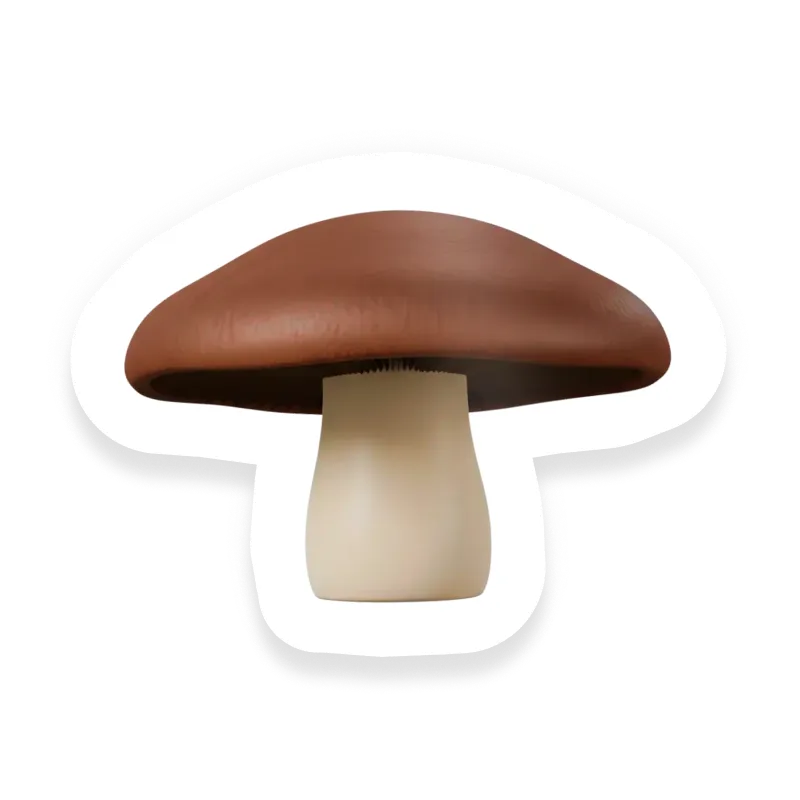
Portobello (Portabella) Mushroom
Fungi
Is Portobello (Portabella) Mushroom Safe for Babies?
Yes, portobello mushrooms can be introduced around 6 months of age when your baby is ready to start solids, prepared thoroughly and in small, manageable pieces.
Yes, but there are some things to know
At a Glance
Portobello mushrooms contain dietary fiber that helps add bulk and makes stools easier to pass. They also have polysaccharides that feed friendly bacteria, which supports digestion and regularity.
How Do You Serve Portobello (Portabella) Mushroom?
- 1Cook portobello caps until tender, then slice into long, thin pieces your baby can grasp and gum.
- 2If slices are slippery, toss them lightly in finely ground hemp seeds or panko breadcrumbs to add grip and texture.
- 3For smaller mouths, finely chop cooked mushrooms and stir into a soft, fully cooked omelet.
- 4Fold the omelet and cut into narrow strips. Easy to hold, these strips help reduce choking risk.
Is Portobello (Portabella) Mushroom a Common Allergen?
Portobello mushrooms are not a common allergen, but true mushroom allergy can occur in rare cases — people with a known mushroom allergy should avoid all types. Some individuals may react to mushroom proteins or to inhaled spores; cross-reactivity with molds/mycoprotein has been reported. Also be mindful of how mushrooms are prepared (butter, soy, nuts, or other allergens) and possible cross‑contamination. When introducing to infants or children, offer a small amount and watch for hives, vomiting, swelling, or breathing problems.
What Nutrients Does Portobello (Portabella) Mushroom Have?
Portobello mushrooms are low‑calorie, low‑fat foods that provide modest protein and fiber and are especially good sources of B‑vitamins (riboflavin, niacin, folate), potassium, and trace minerals like copper and selenium; vitamin D can be increased if mushrooms are exposed to sunlight or UV after harvest. These nutrients support energy metabolism, growth and red blood cell formation (folate), immune and antioxidant function (selenium, copper), and healthy cell/electrolyte balance (potassium), making mushrooms a nutritious addition to baby meals when cooked and properly cut. Overconsumption isn't a nutrient risk for infants, but introduce in small amounts, watch for rare mushroom/chitin sensitivities or allergy, avoid wild mushrooms, and always cook and prepare to reduce choking risk.
Is Portobello (Portabella) Mushroom a Choking Hazard?
Elevated Choking Risk
Portobello mushrooms can pose a choking risk because the caps are chewy and stems are cylindrical, which babies may struggle to break down. Thin raw slices can also stick to the tongue or roof of the mouth and provoke gagging. Stay within arm’s reach and keep a closely supervised, safe eating environment so you can respond quickly if your baby coughs or gags.
Have More Questions?
Yes. Portobello mushrooms can be introduced to babies around 6 months old when they start solids, but always ensure they are cooked and prepared appropriately for safety.
Yes. Portobellos provide nutrients beneficial for brain, bone, and immune health, making them a healthy addition to a baby's diet when served properly.
No. Mushrooms are not a common allergen, though some individuals may have sensitivities, especially due to spores or oral allergy syndrome; consult with your pediatrician if concerned.
Yes. Due to their chewy texture, portobellos can be a choking risk for babies, especially if not prepared in an age-appropriate way; always supervise feeding.
Yes. While raw mushrooms are safe, cooking portobellos is recommended for babies to reduce choking risk and improve digestibility and flavor.
Is Portobello (Portabella) Mushroom safe for your baby?
Get personalized guidance on introducing Portobello (Portabella) Mushroom — with prep tips, allergen alerts, and age-specific serving ideas.
Sources
- Mushrooms - Biologically Distinct and Nutritionally Unique: Exploring a 'Third Food Kingdom' (Nutrition Today, 2014) doi.org
- Mushrooms and Health Summit proceedings (The Journal of Nutrition, 2014) doi.org
- Polysaccharides and Antioxidants from Culinary-Medicinal White Button Mushroom (International Journal of Medicinal Mushrooms, 2018) doi.org
- The effects of whole mushrooms during inflammation (BMC Immunology, 2009) doi.org
- White button mushroom exhibits antiproliferative and proapoptotic properties (Nutrition and Cancer, 2008) doi.org
- Vitamin D mushrooms: composition comparison (Journal of Agricultural and Food Chemistry, 2011) doi.org
- Photobiology of vitamin D in mushrooms and its bioavailability (Dermato-endocrinology, 2013) doi.org
- Mushroom allergy (Allergy, 1988) doi.org
- Cross-reactivity between raw mushroom and molds (Annals of Allergy, Asthma & Immunology, 2002) doi.org
- Chitin, chitinases and chitinase-like proteins in allergic inflammation (Yonsei Medical Journal, 2009) doi.org
- Three-year follow-up study of allergy in workers in a mushroom factory (Respiratory Medicine, 2001) doi.org
- Mushroom allergy: Case series (The Journal of Allergy and Clinical Immunology: In Practice, 2020) doi.org
What Other Fungi Can Babies Eat?
See all →
Backed by Science
Data you can trust.
Every food, guideline, and recommendation in Tummi is sourced from leading health institutions and peer-reviewed research.
 Centers for Disease Control and Prevention
Developmental milestones, nutrition guidelines, and allergen introduction timelines.
 American Academy of Pediatrics
Evidence-based feeding recommendations from the leading pediatric authority.
 National Institutes of Health
Peer-reviewed research on infant nutrition, allergies, and food safety.