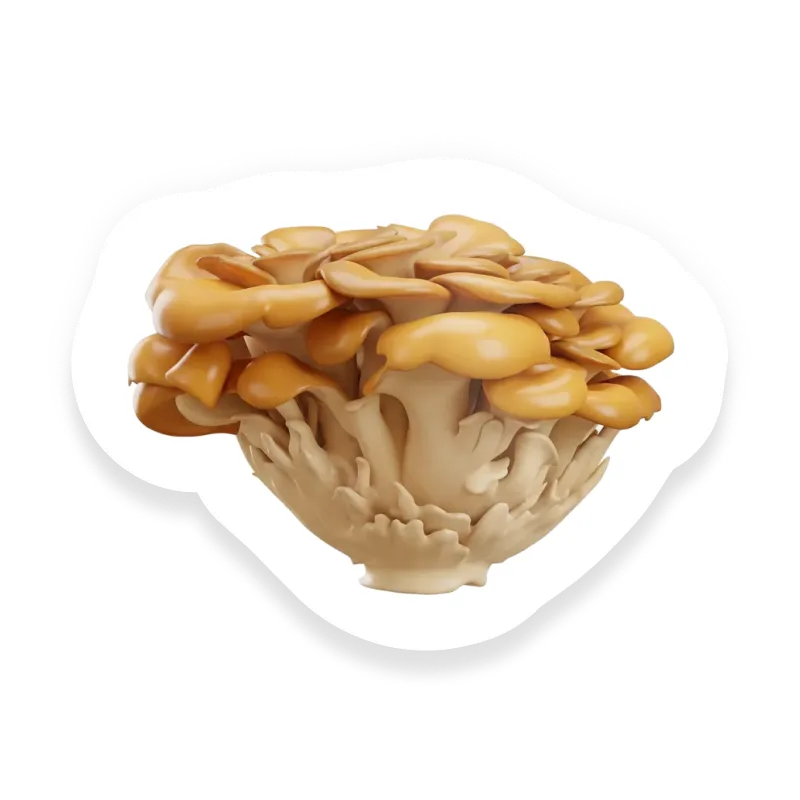
Maitake (Hen-of-the-Woods)
Fungi
Is Maitake (Hen-of-the-Woods) Safe for Babies?
Yes, maitake mushrooms can be introduced around 6 months when baby is ready for solids, ensuring they are thoroughly cooked and cut into small, manageable pieces.
Yes, but there are some things to know
At a Glance
Maitake mushrooms are rich in fiber, which adds bulk and helps food move through the gut for more regular stools. They also contain beta glucans, polysaccharides that feed friendly gut bacteria and support steady digestion.
How Do You Serve Maitake (Hen-of-the-Woods)?
- 1Remove any round, firm stems and offer only large cooked florets—if a floret is small enough to fit whole in the mouth, replace it with a larger piece.
- 2Ensure florets are very soft and fully cooked so they can be mashed easily between gum and tongue. This reduces choking risk.
- 3To make spoonable meals, finely chop cooked maitake and fold into congee, porridge, mashed vegetables, or thin egg strips for smoother textures.
- 4For finger foods, give one large, soft floret or a larger soft piece that the baby can grasp; avoid small, round pieces and always supervise while eating.
- 5If the baby gags or struggles, cut or mash the mushroom further and wait before offering again.
Is Maitake (Hen-of-the-Woods) a Common Allergen?
Maitake (hen‑of‑the‑woods) is not one of the FDA's major food allergens and mushroom allergy is uncommon, but mushrooms can cause allergic reactions in some people. Individuals with known mushroom or fungal/mold allergies, or with asthma, should avoid or be cautious and watch for symptoms after trying maitake. Introduce cooked mushrooms to infants only per your pediatrician’s guidance and watch closely for any signs of a reaction; also avoid eating wild‑foraged mushrooms unless identified by an expert due to misidentification risks.
What Nutrients Does Maitake (Hen-of-the-Woods) Have?
Nutrient Snapshot: Maitake mushrooms provide notable vitamin D — rare in whole foods — plus choline, zinc, fiber, and antioxidant compounds. These nutrients support baby bone and immune health, brain development, and healthy gut function; the fiber and prebiotic components can also help stool bulk and regularity. Avoid concentrated maitake supplements for infants; whole-food intake poses little risk, though excessive intake of any single concentrated source (or added sulfites in dried products) could cause issues, so offer as part of a varied diet.
Is Maitake (Hen-of-the-Woods) a Choking Hazard?
Low Choking Risk
Maitake mushrooms can be a choking risk because they’re chewy, slippery, and the stems are especially problematic for young eaters. Stay within an arm’s reach during mealtimes and watch closely for gagging or signs of trouble. If you’re worried about your child’s chewing or swallowing skills, check in with your pediatrician or a feeding specialist.
Have More Questions?
Yes. Maitake mushrooms can be introduced to babies around 6 months old once they are ready for solids, but always ensure they are prepared and served safely.
Yes. Maitake mushrooms are nutritious and support various aspects of a baby’s development, including immune function and gut health. However, avoid giving supplements to babies.
No. Mushroom allergy is rare in babies, but some may react, especially if sensitive to mold or related foods. Cooking can often help reduce allergic responses.
Yes. The stems and chewy parts of maitake mushrooms can be choking hazards for babies, especially if not prepared properly. Serve in age-appropriate, manageable pieces.
Yes. It is generally safer to cook maitake mushrooms before serving to babies because cooking reduces bacteria, improves digestibility, and lowers choking risks.
Is Maitake (Hen-of-the-Woods) safe for your baby?
Get personalized guidance on introducing Maitake (Hen-of-the-Woods) — with prep tips, allergen alerts, and age-specific serving ideas.
Sources
- Venturella G., Ferraro V., Cirlincione F., Gargano M. L. (2021). Medicinal Mushrooms: Bioactive Compounds, Use, and Clinical Trials. International Journal of Molecular Sciences doi.org
- Pravettoni V., Primavesi L., Piantanida M. (2014). Shiitake mushroom (Lentinus edodes): A poorly known allergen... doi.org
- Gabriel M. F., González-Delgado P., Postigo I., et al. (2015). Anaphylactic reaction after ingestion of mushrooms (Agaricus bisporus). Medical Mycology Case Reports doi.org
- Branicka O., Rozłucka L., Gawlik R. (2021). A case of anaphylactic reaction following oyster mushroom inhalation. International Journal of Occupational Medicine and Environmental Health doi.org
- Lee C.G. (2009). Chitin, chitinases and chitinase-like proteins in allergic inflammation. Yonsei Medical Journal doi.org
- Dauby P.A., Whisman B.A., Hagan L. (2002). Cross-reactivity between raw mushroom and molds. Annals of Allergy, Asthma & Immunology doi.org
- Koivikko A., Savolainen J. (1988). Mushroom allergy. Allergy doi.org
- Kayode O.S., Siew L., Pillai P., et al. (2020). Mushroom allergy: Case series. Journal of Allergy and Clinical Immunology: In Practice doi.org
- Jayachandran M., Xiao J., Xu B. (2017). A Critical Review on Health Promoting Benefits of Edible Mushrooms through Gut Microbiota. International Journal of Molecular Sciences doi.org
- Quagliani D., Felt-Gunderson P. (2016). Closing America's Fiber Intake Gap. American Journal of Lifestyle Medicine doi.org
- Kashyap R.R., Kashyap R.S. (2015). Oral Allergy Syndrome: An Update for Stomatologists. Journal of Allergy doi.org
What Other Fungi Can Babies Eat?
See all →
Backed by Science
Data you can trust.
Every food, guideline, and recommendation in Tummi is sourced from leading health institutions and peer-reviewed research.
 Centers for Disease Control and Prevention
Developmental milestones, nutrition guidelines, and allergen introduction timelines.
 American Academy of Pediatrics
Evidence-based feeding recommendations from the leading pediatric authority.
 National Institutes of Health
Peer-reviewed research on infant nutrition, allergies, and food safety.