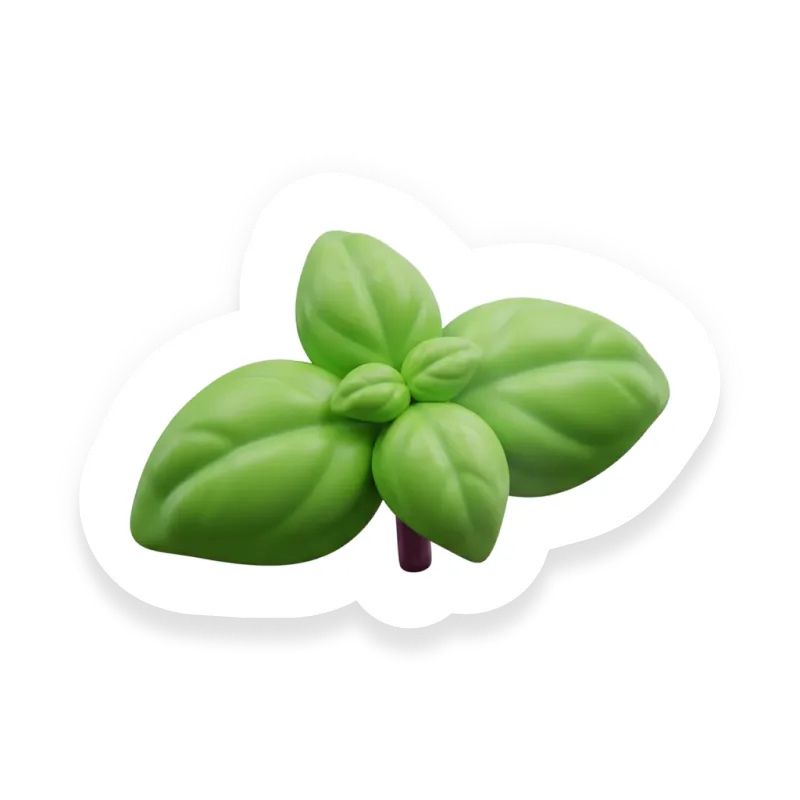
Basil
Herb/Spice
Is Basil Safe for Babies?
Yes, basil can be introduced around 6 months old when baby is ready for solids, prepared in an appropriate, safe manner.
Yes, but there are some things to know
How Do You Serve Basil?
- 1Rinse basil leaves, remove thick stems, then finely chop or tear into very small pieces so they blend smoothly into soft foods.
- 2Stir a small pinch of chopped basil into scoopable foods like yogurt, mashed avocado, or ricotta; start with a little and adjust to taste.
- 3For soft finger foods (large meatballs, patties), mix the basil into the center or knead gently into the mixture so no large leaf pieces remain.
- 4If making mild sauces (simple pesto or chimichurri), puree until smooth and serve separately from any allergenic ingredients, introducing those ingredients on their own in appropriate forms.
Is Basil a Common Allergen?
Plain basil is not a common food allergen for most children, but some people can have contact or IgE‑mediated reactions to basil or its pollen. Reactions may include oral allergy symptoms (itchy mouth or lips), skin rashes, or, rarely, more significant respiratory or systemic symptoms. Be cautious with prepared foods like pesto, which can contain pine nuts or cheese—common allergens that may cause reactions. If your child develops hives, swelling, difficulty breathing, or persistent vomiting after eating basil-containing foods, seek immediate medical care.
What Nutrients Does Basil Have?
Though used in small amounts, basil contributes vision-supporting carotenoids (beta‑carotene, lutein, zeaxanthin), vitamin K (for blood clotting and bone), and modest vitamin C and folate, plus antioxidant and anti‑inflammatory compounds that support immune and overall health. These nutrients can aid visual development, bone health, and provide antioxidant protection, but meaningful intake comes from regular culinary amounts rather than tiny sprigs. Babies are unlikely to consume too much basil in normal cooking, though concentrated extracts or essential oils should be avoided and consult a clinician if your baby is on blood‑thinning medication.
Is Basil a Choking Hazard?
Very Low Choking Risk
Basil is generally a low choking risk, but the leaf’s texture can cause bits to stick in a baby’s mouth and trigger gagging or coughing. Expect spitting and gag reflexes as babies learn to manage basil’s challenging texture. Stay within arm’s reach during meals and be prepared to respond if gagging or choking occurs—know infant/toddler rescue steps.
Have More Questions?
Yes. Basil can typically be introduced to babies around 6 months old when they are ready for solids, but ensure it is served in an appropriate, small, and safe manner for their developmental stage.
Yes. Basil contains various nutrients that support eye health, blood clotting, and immune function, making it a healthy addition when introduced appropriately to your baby's diet.
Yes, but basil allergies are rare. However, if your baby is sensitive to mint, which is in the same family, observe for reactions when adding basil to their diet.
No, basil is not a choking hazard if prepared correctly. Serve it finely chopped or as a small, age-appropriate puree, and always supervise your baby during eating.
It depends. Start with small amounts, such as a tiny leaf or a sprinkle of chopped basil, and observe your baby's response, increasing gradually as they get used to the flavor and texture.
Is Basil safe for your baby?
Get personalized guidance on introducing Basil — with prep tips, allergen alerts, and age-specific serving ideas.
Sources
What Other Herb/Spice Can Babies Eat?
See all →
Backed by Science
Data you can trust.
Every food, guideline, and recommendation in Tummi is sourced from leading health institutions and peer-reviewed research.
 Centers for Disease Control and Prevention
Developmental milestones, nutrition guidelines, and allergen introduction timelines.
 American Academy of Pediatrics
Evidence-based feeding recommendations from the leading pediatric authority.
 National Institutes of Health
Peer-reviewed research on infant nutrition, allergies, and food safety.