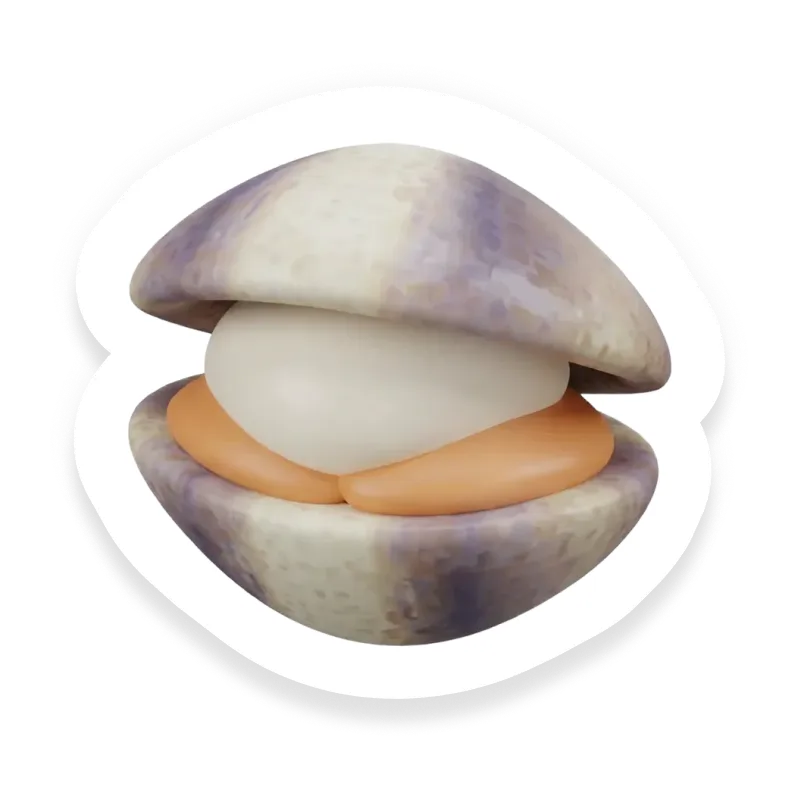
Clams
Shellfish
Is Clams Safe for Babies?
No, babies should only be given thoroughly cooked clams from around 6 months, due to the risk of foodborne illness and choking hazards.
Yes, but there are some things to know
At a Glance
Clams are a rich dietary source of iron, giving a large portion of daily needs in a small serving. Their iron is easily absorbed iron from animal foods and, along with vitamin B12 and protein, helps the body make healthy red blood cells.
How Do You Serve Clams?
- 1Use only thoroughly cooked or canned clams—remove shells, drain well, and finely chop or puree before mixing into a smooth, scoopable base like mashed vegetables, plain yogurt, or sour cream.
- 2Offer a very small amount (about ½ teaspoon) on a spoon the first time and wait 2–3 days before giving more to monitor for allergic reactions.
- 3Keep all pieces tiny and very soft—no threads or visible chunks; cut or mash whole clams well to eliminate choking hazards.
- 4If there’s a family history of shellfish allergy or past reactions, check with your pediatrician before offering clams. Seek emergency care for difficulty breathing, swelling, hives, or other severe symptoms.
Is Clams a Common Allergen?
Clams are mollusk shellfish and can trigger shellfish allergies. People with shellfish allergy may react to clams, and reactions can be severe (including anaphylaxis); some individuals allergic to crustaceans tolerate mollusks, but cross-reactions are possible. If a child has a known shellfish allergy, avoid clams and watch for cross-contact; consult an allergist for testing and personalized guidance.
What Nutrients Does Clams Have?
Clams are nutrient-dense for babies: they supply high-quality protein, heme iron (supports red blood cell production), vitamin B12 (important for brain and nervous system development), zinc (growth and immune function), choline (brain development), and calcium. They can be a useful source of iron and B12 for infants who eat limited meat. Limit frequent servings because clams may contain environmental contaminants (e.g., cadmium) and canned clams can be high in sodium; vary seafood choices and prioritize thoroughly cooked, age-appropriate preparations.
Is Clams a Choking Hazard?
Elevated Choking Risk
Clams are rubbery, slippery, and often round, which increases their choking risk for young children. Stay within an arm’s reach and closely supervise any time clams are offered, watching for signs of gagging or choking. Parents should refresh their knowledge of choking first aid so they’re ready to act quickly if needed.
Have More Questions?
Yes. Ensure clams are thoroughly cooked to reduce the risk of foodborne illness, which can be severe in babies, and serve in an age-appropriate texture to prevent choking.
Yes. Clams can be introduced around 6 months if well-cooked and pureed, but raw clams should be avoided due to high risk of bacteria.
It depends. Proper storage involves keeping cooked clam puree in airtight containers in the refrigerator for up to 24 hours, and freezing leftovers for longer shelf life.
It depends. When introducing clams, offer small amounts at first and watch for any adverse reactions, especially if there's a family history of shellfish allergy.
It depends. To reduce choking risk, serve clam in small, manageable pieces or purees, especially since clams are slippery and chewy.
Is Clams safe for your baby?
Get personalized guidance on introducing Clams — with prep tips, allergen alerts, and age-specific serving ideas.
Sources
- Foods That Can Cause Food Poisoning | Food Safety - CDC cdc.gov
- Developmental toxicity of cadmium in infants and children: a review pmc.ncbi.nlm.nih.gov
- About Vibrio Infection - CDC cdc.gov
- Shellfish allergy (Lopata et al., 2010) pubmed.ncbi.nlm.nih.gov
- Questions and Answers Regarding Food Allergen Labeling (Edition 5) - FDA fda.gov
- Choosing and Making Safe Foods - Kids With Food Allergies kidswithfoodallergies.org
- Shellfish - FoodAllergy.org (Food Allergy Research & Education) foodallergy.org
- Clinical Relevance of Cross-Reactivity in Food Allergy (Cox et al., 2021) pubmed.ncbi.nlm.nih.gov
What Other Shellfish Can Babies Eat?
See all →


Backed by Science
Data you can trust.
Every food, guideline, and recommendation in Tummi is sourced from leading health institutions and peer-reviewed research.
 Centers for Disease Control and Prevention
Developmental milestones, nutrition guidelines, and allergen introduction timelines.
 American Academy of Pediatrics
Evidence-based feeding recommendations from the leading pediatric authority.
 National Institutes of Health
Peer-reviewed research on infant nutrition, allergies, and food safety.