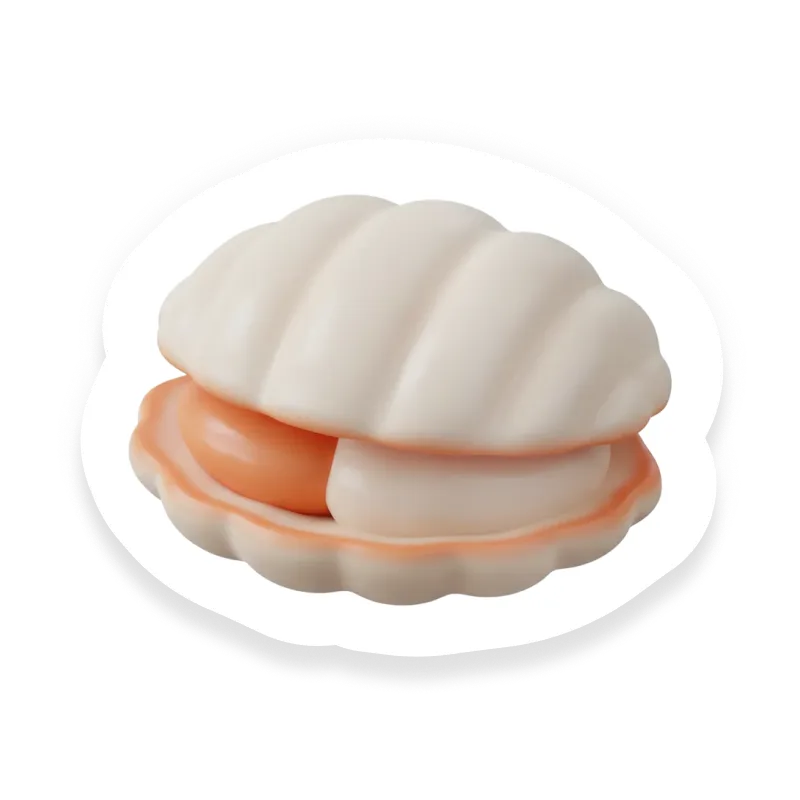
Scallops
Shellfish
Is Scallops Safe for Babies?
Yes, babies can eat cooked scallops from 6 months onward; ensure they are thoroughly cooked to reduce foodborne illness risk.
Yes, but there are some things to know
How Do You Serve Scallops?
- 1Use scallops that are fully cooked or well-drained if canned; remove side muscle if present.
- 2Finely chop or mash scallops until pieces are very small and soft enough to be scooped.
- 3Mix into a smooth, scoopable base like mashed vegetables, yogurt, or sour cream so textures blend and stay soft.
- 4Test temperature before serving, offer small spoonfuls, and stay within arm's reach while watching for swallowing difficulties.
Is Scallops a Common Allergen?
Scallops are a type of shellfish (mollusk) and can trigger shellfish allergies, which may cause severe or life‑threatening reactions in sensitized individuals. If your child has a known shellfish allergy, avoid scallops and foods that may have been cross‑contacted with shellfish. If you're unsure, consult an allergist before offering scallops, and seek emergency care for signs of anaphylaxis (difficulty breathing, swelling, or widespread hives).
What Nutrients Does Scallops Have?
Scallops are a nutrient-dense seafood that provide high-quality protein plus important micronutrients for infants including choline, vitamins B6 and B12, zinc, and iodine—supporting brain development, growth, and red blood cell formation. They’re low in fat and can help meet baby’s protein needs when introduced with age-appropriate preparation. Limit frequency and portion size because some scallops can contain cadmium and canned varieties may be high in sodium; choose low-sodium options when possible and offer scallops as part of a varied diet. Always cook scallops thoroughly to reduce the risk of foodborne illness.
Is Scallops a Choking Hazard?
Elevated Choking Risk
Scallops are firm, slippery, and sometimes small, making them a notable choking hazard for babies and toddlers. Because of this, stay within arm’s reach during meals and watch closely for signs of gagging or choking so you can intervene quickly. Be especially cautious with small whole scallops, as their size can be similar to a child’s airway and increase the risk.
Have More Questions?
Yes. To minimize risk, serve scallops that are thoroughly cooked and in an appropriate texture for your baby's age, ensuring the food is fresh and well-prepared.
Yes. Preparing scallops by steaming, boiling, or baking ensures they are safe for babies and helps prevent foodborne illness.
It depends. Canned scallops can be given to babies, but they should be finely chopped and low in sodium; fresh or cooked scallops are preferable for safety.
Yes. When offering scallops, always cut them into small, manageable pieces suitable for your baby's chewing ability, especially for younger babies.
It depends. Feeding frequency varies, but starting with once a week and observing how your baby responds is generally recommended.
Is Scallops safe for your baby?
Get personalized guidance on introducing Scallops — with prep tips, allergen alerts, and age-specific serving ideas.
Sources
- Centers for Disease Control and Prevention — Foods that can cause food poisoning cdc.gov
- Centers for Disease Control and Prevention — Vibrio cdc.gov
- Chandravanshi L., Shiv K., Kumar S. (2021). Developmental toxicity of cadmium in infants and children doi.org
- Lopata A.L., O'Hehir R.E., Lehrer S.B. (2010). Shellfish allergy doi.org
- Salazar-Llorente E., Morales M., Sornoza I., et al. (2021). Microbiological quality of high-demand food from three major cities in Ecuador doi.org
- U.S. Food & Drug Administration — Questions and answers regarding food allergens (2022) fda.gov
What Other Shellfish Can Babies Eat?
See all →

Backed by Science
Data you can trust.
Every food, guideline, and recommendation in Tummi is sourced from leading health institutions and peer-reviewed research.
 Centers for Disease Control and Prevention
Developmental milestones, nutrition guidelines, and allergen introduction timelines.
 American Academy of Pediatrics
Evidence-based feeding recommendations from the leading pediatric authority.
 National Institutes of Health
Peer-reviewed research on infant nutrition, allergies, and food safety.