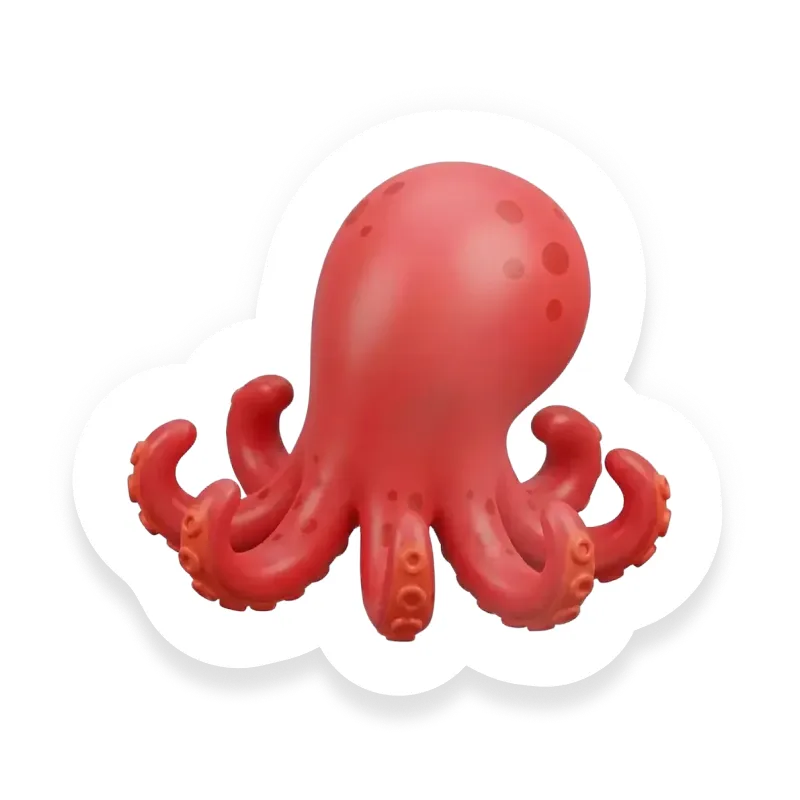
Octopus
Shellfish
Is Octopus Safe for Babies?
Yes, serve octopus to babies around 12 months, ensuring it is thoroughly cooked, tender, and cut into small, manageable pieces to reduce choking risk.
Yes, but there are some things to know
At a Glance
Octopus provides about 9 mg of iron per 100 g, making it a rich in iron choice that supports healthy blood. It also supplies vitamin B12 and is a lean protein source, which helps the body use iron and keep energy up.
How Do You Serve Octopus?
- 1Slice cooked octopus arms lengthwise into thin matchstick shapes so pieces lie flat and cannot roll or be swallowed whole.
- 2Do not offer whole tentacles or cylindrical slices—these can be a choking hazard.
- 3Cook until tender: either simmer slowly until soft or briefly sear after tenderizing; test tenderness by piercing with a fork to ensure it’s easy to chew.
- 4Stay within arm’s reach while the child eats, offer small portions, and remove any long or slippery pieces immediately.
Is Octopus a Common Allergen?
Octopus is a molluscan shellfish and can cause shellfish allergy reactions in susceptible people; some individuals allergic to shellfish may react to octopus. Cross‑reactivity with other mollusks and sometimes crustaceans is possible, and reactions can be severe (including anaphylaxis). If a child has a known shellfish allergy, avoid octopus and be cautious about cross‑contact in restaurants; consult an allergist for testing and advice.
What Nutrients Does Octopus Have?
Octopus is nutrient-dense for babies: it provides high-quality protein, omega‑3 fatty acids, vitamin B12, bioavailable iron, and selenium—nutrients that support brain development, red blood cell formation, nervous system function, and immune health. Offer octopus in moderation (generally after ~12 months) because it can contain moderate levels of mercury and, especially if canned or seasoned, high sodium; experts suggest limiting intake to a few servings per month. Choose fresh or frozen over canned to reduce BPA and excess salt, introduce small amounts at first, and always prepare and cut to reduce choking risk.
Is Octopus a Choking Hazard?
Low Choking Risk
Cooked octopus can be firm and rubbery and—because many pieces are cylindrical or round—poses a notable choking risk for young children. Stay within an arm’s reach and watch closely for gagging or signs of trouble so you can quickly remove any unsafe pieces. Offer cautiously and only when your child shows the chewing skills to handle chewy textures.
Have More Questions?
Yes, octopus can be healthy for babies after 12 months in moderation. It provides essential nutrients like protein, omega-3s, vitamin B12, iron, and selenium, supporting growth and development.
Yes, but it is recommended to wait until closer to 12 months due to its moderate mercury levels and high sodium content. Serving in small, occasional portions is safest.
It depends; octopus is a nutritious seafood option, but ensure it is fresh or frozen to avoid BPA from cans and rinse canned varieties to reduce sodium. Always watch for allergies and toxicity risks.
Yes, but always introduce in small amounts and monitor for allergic reactions or choking hazards. Proper preparation and supervision are essential when feeding this firm, chewy seafood.
It depends; octopus is not a common allergen but is part of the shellfish family, so watch for potential allergies, especially if there is a history of shellfish allergy in the family.
Is Octopus safe for your baby?
Get personalized guidance on introducing Octopus — with prep tips, allergen alerts, and age-specific serving ideas.
Sources
- U.S. Environmental Protection Agency — Mercury Emissions: Global Context epa.gov
- Environmental Defense Fund — EFF Seafood Selector: Octopus edf.org
- Lopata AL, O'Hehir RE, Lehrer SB (2010) — Shellfish allergy doi.org
- U.S. Food & Drug Administration — Questions and answers regarding food allergens (2022) fda.gov
- Kids with Food Allergies — Food allergen labeling kidswithfoodallergies.org
- Food Allergy Research & Education — Shellfish & Fish Allergy foodallergy.org
What Other Shellfish Can Babies Eat?
See all →

Backed by Science
Data you can trust.
Every food, guideline, and recommendation in Tummi is sourced from leading health institutions and peer-reviewed research.
 Centers for Disease Control and Prevention
Developmental milestones, nutrition guidelines, and allergen introduction timelines.
 American Academy of Pediatrics
Evidence-based feeding recommendations from the leading pediatric authority.
 National Institutes of Health
Peer-reviewed research on infant nutrition, allergies, and food safety.