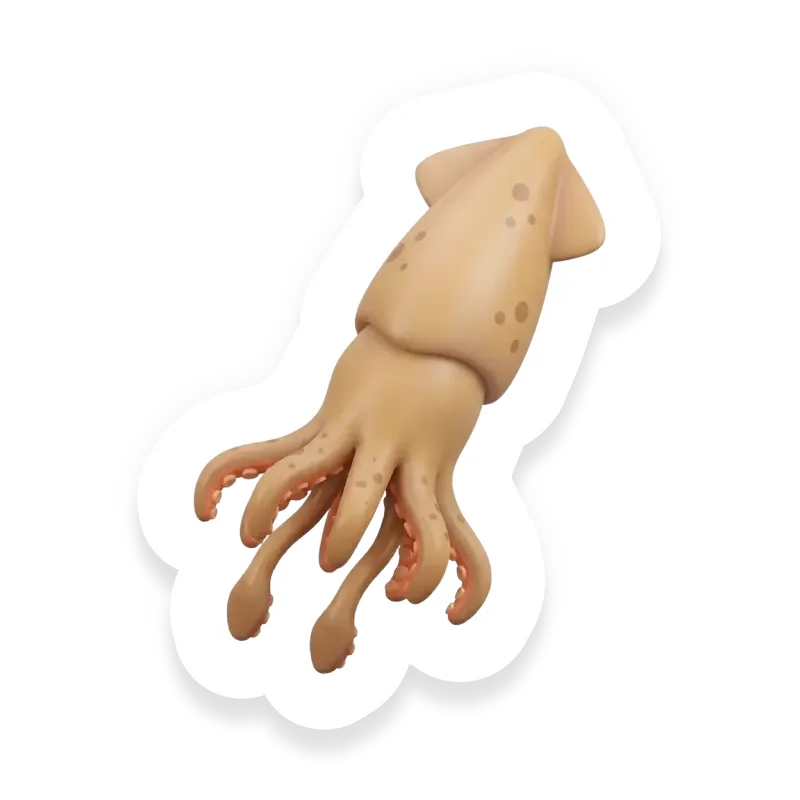
Squid
Shellfish
Is Squid Safe for Babies?
Yes, babies can eat cooked squid from around 6 months of age, ensuring it is thoroughly cooked and prepared appropriately.
Yes, but there are some things to know
How Do You Serve Squid?
- 1Cook squid thoroughly until tender (no rubbery texture) and cut the mantle into large sections or thin strips that a baby can grasp and gnaw.
- 2For lower choking risk, finely mince cooked squid and mix it into spoonable foods like purees, soft rice, or mashed vegetables so baby can scoop and eat safely.
- 3Offer pieces that are soft enough to be mashed with gums but still allow practice biting and tearing. Remove any pieces that break into large chunks.
- 4Always supervise closely during feeding and be ready to take away any piece that becomes too big or hard to handle.
Is Squid a Common Allergen?
Squid is a mollusk and is considered a type of shellfish that can trigger shellfish allergy. People allergic to crustacean shellfish may also react to mollusks, though cross-reactivity varies between individuals. Prepared squid (calamari) is often battered or marinated and can contain wheat (gluten), egg, or soy—so check preparation and ingredient lists. If your child has a known shellfish, wheat/gluten, egg, or soy allergy, avoid squid unless an allergy specialist clears it.
What Nutrients Does Squid Have?
Nutrient snapshot: Squid is a low‑calorie, nutrient‑dense seafood high in complete protein and a source of omega‑3s, vitamin B12, selenium and riboflavin, plus minerals like phosphorus and copper — nutrients that support growth, brain/eye development and immune health in babies. Because squid is low in mercury it’s a good seafood choice in moderation, but avoid fried, cured or heavily salted/preserved forms (these can be high in sodium). Introduce small amounts at first and watch for allergic reactions; also prepare to minimize choking risk (mince or offer large chewable mantle sections under close supervision).
Is Squid a Choking Hazard?
Elevated Choking Risk
Cooked squid can be firm and rubbery, making it a notable choking hazard for young babies who are still learning to chew. Stay within arm’s reach during meals and watch closely for signs of gagging or difficulty breathing so you can intervene quickly. Be especially cautious with dense or chewy pieces, which can be hard for little mouths to manage.
Have More Questions?
Yes. Squid can be introduced to babies around 6 months old when they are ready for solids, but it must be cooked thoroughly and served in a suitable texture.
Yes. Squid is a healthy food for babies, providing omega-3s, protein, and selenium, and is considered low in mercury, making it a safe choice when properly prepared.
Yes. Cooked squid can be a choking hazard due to its firm and sometimes rubbery texture. Ensure it is minced or served in manageable pieces to reduce risk.
No. Mollusks like squid are not classified as common allergens according to WHO, but some children can develop sensitivities. Introduce cautiously and observe for reactions.
It depends. Properly cooked squid is safe for most babies, but always check with your pediatrician, especially if there are known seafood allergies or concerns about ocean contamination.
Is Squid safe for your baby?
Get personalized guidance on introducing Squid — with prep tips, allergen alerts, and age-specific serving ideas.
Sources
- U.S. Food & Drug Administration — Advice about Eating Fish fda.gov
- Derby, C.D. (2014). Cephalopod ink (Marine Drugs) mdpi.com
- Monterey Bay Aquarium — Seafood Watch: Squid seafoodwatch.org
- Lopata, A.L. et al. (2010). Shellfish allergy (Clinical and Experimental Allergy) doi.org
- U.S. Food & Drug Administration — Questions & answers regarding food allergens (2022) fda.gov
- Kids With Food Allergies — Food allergen labeling kidswithfoodallergies.org
- Food Allergy Research & Education (FARE) foodallergy.org
What Other Shellfish Can Babies Eat?
See all →

Backed by Science
Data you can trust.
Every food, guideline, and recommendation in Tummi is sourced from leading health institutions and peer-reviewed research.
 Centers for Disease Control and Prevention
Developmental milestones, nutrition guidelines, and allergen introduction timelines.
 American Academy of Pediatrics
Evidence-based feeding recommendations from the leading pediatric authority.
 National Institutes of Health
Peer-reviewed research on infant nutrition, allergies, and food safety.