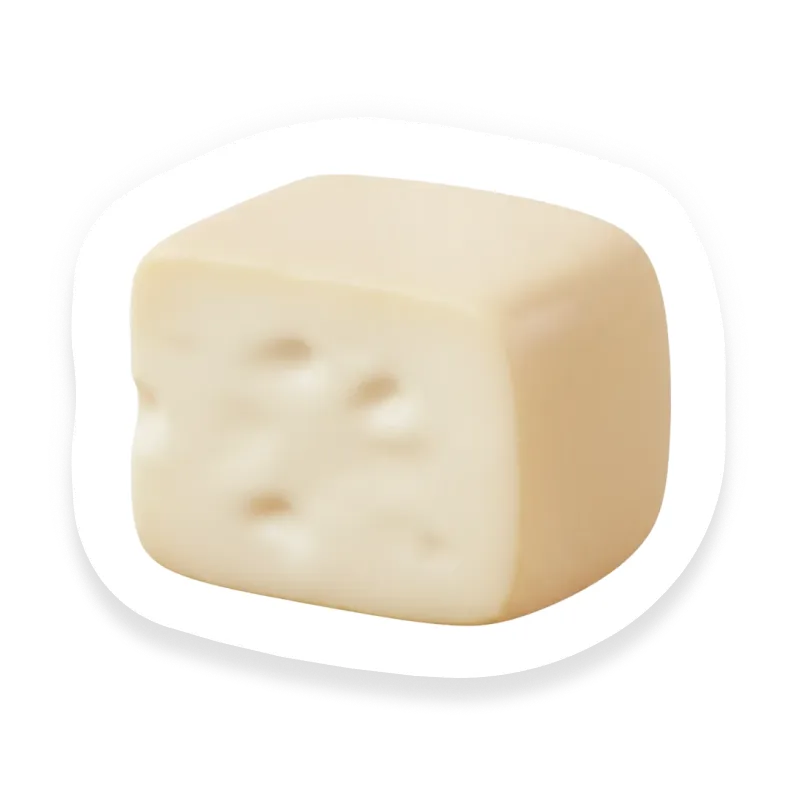
Pecorino Cheese
Dairy
Is Pecorino Cheese Safe for Babies?
Yes, babies can eat small amounts of pasteurized pecorino cheese around 6 months, but due to high sodium, it should be offered sparingly.
Yes, but there are some things to know
At a Glance
Pecorino is made from sheep's milk and can trigger allergic reactions in people sensitive to milk proteins like casein. It is also rich in calcium and high in protein, which support bone strength and provide lasting energy.
How Do You Serve Pecorino Cheese?
- 1Use only pasteurized pecorino and offer small tastes sparingly because it’s high in salt; include it as part of a varied diet.
- 2To reduce choking risk, grate finely over warm foods or give a long, thin flat slice so the baby can self-feed safely—always supervise while they eat.
- 3If melting the cheese, finely shred a small amount and stir into warm food so it disperses evenly. Sticky, gooey clumps can be hard to manage and should be avoided.
- 4Never serve cubes or large pieces; wait for reliable chewing skills before increasing texture.
Is Pecorino Cheese a Common Allergen?
Pecorino is a hard Italian cheese made from sheep’s milk and is a dairy product — not safe for anyone with a milk allergy. It contains milk proteins (casein) and may contain lactose, so it can trigger reactions in milk-allergic children and cause symptoms in those who are lactose intolerant. Some varieties use animal rennet, which may matter for strict vegetarians. Always check the product label for cross-contamination warnings if your child has multiple allergies.
What Nutrients Does Pecorino Cheese Have?
High in calcium, protein, and energy-rich fat — pecorino supplies bone-building calcium and growth-supporting protein plus vitamin B12, phosphorus, zinc, and selenium. It is also very high in sodium (and can be firm/sticky), so serve pasteurized pecorino in small amounts (a sprinkle or thin flat slice) and avoid frequent large portions. Use it as an occasional nutrient-dense flavoring rather than a daily staple for babies.
Is Pecorino Cheese a Choking Hazard?
Very Low Choking Risk
Pecorino can be firm and may form sticky masses in the mouth, which increases choking risk for young babies. Be cautious when introducing it and always supervise meals closely, staying within arm’s reach. Caregivers should know the signs of choking and basic infant choking first aid before offering pecorino.
Have More Questions?
Yes, you can store pecorino cheese in the refrigerator for up to a week once opened, wrapping it properly to prevent absorption of other odors and moisture.
Yes, freezing pecorino cheese is possible, but it may become crumbly and less suited for slicing; it's best used grated or melted after freezing.
Yes, choosing organic pecorino cheese may reduce exposure to pesticides and additives, though both organic and conventional products can be safely used for babies.
Yes, you can combine pecorino cheese with other foods for your baby, such as pasta or vegetables, to introduce new flavors and textures.
Yes, appropriate portion sizes for babies usually start small, about 1-2 teaspoons of grated cheese, and can be adjusted based on your child's appetite and tolerance.
Is Pecorino Cheese safe for your baby?
Get personalized guidance on introducing Pecorino Cheese — with prep tips, allergen alerts, and age-specific serving ideas.
Sources
- Committee on Infectious Diseases; Committee on Nutrition; American Academy of Pediatrics (2014) - Consumption of raw or unpasteurized milk and milk products pediatrics.aappublications.org
- U.S. Food & Drug Administration - Dangers of raw milk fda.gov
- Strazzullo P et al. (2012) - Does salt intake in the first two years of life affect the development of cardiovascular disorders in adulthood? doi.org
- Liem D. G. (2017) - Infants' and Children's Salt Taste Perception and Liking: A Review doi.org
- Warren CM et al. (2013) - The epidemiology of milk allergy in US children doi.org
- El-Agamy E. (2007) - The challenge of cow milk protein allergy doi.org
- Bernard H. et al. (2021) - Allergen risk assessment for specific allergy to small ruminant’s milk doi.org
- Comas-Basté O. et al. (2020) - Histamine Intolerance: The Current State of the Art doi.org
- Nazar W. et al. (2021) - Histamine Intolerance in Children: A Narrative Review doi.org
- Nowak-Węgrzyn A. (2015) - Food protein-induced enterocolitis syndrome and allergic proctocolitis doi.org
- InformedHealth.org (IQWiG) - Living with lactose intolerance informedhealth.org
What Other Dairy Can Babies Eat?
See all →
Backed by Science
Data you can trust.
Every food, guideline, and recommendation in Tummi is sourced from leading health institutions and peer-reviewed research.
 Centers for Disease Control and Prevention
Developmental milestones, nutrition guidelines, and allergen introduction timelines.
 American Academy of Pediatrics
Evidence-based feeding recommendations from the leading pediatric authority.
 National Institutes of Health
Peer-reviewed research on infant nutrition, allergies, and food safety.