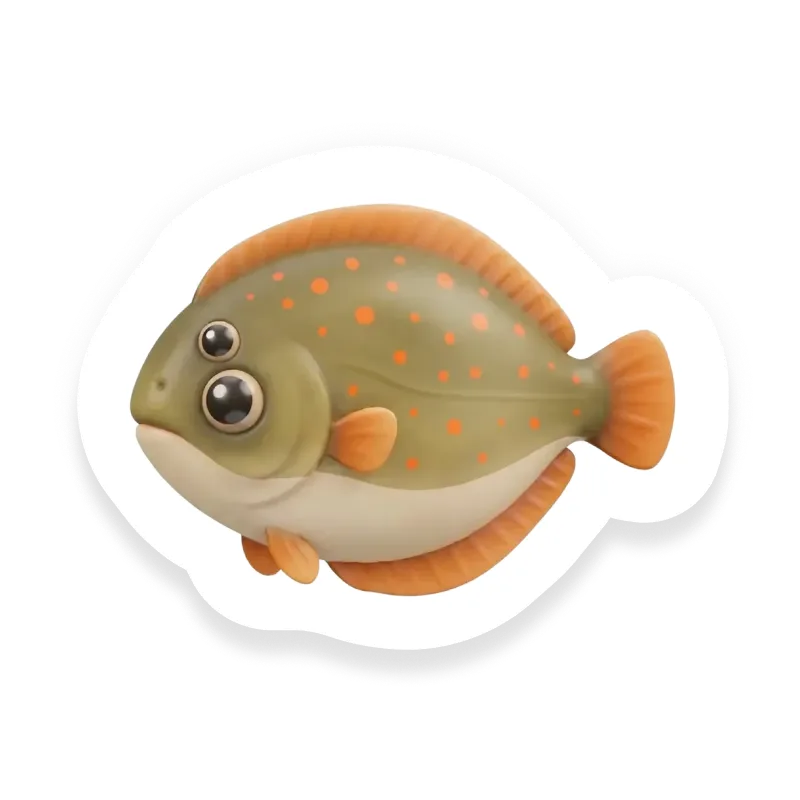
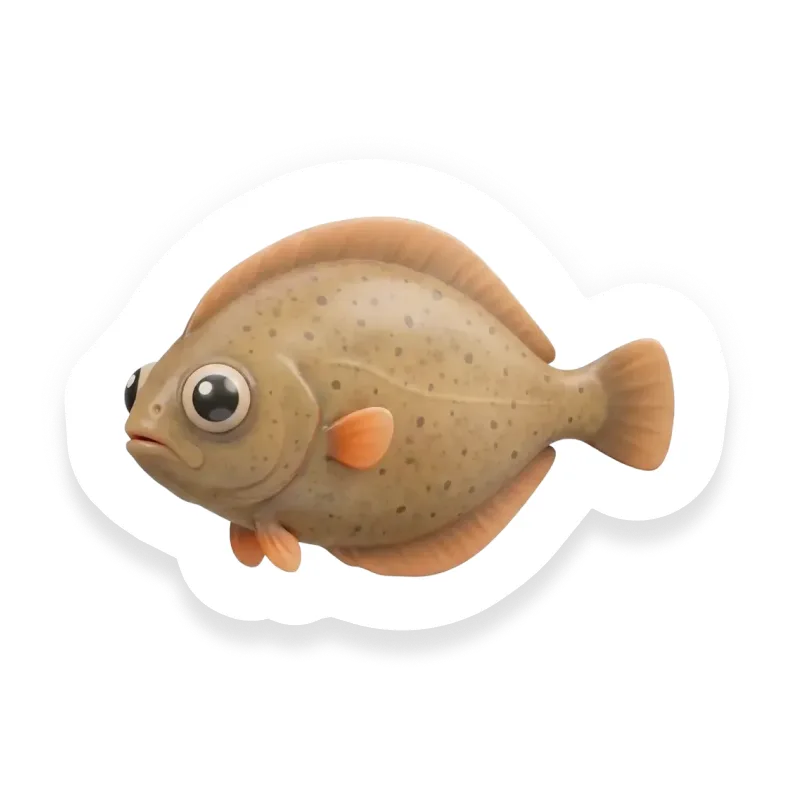
Plaice
Fish
Is Plaice Safe for Babies?
Yes, babies can eat plaice around 6 months, prepared thoroughly and in mashed or flaked form.
Yes, but there are some things to know
At a Glance
Plaice is a common allergenic fish and can trigger allergic reactions in people who are sensitive to fish proteins. It is a lean white fish that is a good protein source and low in calories, supplying B vitamins and small amounts of omega‑3 fats.
How Do You Serve Plaice?
- 1Cook the plaice fillet until completely opaque and it flakes easily; remove all bones and skin and run your fingers over the flesh to check for any stray bones.
- 2Cut the cooked, deboned fillet into soft strips about the width and length of two adult pinky fingers placed side-by-side so baby can grip them.
- 3Offer strips as finger food for self-feeding, or gently flake/mash the fish into cooked vegetables or plain yogurt and pre-load a spoon for practice.
- 4Ensure pieces are soft and not stringy — if needed, press or flake the fish into small, soft lumps that are easy to chew and less likely to slip back in the throat.
- 5Add a little butter or mild oil for healthy fats and serve lukewarm; when introducing fish for the first time, watch closely for any signs of allergy.
Is Plaice a Common Allergen?
Plaice is a finned (bony) fish and therefore contains fish allergens — avoid if your child has a fish allergy. Watch for cross-contact (shared counters, fryers or utensils) and check labels/packaging for ‘may contain’ or shared-equipment warnings in mixed or processed foods. If there’s any uncertainty, consult your child’s GP or allergist and follow their allergy action plan.
What Nutrients Does Plaice Have?
Nutrient Snapshot: Plaice is a high-quality, complete source of protein and provides important micronutrients for babies—notably vitamins B6 and B12, vitamin D, and selenium—plus small amounts of healthy fats that support brain development and growth. Because it’s relatively low in mercury compared with larger white fish, plaice can be offered roughly 1–2 times per week as part of a varied diet; avoid excessive frequency to limit mercury exposure. To boost caloric and fat intake for infants, serve plaice with a little butter or a healthy oil (olive, avocado, or coconut).
Is Plaice a Choking Hazard?
Very Low Choking Risk
Plaice isn’t commonly a choking hazard, but bones in fresh fish can pose a risk if not fully removed—carefully check and remove any bones before offering fish. Always stay within arm’s reach during meals and watch for signs of gagging, coughing, difficulty breathing, or changes in skin color. If choking occurs or you’re concerned, follow emergency procedures and seek immediate medical help.
Have More Questions?
Yes. You can serve cooked, boneless plaice to babies around 6 months, ensuring it is well-mashed or flaked into small, manageable pieces to prevent choking.
It depends. Fresh or frozen plaice can be stored in the fridge for 1-2 days or frozen for longer storage; always refrigerate cooked fish within 2 hours of cooking.
Yes. Feeding organic fish may reduce exposure to pesticides and environmental toxins, but conventional fish is also safe; both should be cooked thoroughly.
It depends. Combine plaice with vegetables or grains to introduce new flavors and nutrients gradually, helping your baby develop a diverse palate.
It depends. Portion sizes vary; start with small servings like a few teaspoons and increase gradually as your baby gets older and more accustomed to eating solids.
Is Plaice safe for your baby?
Get personalized guidance on introducing Plaice — with prep tips, allergen alerts, and age-specific serving ideas.
Sources
- U.S. Food & Drug Administration — Mercury Levels in Commercial Fish and Shellfish (1990-2012) fda.gov
- United States Environmental Protection Agency — Basic Information about Mercury epa.gov
- Harvard T.H. Chan School of Public Health — Fish: Friend or Foe? nutritionsource.hsph.harvard.edu
- Rice KM et al. (2014) — Environmental Mercury and Its Toxic Effects ncbi.nlm.nih.gov
- Food Allergy Research & Education (FARE) foodallergy.org
- Tong WS et al. (2018) — Diagnosis of fish and shellfish allergies ncbi.nlm.nih.gov
- Tsabouri S et al. (2012) — Fish and shellfish allergy in children (review) pubmed.ncbi.nlm.nih.gov
- Moonesinghe H et al. (2016) — Prevalence of fish and shellfish allergy: A systematic review pubmed.ncbi.nlm.nih.gov
- Food Allergy & Anaphylaxis Connection Team (FAACT) — Fish foodallergyawareness.org
- Crespo J.F. et al. (1995) — Sensitization to inhalant allergens in children diagnosed with food hypersensitivity pubmed.ncbi.nlm.nih.gov
- James J.M., Crespo J.F. (2007) — Allergic reactions to foods by inhalation link.springer.com
- U.S. Food & Drug Administration — Scombrotoxin Poisoning and Decomposition (2017) fda.gov
- Zhu Y. et al. (2015) — Meat, dairy and plant proteins alter bacterial composition of rat gut bacteria (Sci Rep) nature.com
- Azad M.A.K. et al. (2018) — Probiotic Species in the Modulation of Gut Microbiota: An Overview hindawi.com
What Other Fish Can Babies Eat?
See all →
Backed by Science
Data you can trust.
Every food, guideline, and recommendation in Tummi is sourced from leading health institutions and peer-reviewed research.
 Centers for Disease Control and Prevention
Developmental milestones, nutrition guidelines, and allergen introduction timelines.
 American Academy of Pediatrics
Evidence-based feeding recommendations from the leading pediatric authority.
 National Institutes of Health
Peer-reviewed research on infant nutrition, allergies, and food safety.