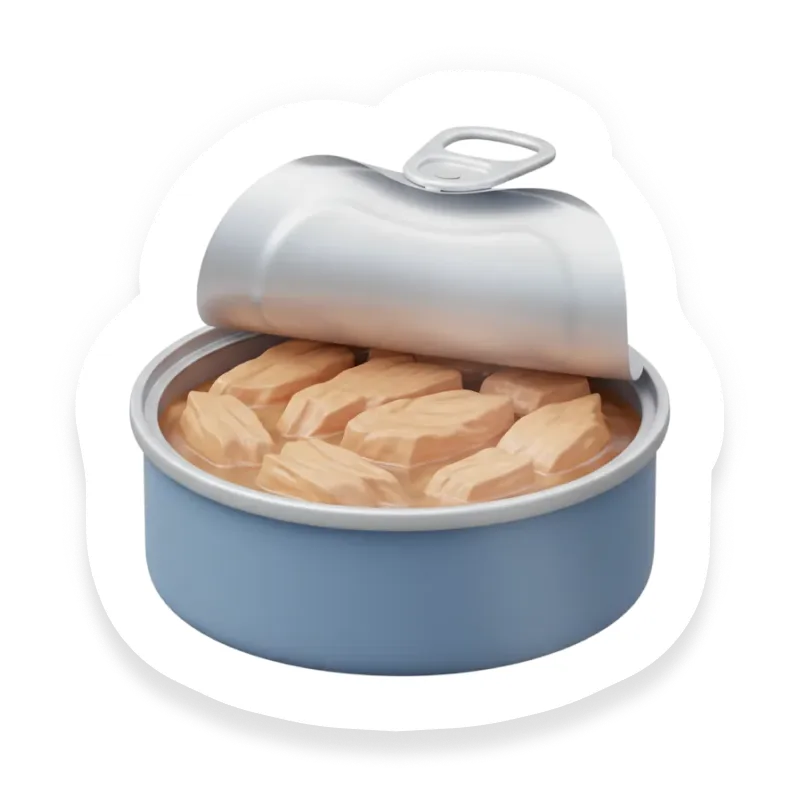
Tuna (Skipjack, Light)
Fish
Is Tuna (Skipjack, Light) Safe for Babies?
Yes, skipjack tuna can be introduced around 6 months, in moderation, ensuring it's low in mercury and properly prepared.
Yes, but there are some things to know
At a Glance
Tuna is a good source of dietary iron, which the body uses to make hemoglobin and carry oxygen. It also provides protein and vitamin B12 that help form healthy red blood cells.
Tuna can cause allergic reactions in sensitive people because proteins like parvalbumin are major fish allergens. It is also a lean protein source rich in omega-3 fatty acids, selenium, and vitamin D, which help heart and brain health.
How Do You Serve Tuna (Skipjack, Light)?
- 1Drain canned skipjack (light) tuna, check for and remove any bones, then finely flake or mash so pieces are soft and small.
- 2Stir a small amount (start with 1–2 teaspoons) into porridge, yogurt, or mashed foods so it’s scoopable and easy to swallow.
- 3Spread a thin layer of mashed tuna on toast strips or form into soft, large fish cakes—make pieces too large for baby to fit whole in their mouth to reduce choking risk.
- 4Choose skipjack (light) to lower mercury and offer tuna once or twice a week; always check temperature and watch closely for any allergic reaction when first introducing fish.
Is Tuna (Skipjack, Light) a Common Allergen?
Tuna (including canned light/skipjack) is a common finned-fish allergen and can trigger allergic reactions in sensitive individuals. Because many fish proteins cross-react, clinicians often advise people with a fish allergy to avoid all finned fish rather than rely on tolerance to a single species; fish allergies are separate from shellfish allergies. Check labels and be alert for cross-contact in processing, and ensure your child carries epinephrine if prescribed and gets emergency care for any signs of anaphylaxis. Consult your allergist before offering tuna if your child has a known fish allergy.
What Nutrients Does Tuna (Skipjack, Light) Have?
Tuna (especially canned skipjack/light) is a good source of high-quality protein and omega-3 fatty acids (DHA/EPA) that support infant brain and eye development, plus vitamin B12, niacin, selenium, zinc, and modest iron—nutrients important for growth, immunity, and neurological development. Because some tuna varieties can contain mercury, limit canned skipjack to about once or twice a week and avoid frequent servings of higher‑mercury species (e.g., albacore); choose low‑sodium options when possible. Tuna is a common fish allergen—introduce in small amounts, watch for reactions, and consult an allergist if there’s concern.
Is Tuna (Skipjack, Light) a Choking Hazard?
Low Choking Risk
Canned tuna is generally low risk for choking because the canning process softens any small bones, but any food can potentially cause choking. Fresh tuna bones can be a hazard if left in place, so check for and remove bones before offering fish to a child. Always stay within arm’s reach while baby is eating and be familiar with basic choking first aid.
Have More Questions?
Yes. It is generally safe to store cooked or canned tuna in the refrigerator for up to 3-4 days in an airtight container, making it suitable for baby food preparations.
Yes. Freezing pureed tuna is possible and can extend storage for 1-2 months; do so in a sealed, airtight container or freezer-safe bag.
Yes. Organic tuna is grown without synthetic pesticides or fertilizers and is a good choice for environmentally conscious parents, though nutrient content is similar to conventional.
Yes. You can combine tuna with cooked vegetables or grains to introduce variety and new flavors to your baby's diet, as long as all ingredients are cooked and age-appropriate.
Yes. Portion sizes vary by age, but a typical serving for a baby starting solids is 1-2 teaspoons, gradually increasing as the child grows and eats more.
Is Tuna (Skipjack, Light) safe for your baby?
Get personalized guidance on introducing Tuna (Skipjack, Light) — with prep tips, allergen alerts, and age-specific serving ideas.
Sources
- Scombrotoxin Poisoning and Decomposition - U.S. Food & Drug Administration fda.gov
- Fish - Food Allergy Research & Education foodallergy.org
- Fish: A Top 9 Food Allergen - Food Allergy & Anaphylaxis Connection Team (FAACT) foodallergyawareness.org
What Other Fish Can Babies Eat?
See all →
Backed by Science
Data you can trust.
Every food, guideline, and recommendation in Tummi is sourced from leading health institutions and peer-reviewed research.
 Centers for Disease Control and Prevention
Developmental milestones, nutrition guidelines, and allergen introduction timelines.
 American Academy of Pediatrics
Evidence-based feeding recommendations from the leading pediatric authority.
 National Institutes of Health
Peer-reviewed research on infant nutrition, allergies, and food safety.