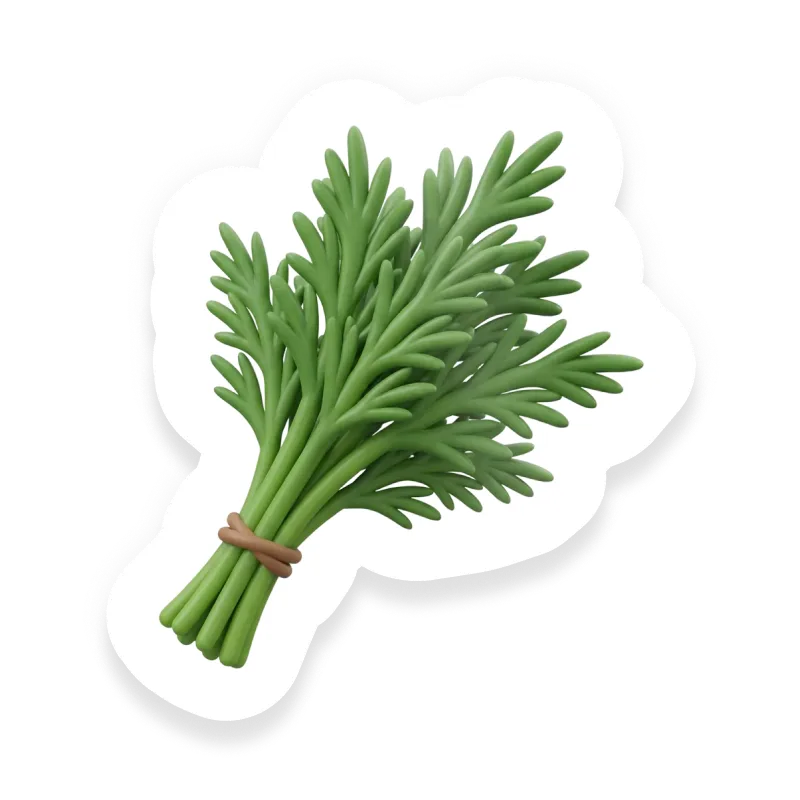
Dill
Herb/Spice
Is Dill Safe for Babies?
Yes, babies can have dill as early as 6 months, when they are ready to start solids, in small, prepared amounts.
Yes, but there are some things to know
How Do You Serve Dill?
- 1Rinse dill and remove any tough, woody stems, then finely chop the soft stems and fronds for an even texture.
- 2Start with a pinch (about 1/8–1/4 tsp) mixed into a single serving to check tolerance — start small and watch.
- 3Stir chopped dill into purees, cooked vegetables, yogurt, sauces, or mashed foods; add after cooking when possible to preserve its fresh flavor.
- 4If using dried dill or dill powder, use about one-third the fresh amount; store fresh dill wrapped in a damp paper towel in the fridge for 2–3 days and introduce on its own while monitoring for any sensitivity.
Is Dill a Common Allergen?
Dill is not a common top allergen and is generally safe for most children, but rare IgE‑mediated allergies and contact dermatitis (and isolated anaphylaxis reports) have been described. Introduce small amounts once other foods are tolerated; cooking may reduce risk. If your child has a history of severe food or herb/pollen allergies, introduce with caution and consult your pediatrician or allergist. Stop and seek medical care if you see hives, swelling, vomiting, difficulty breathing, or other signs of a severe reaction.
What Nutrients Does Dill Have?
Dill is low-calorie and, when used as a culinary herb, provides small amounts of vitamin C, vitamin A (as beta‑carotene), calcium, potassium, manganese and dietary fiber, plus antioxidant plant compounds (flavonoids and phenolic acids). For babies, the vitamin C and antioxidants can support immune function and help with iron absorption from other foods, while the fiber and plant compounds may aid digestion. Dill is not a significant source of iron or other macronutrients, so it should be used as a flavoring rather than a primary nutrient source. Avoid concentrated forms (dill essential oils) and offer dill in small amounts—large intakes could cause mild stomach upset and, rarely, allergic or contact reactions.
Is Dill a Choking Hazard?
Very Low Choking Risk
Dill is not generally a choking hazard and presents a low risk when offered in forms appropriate for your child’s developmental stage, but any food can pose a choking risk. Larger pieces of fronds may cause babies or toddlers to gag or cough, so stay within arm’s reach and watch closely during meals. Make sure you know basic choking first-aid and seek immediate help if your child shows signs of choking (unable to cry, cough, or breathe).
Have More Questions?
Yes, dill can be stored in the refrigerator for up to a week when wrapped in a damp paper towel and placed in a plastic bag.
Yes, freezing dill in ice cube trays with water or olive oil allows you to keep small portions for future meals.
It depends; organic dill is usually more expensive but may have fewer pesticide residues, while conventional dill is more accessible and still safe for babies.
Yes, combining dill with mild, baby-friendly foods like pureed vegetables or grains can add flavor without overwhelming your baby's palate.
It depends on the amount and frequency; small amounts of dill in foods are generally safe, but excessive use might cause digestive discomfort in some babies.
Is Dill safe for your baby?
Get personalized guidance on introducing Dill — with prep tips, allergen alerts, and age-specific serving ideas.
Sources
- 21 CFR Part 182 -- Substances Generally Recognized as Safe (eCFR) ecfr.gov
- Anethum graveolens: An Indian traditional medicinal herb and spice (Pharmacognosy Reviews, 2010) ncbi.nlm.nih.gov
- Anaphylaxis to dill (Annals of Allergy, Asthma & Immunology, 2000) sciencedirect.com
- Occupational contact dermatitis to dill (Allergy, 2002) onlinelibrary.wiley.com
- Apiaceae Family as a Valuable Source of Biocidal Components (Horticulturae, 2022) mdpi.com
- Food allergy — Symptoms and causes (Mayo Clinic) mayoclinic.org
- Oral Allergy Syndrome (AAAAI) aaaai.org
- Oral Allergy Syndrome: An Update for Stomatologists (Journal of Allergy, 2015) pubmed.ncbi.nlm.nih.gov
- Phytophotodermatitis: a visit to Margaritaville (Cutis, 1993) pubmed.ncbi.nlm.nih.gov
What Other Herb/Spice Can Babies Eat?
See all →
Backed by Science
Data you can trust.
Every food, guideline, and recommendation in Tummi is sourced from leading health institutions and peer-reviewed research.
 Centers for Disease Control and Prevention
Developmental milestones, nutrition guidelines, and allergen introduction timelines.
 American Academy of Pediatrics
Evidence-based feeding recommendations from the leading pediatric authority.
 National Institutes of Health
Peer-reviewed research on infant nutrition, allergies, and food safety.