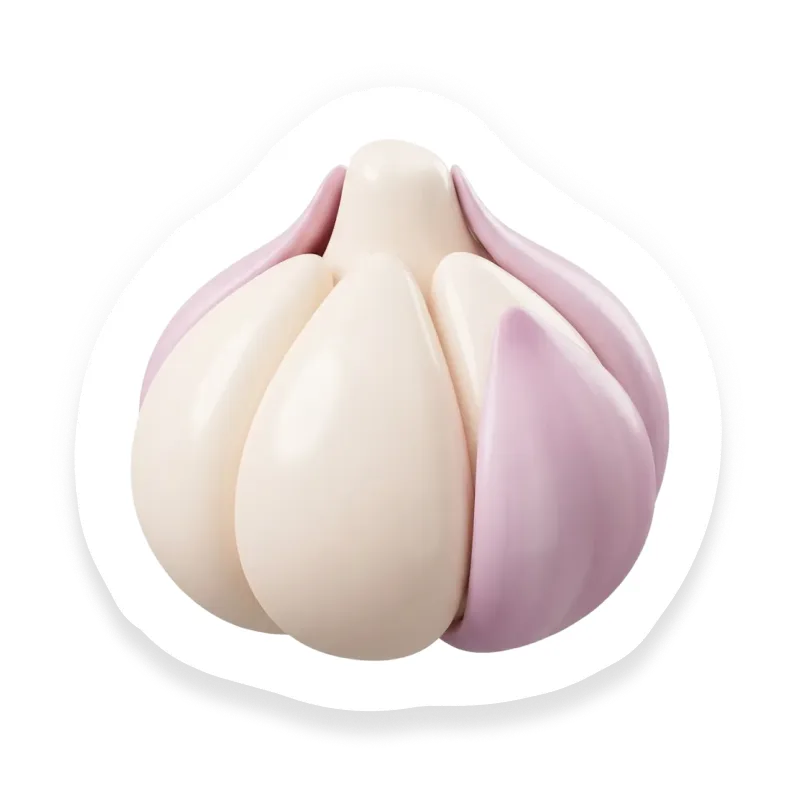
Garlic
Herb/Spice
Is Garlic Safe for Babies?
Yes, garlic can be introduced around 6 months old, preferably cooked and in small quantities, as part of a diverse, age-appropriate solid food diet.
Yes, but there are some things to know
At a Glance
Garlic contains prebiotic inulin fructans that feed good gut bacteria and can help make stools softer and more regular. It also has sulfur compounds like allicin that modulate gut microbes and support a healthier digestive balance.
Is Garlic a Common Allergen?
Garlic is not a common top-9 food allergen and true IgE-mediated allergy is rare. However, some children may develop contact dermatitis, oral allergy syndrome (cross-reactivity with related Allium species like onion), or gastrointestinal upset—especially with raw or concentrated forms. Introduce small cooked amounts after basic solids are tolerated and avoid large amounts in infants; watch for skin, mouth, breathing, or digestive reactions. If there’s a history of plant/pollen allergies or past reactions, consult your pediatrician or an allergist before introducing garlic.
What Nutrients Does Garlic Have?
Garlic supplies baby-friendly nutrients — especially vitamin B6 and vitamin C plus calcium, copper, manganese, phosphorus, and selenium — and contains sulfur-based phytonutrients (like allicin) and natural prebiotics that support gut bacteria. These nutrients and phytonutrients offer antioxidant, anti-inflammatory and immune-supporting benefits and can help feed beneficial gut microbes when garlic is included in small culinary amounts. Large amounts at once may cause gas or stomach upset because of its prebiotic content; typical seasoning amounts are not associated with nutrient toxicity. Avoid unrefrigerated garlic preserved in oil (botulism risk) and introduce small quantities at first since allergic reactions are rare but possible.
Is Garlic a Choking Hazard?
Very Low Choking Risk
Cooked garlic poses a low choking risk for babies, but large pieces of raw garlic can be a choking hazard. Because any food can cause choking, always keep your baby within arm’s reach during meals and watch how they handle bites. If your baby coughs or cannot breathe or cry effectively, respond immediately and seek emergency help.
Have More Questions?
Yes. Garlic can be added to baby foods from around 6 months old to introduce flavors early, and it provides various nutrients beneficial for development.
Yes. Garlic contains essential vitamins and phytonutrients that support a baby’s immune health and gut flora, making it a healthy addition in appropriate cooked forms.
No. Garlic allergy in babies is rare but possible, often linked to other allergies; start with small amounts and observe for reactions.
No. Cooked garlic, when properly prepared, is safe for babies to eat in small, age-appropriate pieces; always supervise during meals.
It depends. Babies can eat garlic once they’re ready for solids, typically around 6 months, but always introduce gradually and observe for digestion or reactions.
Is Garlic safe for your baby?
Get personalized guidance on introducing Garlic — with prep tips, allergen alerts, and age-specific serving ideas.
Sources
- Mennella J & Beauchamp J (1993) The effects of repeated exposure to garlic-flavored milk doi.org
- U.S. Department of Agriculture (2019) Garlic, raw — FoodData Central fdc.nal.usda.gov
- Zhang Y et al. (2020) Phytochemicals of garlic: Promising candidates for cancer therapy doi.org
- Amagase H (2006) Clarifying the real bioactive constituents of garlic doi.org
- Kaur AP et al. (2021) Plant Prebiotics and Their Role in the Amelioration of Diseases doi.org
- Kwak JS et al. (2014) Garlic powder intake and cardiovascular risk factors: a meta-analysis doi.org
- Jeong YY et al. (2016) Comparison of Anti-Oxidant and Anti-Inflammatory Effects between Fresh and Aged Black Garlic Extracts doi.org
- Fedewa A & Rao SS (2014) Dietary fructose intolerance, fructan intolerance and FODMAPs doi.org
- CDC (2019) Botulism Prevention cdc.gov
- Yagami A et al. (2015) Immediate allergy due to raw garlic doi.org
- Ma S & Yin J (2012) Anaphylaxis induced by ingestion of raw garlic doi.org
What Other Herb/Spice Can Babies Eat?
See all →
Backed by Science
Data you can trust.
Every food, guideline, and recommendation in Tummi is sourced from leading health institutions and peer-reviewed research.
 Centers for Disease Control and Prevention
Developmental milestones, nutrition guidelines, and allergen introduction timelines.
 American Academy of Pediatrics
Evidence-based feeding recommendations from the leading pediatric authority.
 National Institutes of Health
Peer-reviewed research on infant nutrition, allergies, and food safety.