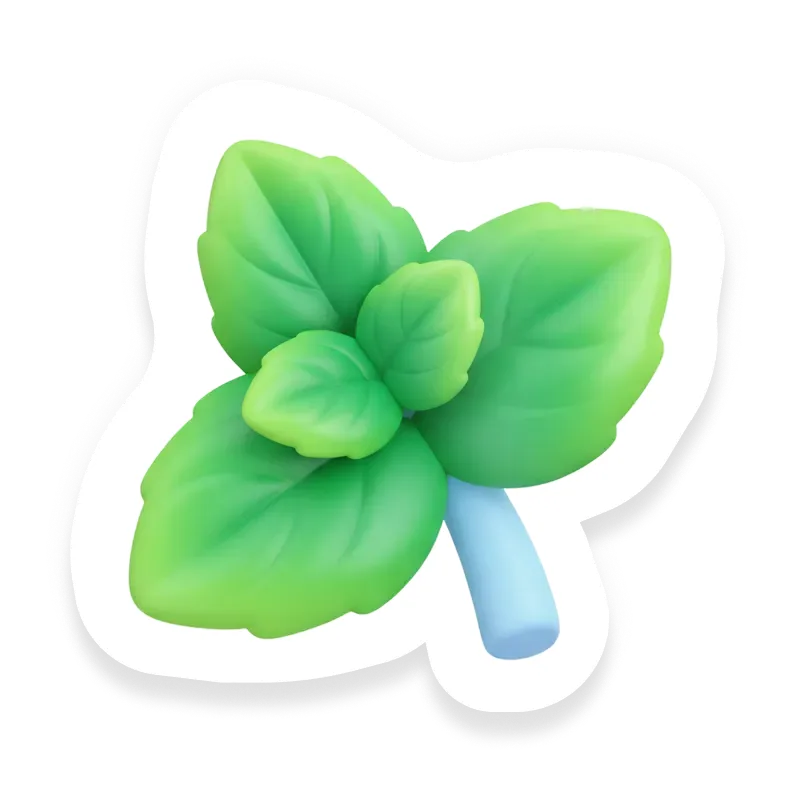
Mint
Herb/Spice
Is Mint Safe for Babies?
Yes, mint can be introduced around 6 months of age when starting solids, as long as it's used in small, diluted amounts.
Yes, but there are some things to know
How Do You Serve Mint?
- 1Wash mint, remove stems, and very finely chop so no leaf fragments remain.
- 2Mix a small amount into soft, scoopable foods like mashed potatoes, yogurt, or large, very soft meatballs or patties. Start with 1/4–1/2 teaspoon per serving and increase only if the baby likes the flavor.
- 3Alternatively, blend mint into sauces or purees and drizzle a tiny amount over food to introduce the taste without fibrous bits.
- 4Keep textures soft and free of leaf pieces; observe for any digestive or allergic reactions and stop use if you notice symptoms.
Is Mint a Common Allergen?
Mint is not a common food allergen, but some people can have contact reactions, oral allergy syndrome, or respiratory symptoms from mint/peppermint. Peppermint oil and concentrated forms can cause skin irritation and may worsen reflux, so avoid essential oils and strong extracts for babies or children with reflux. Watch for rash, swelling, itching, or breathing changes after ingestion or skin contact and seek medical care for any severe reactions.
What Nutrients Does Mint Have?
Mint supplies small amounts of fiber, calcium, iron, folate, vitamin A and vitamin C, plus antioxidant compounds (e.g., menthol, rosmarinic acid). These nutrients support digestion, bone and blood health, immune function, vision, and nervous system development, so adding finely chopped or blended mint can modestly boost micronutrient intake and provide anti-inflammatory benefits. Because mint is normally used in small amounts as an herb, babies are unlikely to get too much, but avoid concentrated oils and introduce gradually while watching for sensitivities to related Lamiaceae plants (e.g., basil, oregano).
Is Mint a Choking Hazard?
Very Low Choking Risk
Mint itself presents a low choking risk for most babies, but whole leaves or larger pieces can stick in the mouth and trigger gagging, coughing, or spitting as infants learn the texture. Gagging is common and not the same as choking, but leaf pieces could, in theory, contribute to an airway obstruction. Stay within arm’s reach and watch closely during meals so you can respond quickly if your baby has trouble breathing.
Have More Questions?
Yes, mint can be used in small amounts as a flavoring in baby foods once they are ready to start solids, around 6 months.
Yes, mint contains antioxidants and vitamins that support a baby's health, but it should be offered in small, age-appropriate portions.
No, mint is not a common allergen, but observe for any sensitivity, especially if the child is sensitive to other herbs in the Lamiaceae family.
No, mint itself is not a choking hazard when prepared properly; avoid large or whole leaves and chop finely if needed.
Yes, mint can be stored in the refrigerator for a few days or frozen in ice cubes for longer storage; use fresh or frozen mint in small quantities.
Is Mint safe for your baby?
Get personalized guidance on introducing Mint — with prep tips, allergen alerts, and age-specific serving ideas.
Sources
What Other Herb/Spice Can Babies Eat?
See all →

Backed by Science
Data you can trust.
Every food, guideline, and recommendation in Tummi is sourced from leading health institutions and peer-reviewed research.
 Centers for Disease Control and Prevention
Developmental milestones, nutrition guidelines, and allergen introduction timelines.
 American Academy of Pediatrics
Evidence-based feeding recommendations from the leading pediatric authority.
 National Institutes of Health
Peer-reviewed research on infant nutrition, allergies, and food safety.