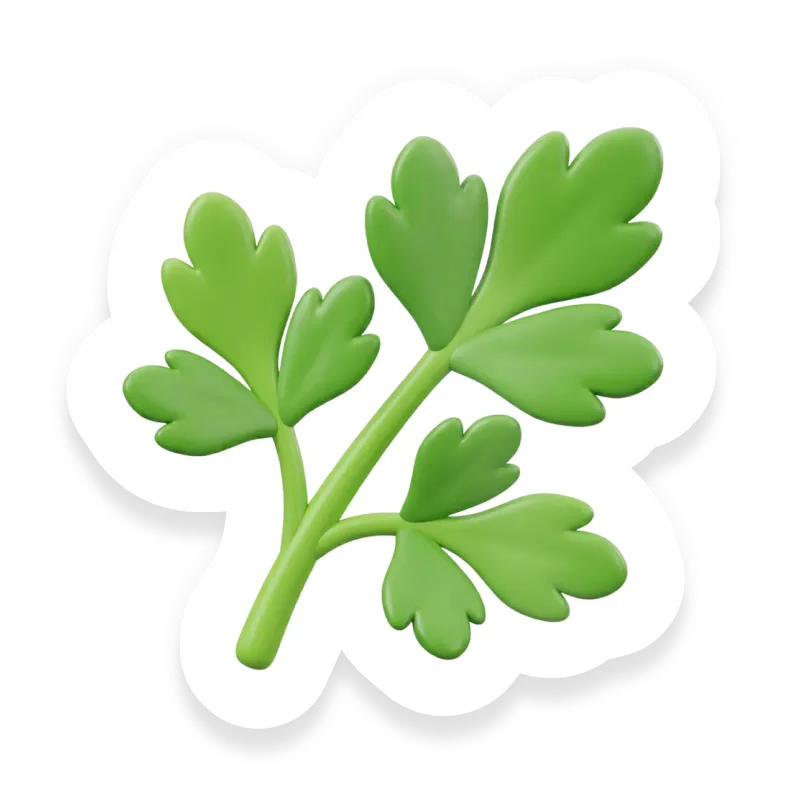
Parsley
Herb/Spice
Is Parsley Safe for Babies?
Yes, parsley can be introduced to babies around 6 months of age as part of a varied diet, used sparingly in cooked dishes or finely chopped for added flavor.
Yes, but there are some things to know
How Do You Serve Parsley?
- 1Finely chop fresh parsley or crumble dried parsley into very small pieces so it blends smoothly into soft purees, mashed foods, or large soft finger foods.
- 2Start with just a small pinch and mix thoroughly so the herb is evenly distributed.
- 3Keep pieces as tiny as possible to reduce choking risk and remove any tough stems before serving.
- 4After offering parsley for the first time, watch closely for any allergic reaction and wait a few days before introducing other new foods.
- 5Do not combine parsley with unknown allergens and avoid adding it to foods with small, hard pieces that could increase choking risk.
Is Parsley a Common Allergen?
Parsley is not a common food allergen and true IgE-mediated allergy is rare. However, people with pollen allergies can experience oral allergy syndrome (itchy/tingly mouth or throat) after eating raw parsley; cooking usually prevents these symptoms. Severe reactions are uncommon but possible—seek medical care for breathing difficulty, swelling, or widespread hives. If your child has seasonal pollen allergies, watch for mouth/throat itching after raw herbs like parsley.
What Nutrients Does Parsley Have?
Parsley is nutrient-dense even in small amounts—especially high in vitamin K, vitamin C, vitamin A (carotenoids), folate, and contains iron, calcium, potassium, fiber and antioxidant compounds like apigenin. For babies these nutrients support bone development (vitamin K), immune and iron absorption (vitamin C), vision/growth (vitamin A) and neural development (folate); adding a little parsley to purees or sauces can boost micronutrients and flavor. Overconsumption is unlikely when used as an herb, but avoid parsley oil and very large amounts because of potential toxic components and note that high vitamin K can affect blood-thinning medications; some people may have oral allergy syndrome or phytophotodermatitis from handling raw parsley. Introduce in small amounts, watch for reactions, and use chopped or blended forms appropriate for baby’s age.
Is Parsley a Choking Hazard?
Very Low Choking Risk
Parsley is generally low risk for choking, but its leaf pieces can stick in a baby’s mouth and trigger gagging or coughing. Stay within arm’s reach and closely supervise the baby when they try it, and ensure caregivers know basic choking-response maneuvers. If gagging or coughing doesn’t resolve quickly or you’re concerned, contact your pediatrician or seek emergency help.
Have More Questions?
Yes. Parsley can be introduced to babies as early as 6 months, once they are ready for solids, and it can be added to purees or soft dishes.
Yes. Parsley is healthy for babies as it provides vitamins, minerals, and beneficial plant compounds that support overall development and immune function.
No. Parsley's allergy prevalence is low, but some children with pollen allergies may react; start with small amounts and watch for reactions.
No. Parsley poses a low choking risk if prepared appropriately; chopping it finely or blending reduces the risk.
It depends. Start with small, manageable portions and observe how your baby responds to new foods, gradually increasing as they show interest and tolerance.
Is Parsley safe for your baby?
Get personalized guidance on introducing Parsley — with prep tips, allergen alerts, and age-specific serving ideas.
Sources
- Effect of parsley (Petroselinum crispum) intake on urinary apigenin excretion, blood antioxidant enzymes and biomarkers for oxidative stress in human subjects (Nielsen et al., 1999) doi.org
- A Cases of Near-fatal Anaphylaxis: Parsley 'Over-use' as an Herbal Remedy (Arslan et al., 2014) doi.org
- Oral Allergy Syndrome (American Academy of Allergy Asthma & Immunology) aaaai.org
What Other Herb/Spice Can Babies Eat?
See all →
Backed by Science
Data you can trust.
Every food, guideline, and recommendation in Tummi is sourced from leading health institutions and peer-reviewed research.
 Centers for Disease Control and Prevention
Developmental milestones, nutrition guidelines, and allergen introduction timelines.
 American Academy of Pediatrics
Evidence-based feeding recommendations from the leading pediatric authority.
 National Institutes of Health
Peer-reviewed research on infant nutrition, allergies, and food safety.