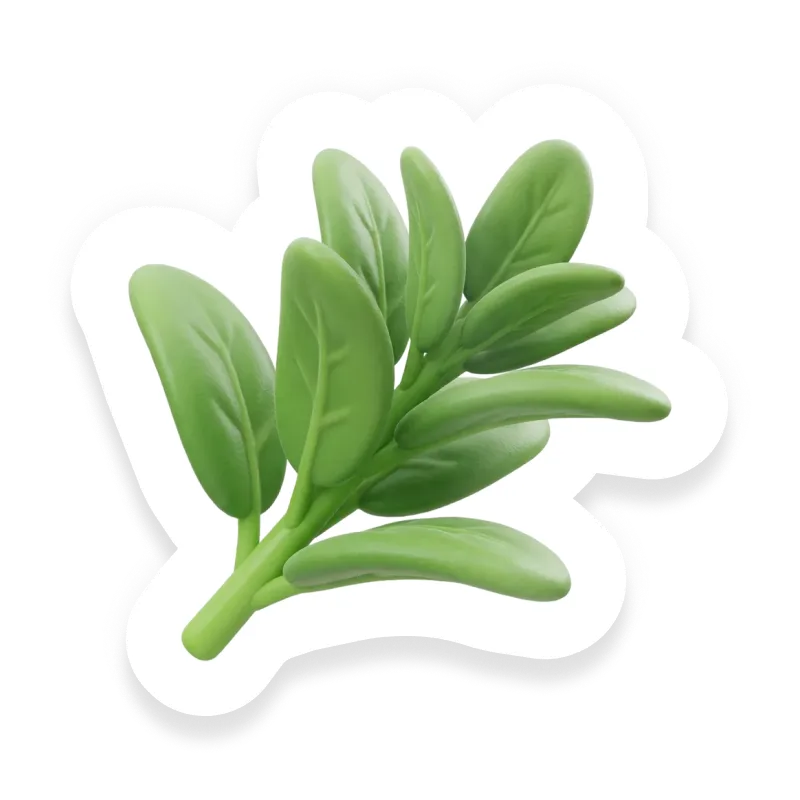
Sage
Herb/Spice
Is Sage Safe for Babies?
Yes, sage can be introduced around 6 months of age when starting solids, in small, well-cooked, or pureed amounts.
Yes, but there are some things to know
How Do You Serve Sage?
- 1Preparation: Rinse fresh sage, remove thick stems, and finely chop until very small; if using dried, start with a pinch (about 1/8 tsp).
- 2Cooking: Add chopped or powdered sage early in cooking so the flavor mellows—stir into purees, sauces, or stews and simmer 5–10 minutes.
- 3Serving and texture: Mix into mashed vegetables, soft pasta, or shredded tender poultry. Ensure no whole leaves remain to avoid choking.
- 4Amounts & storage: Use sparingly—herbs are potent—taste before serving and store leftovers in a sealed container in the fridge up to 48 hours.
Is Sage a Common Allergen?
Sage is not a common food allergen and is generally safe in the small amounts used in cooking; however, rare allergic reactions have been reported and sage can cause allergic contact dermatitis in sensitive people. Avoid using concentrated sage products (essential oils or extracts) in infants and on broken skin. When giving foods containing sage, be mindful of cross-contamination with common allergens (nuts, dairy, soy, etc.) in prepared foods. If your child has a history of severe allergies, check ingredient lists and consult your pediatrician before offering new herbs.
What Nutrients Does Sage Have?
Sage eaten in typical culinary amounts provides modest amounts of micronutrients—notably vitamin K (which is relatively high), plus small amounts of calcium, iron, folate, vitamin B6, fiber and antioxidant compounds. These nutrients offer minor nutritional benefits (supporting clotting, bone health and general micronutrient intake) and antioxidant/anti‑inflammatory effects, but benefits are limited because herbs are consumed in small quantities. Avoid concentrated forms (supplements, essential oils, or sage tea) and check with a clinician if your child takes blood‑thinning medication, since vitamin K and certain sage compounds can cause interactions or toxicity if consumed in excess.
Is Sage a Choking Hazard?
Very Low Choking Risk
Sage is generally a low choking risk when offered appropriately for a baby’s developmental stage, but its leaves can stick to the inside of the mouth and provoke gagging or coughing as infants learn to manage the texture. Expect lots of spitting and brief gagging while babies adjust. Always supervise closely and stay within arm’s reach during meals, and make sure caregivers know the signs of choking and how to respond.
Have More Questions?
Yes, sage can be introduced to babies around 6 months when they start solids.
Yes, in typical culinary amounts, sage is generally safe for babies. Avoid sage supplements, teas, or essential oils, as they can be unsafe and are not well-studied in infants.
Yes, sage provides some nutrients like vitamin K, calcium, and folate, and may have antioxidant properties. Use small amounts in foods to avoid overwhelming your baby’s system.
No, sage is not a common allergen, but allergic reactions can occur. Always wash hands after handling and start with small amounts when introducing sage to your baby.
No, sage is not a choking hazard if prepared properly for babies. Serve in age-appropriate, small, finely chopped pieces, and supervise during meals.
Is Sage safe for your baby?
Get personalized guidance on introducing Sage — with prep tips, allergen alerts, and age-specific serving ideas.
Sources
- 21 CFR Part 182 -- Substances Generally Recognized as Safe (eCFR) ecfr.gov
- Determination of the biologically active flavour substances thujone and camphor in foods and medicines containing sage (Walch et al., 2011) pmc.ncbi.nlm.nih.gov
- Toxicity of Salvia officinalis in a newborn and a child (Halicioglu et al., 2011) pubmed.ncbi.nlm.nih.gov
- New Insights into the Antioxidant and Anti-Inflammatory Effects of Italian Salvia officinalis (Brindisi et al., 2021) mdpi.com
- Anaphylaxis following sage ingestion (Unkle et al., 2012) pubmed.ncbi.nlm.nih.gov
- Immunological and respiratory findings in spice-factory workers (Zuskin et al., 1988) pubmed.ncbi.nlm.nih.gov
- Allergic contact dermatitis caused by Salvia officinalis extract (Mayer et al., 2011) pubmed.ncbi.nlm.nih.gov
- Salviae officinalis folium - European Union herbal monograph (HMPC, 2016) ema.europa.eu
What Other Herb/Spice Can Babies Eat?
See all →
Backed by Science
Data you can trust.
Every food, guideline, and recommendation in Tummi is sourced from leading health institutions and peer-reviewed research.
 Centers for Disease Control and Prevention
Developmental milestones, nutrition guidelines, and allergen introduction timelines.
 American Academy of Pediatrics
Evidence-based feeding recommendations from the leading pediatric authority.
 National Institutes of Health
Peer-reviewed research on infant nutrition, allergies, and food safety.