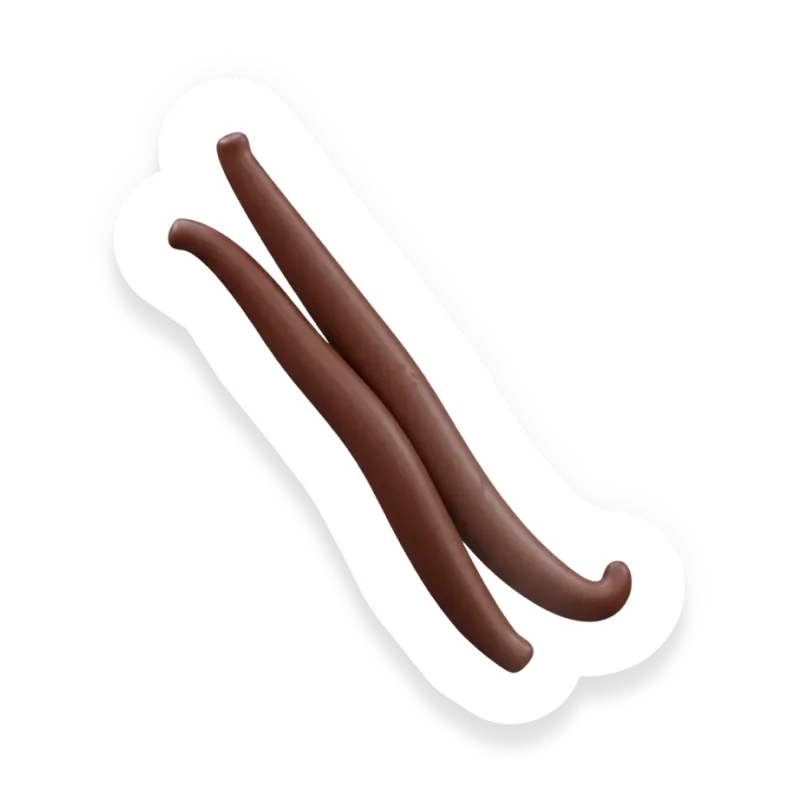
Vanilla
Herb/Spice
Is Vanilla Safe for Babies?
Yes, vanilla can be introduced around 6 months when starting solids, typically used as a flavor in cooking or baking in small amounts.
Yes, but there are some things to know
How Do You Serve Vanilla?
- 1Add a very small amount of vanilla extract or the tiny scraped seeds from a vanilla bean to soft, spoonable foods and baked breakfasts (pancakes, waffles, muffins, porridge) to gently introduce the flavor.
- 2Use vanilla extract or scraped seeds only; do not give whole vanilla pods because they are a choking hazard.
- 3Ensure foods are very soft, mashed, or cut into small, manageable pieces and appropriate for your baby's chewing ability, and stay within arm’s reach while they eat.
- 4Offer vanilla-flavored or sweetened treats only occasionally so there’s room for a variety of nourishing foods and to protect oral health.
Is Vanilla a Common Allergen?
This vanilla item is not flagged for common allergens—no dairy, eggs, nuts (including peanuts), soy, gluten, sesame, shellfish, or fish. However, parents of children with severe allergies should always check the product label and any manufacturing allergen statements for possible cross-contact. If there is any doubt, contact the manufacturer or choose a certified allergen-free alternative.
What Nutrients Does Vanilla Have?
Vanilla is used mainly for flavor and provides negligible calories, protein, fat, fiber, or iron; it is not a meaningful source of essential nutrients for babies. The bean and extract contain trace minerals and plant compounds (notably vanillin) with antioxidant and anti-inflammatory properties, but amounts used in food are too small to deliver significant nutritional benefit. Vanilla extract can contain alcohol—cook foods to reduce alcohol exposure and keep bottles away from children—and whole vanilla pods pose a choking risk. In short: safe in typical culinary amounts but not a significant nutrient source, so offer for flavor rather than nutrition.
Is Vanilla a Choking Hazard?
Very Low Choking Risk
Whole vanilla pods (or pieces of pod) are small, firm items that can pose a choking hazard for babies, so they shouldn’t be left in foods for infants. Vanilla extracts and powders themselves are low choking risks, but the texture of the food they flavor can still cause choking. Always stay within arm’s reach and closely supervise babies during meals.
Have More Questions?
Yes. Vanilla can be introduced to babies around 6 months old when they start solids, as it is generally safe and well-tolerated in small amounts.
Yes. Vanilla extract is safe in typical cooking amounts; however, opt for alcohol-free options or thoroughly cook foods with vanilla to minimize alcohol exposure.
Yes. Vanilla contains plant compounds with potential anti-inflammatory and antioxidant properties, and can be safely included in a balanced diet for babies in small quantities.
No. Vanilla allergies are uncommon, but contact or ingestion may cause rashes or skin reactions; start with small amounts to check for sensitivities.
It can be. Whole vanilla pods pose a choking risk due to their firmness, so avoid serving whole pods to babies and always serve vanilla-seasoned foods in age-appropriate forms.
Is Vanilla safe for your baby?
Get personalized guidance on introducing Vanilla — with prep tips, allergen alerts, and age-specific serving ideas.
Sources
- U.S. Food & Drug Administration — Generally Recognized as Safe (GRAS) fda.gov
- National Capital Poison Center — Kitchen Surprises and Cautions poison.org
- Ilić et al., 2014 — Anti-inflammatory activity (J. Agric. Food Chem.) doi.org
- Arya et al., 2021 — Vanillin: a review (Advances in Traditional Medicine) link.springer.com
- World Health Organization — Guideline for complementary feeding (6–23 months) who.int
- Fidler Mis et al., 2017 — Sugar in Infants, Children and Adolescents (ESPGHAN position paper) doi.org
- Ferguson & Beck, 1995 — Contact sensitivity to vanilla (Contact Dermatitis) pubmed.ncbi.nlm.nih.gov
- Kanny et al., 1994 — Allergy and intolerance to flavouring agents (Allergie et Immunologie) pubmed.ncbi.nlm.nih.gov
- American Academy of Allergy, Asthma & Immunology — Allergy information (spices and allergic reactions) aaaai.org
What Other Herb/Spice Can Babies Eat?
See all →
Backed by Science
Data you can trust.
Every food, guideline, and recommendation in Tummi is sourced from leading health institutions and peer-reviewed research.
 Centers for Disease Control and Prevention
Developmental milestones, nutrition guidelines, and allergen introduction timelines.
 American Academy of Pediatrics
Evidence-based feeding recommendations from the leading pediatric authority.
 National Institutes of Health
Peer-reviewed research on infant nutrition, allergies, and food safety.