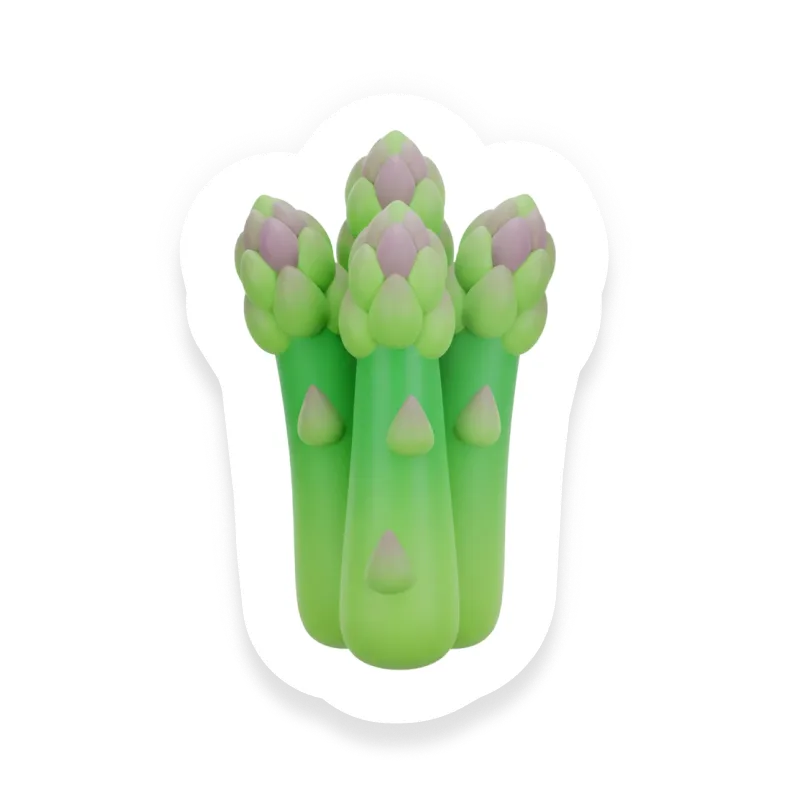
Asparagus
Vegetable
Is Asparagus Safe for Babies?
Yes, asparagus can be introduced around 6 months of age when your baby is ready for solids, prepared in an age-appropriate, soft, and easy-to-chew form.
Yes, but there are some things to know
At a Glance
Asparagus is high in fiber and contains inulin, a natural prebiotic that feeds gut bacteria. These fibers and its water content help soften stool and support regular digestion.
How Do You Serve Asparagus?
- 1Trim the woody ends (about 1–2 inches) before cooking so the baby won’t encounter tough, stringy bits.
- 2Choose a method that softens while keeping shape: roast at 400°F for 10–15 minutes, grill 6–8 minutes, sauté 4–6 minutes, or steam until a fork slides in easily. Avoid overcooking so the spear stays easy to grasp.
- 3Serve a whole spear with the tip intact to encourage grasping and self-feeding; confirm it’s soft enough that a fork pierces easily and let it cool to a lukewarm temperature before offering.
- 4Always supervise during meals, inspect for any remaining tough fibers and remove them, and only cut into strips if the spear is still too firm to mash with light pressure.
Is Asparagus a Common Allergen?
Asparagus is not a common top-9 allergen and is usually well tolerated, but people with pollen allergies (especially birch) can get oral allergy syndrome — itching or tingling in the mouth/throat — more with raw vegetables. Cooking generally reduces this risk, so introduce asparagus to infants well-cooked and pureed and watch closely for choking. True asparagus allergy and rare severe reactions have been reported; stop feeding and seek medical care for hives, swelling, vomiting, wheeze, or breathing difficulty. Also check how asparagus is prepared—added butter, cheese, sauces, or coatings can introduce dairy, soy, gluten, or nut allergens.
What Nutrients Does Asparagus Have?
Asparagus is a nutrient-dense first food for babies—especially rich in folate (supports cell growth), vitamin B6 (helps metabolize protein and carbs), plant-based iron, vitamin A/antioxidants, and prebiotic fiber (supports digestion and the microbiome). These nutrients support growth, brain development, and gut health, but asparagus can cause gas or intestinal discomfort in some infants due to fermentable sugars and fiber, so introduce it slowly and in small amounts. There’s no toxicity risk from asparagus itself, though rare allergies exist—watch for reactions and serve age-appropriate textures to reduce choking risk.
Is Asparagus a Choking Hazard?
Moderate Choking Risk
Asparagus can be a choking hazard because its cylindrical shape and fibrous texture make it tough to chew, and small pieces may be easy for a baby to swallow whole. Babies can gag or choke while exploring this food, so stay within arm’s reach and watch closely during meals. Be prepared to respond to gagging or choking and consider getting infant choking first-aid training.
Have More Questions?
Yes. Asparagus can be introduced to babies around 6 months when they start solids, provided it's prepared appropriately.
Yes. Asparagus is healthy for babies, offering vitamins, fiber, and antioxidants, but should be introduced gradually to monitor digestion.
No. Allergies to asparagus are rare, but some sensitivities exist, especially in those sensitive to the Liliaceae family plants.
Yes. Asparagus is a cylindrical vegetable and can be a choking hazard if not prepared well; always serve in manageable, age-appropriate sizes.
Yes. Eating asparagus can cause a strong urine odor in some babies, due to sulfur compounds, but this effect varies among individuals.
Is Asparagus safe for your baby?
Get personalized guidance on introducing Asparagus — with prep tips, allergen alerts, and age-specific serving ideas.
Sources
- Trends and nutritional significance of mineral content in fresh white asparagus spears doi.org
- Quantification of protodioscin and rutin in asparagus shoots by LC/MS and HPLC methods doi.org
- Antioxidation Capacities of Extracts from Green, Purple, and White Asparagus Spears Related to Polyphenol Concentration doi.org
- Foods Likely to Cause Gas - International Foundation for Gastrointestinal Disorders iffgd.org
- Should you be avoiding fructans? - Ohio State Health health.osu.edu
- Diversity of asparagus allergy: Clinical and immunological features doi.org
- Asparagus, Urinary Odor, and 1,2-Dithiolane-4-Carboxylic Acid doi.org
- A polymorphism of the ability to smell urinary metabolites of asparagus doi.org
What Other Vegetable Can Babies Eat?
See all →
Backed by Science
Data you can trust.
Every food, guideline, and recommendation in Tummi is sourced from leading health institutions and peer-reviewed research.
 Centers for Disease Control and Prevention
Developmental milestones, nutrition guidelines, and allergen introduction timelines.
 American Academy of Pediatrics
Evidence-based feeding recommendations from the leading pediatric authority.
 National Institutes of Health
Peer-reviewed research on infant nutrition, allergies, and food safety.