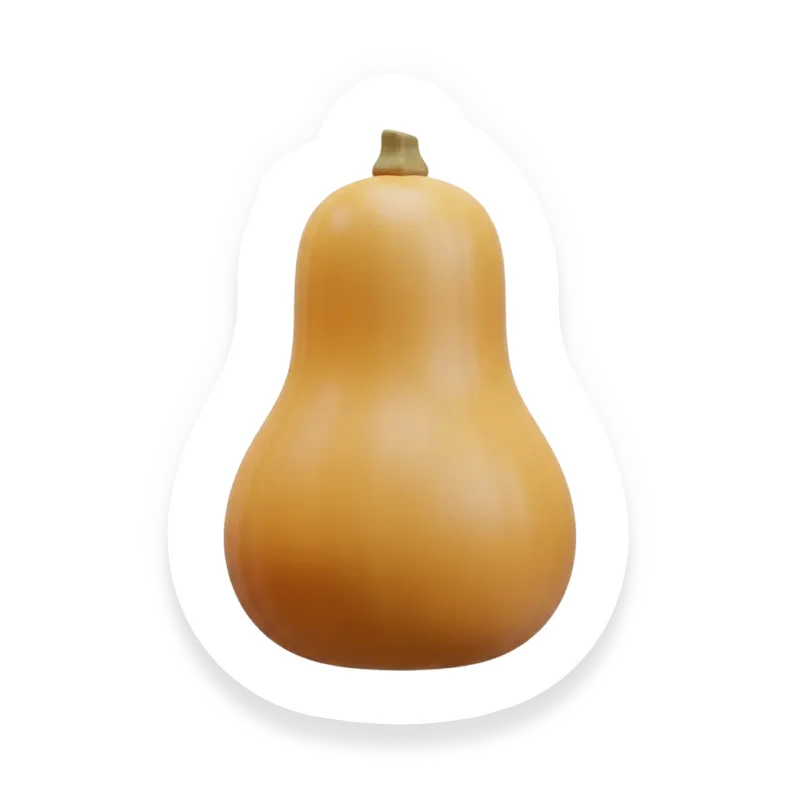
Butternut Squash
Vegetable
Is Butternut Squash Safe for Babies?
Yes, butternut squash can be introduced around 6 months when baby is ready for solids, prepared as a soft, cooked puree.
Yes, but there are some things to know
At a Glance
Butternut squash is gentle on the belly and is high in fiber, which helps keep bowel movements regular. Its fiber, water and carotenoids add bulk and gentle moisture, supporting digestive health.
How Do You Serve Butternut Squash?
- 1Cook squash until very soft; remove seeds and any tough skin, then mash or cut into large crescent-shaped pieces that baby can grasp.
- 2Offer pieces large enough to hold but soft enough to be easily squashed between gums — test by pressing with a fork before serving.
- 3For spoon-feeding, pre-load the spoon with smooth mashed squash that has only tiny, soft lumps so it's easy to swallow.
- 4Always supervise within arm's reach and stay calm if a piece breaks off; allow baby to work it forward with their fingers and only intervene if it blocks breathing.
- 5Let squash cool to a warm (not hot) temperature and serve small amounts to reduce choking risk.
Is Butternut Squash a Common Allergen?
Butternut squash is not a common food allergen and is generally safe for babies and children. Rarely it can cause contact dermatitis or oral allergy symptoms in people with pollen sensitivities, and true IgE‑mediated reactions are uncommon. Introduce it as a single new food and watch for hives, swelling, vomiting, or breathing difficulty; stop feeding and seek medical care if these occur. As with any new food, introduce slowly and monitor for a couple of days before offering other new foods.
What Nutrients Does Butternut Squash Have?
Butternut squash is rich in provitamin A (beta‑carotene) which supports vision and immune development, and provides vitamin C (helps iron absorption), fiber (supports healthy digestion), plus B vitamins, vitamin E and potassium. It is low in iron and protein, so pair servings with iron-rich foods (e.g., beans, meat, fortified cereals) to meet infants' needs. Eating very large amounts of carotenoid-rich foods may cause benign carotenemia (yellowing of the skin) but does not cause toxic vitamin A exposure from provitamin A in squash.
Is Butternut Squash a Choking Hazard?
Low Choking Risk
Cooked butternut squash is generally a low choking risk for babies, though any food can pose a hazard in rare cases. Always supervise meals closely—stay within an arm’s reach—and make sure you know the signs of choking versus gagging and how to respond with infant choking first aid.
Have More Questions?
Yes. Butternut squash can be stored in an airtight container in the refrigerator for up to 3 days or frozen for longer storage. Proper storage helps maintain freshness and nutritional value.
Yes. Freezing pureed butternut squash is a great way to prepare in bulk and use later. Store cooled purees in freezer-safe containers for up to 3 months.
It depends. Choosing organic butternut squash reduces exposure to pesticides but isn't strictly necessary. Wash non-organic squash thoroughly before cooking to reduce residues.
Yes. Combining butternut squash with other mild-flavored foods, like apples or carrots, can introduce new flavors and textures for your baby.
It depends. Portion sizes vary based on your baby’s age and appetite. Start with 1-2 tablespoons and adjust as your baby gets used to the new food.
Is Butternut Squash safe for your baby?
Get personalized guidance on introducing Butternut Squash — with prep tips, allergen alerts, and age-specific serving ideas.
Sources
What Other Vegetable Can Babies Eat?
See all →
Backed by Science
Data you can trust.
Every food, guideline, and recommendation in Tummi is sourced from leading health institutions and peer-reviewed research.
 Centers for Disease Control and Prevention
Developmental milestones, nutrition guidelines, and allergen introduction timelines.
 American Academy of Pediatrics
Evidence-based feeding recommendations from the leading pediatric authority.
 National Institutes of Health
Peer-reviewed research on infant nutrition, allergies, and food safety.