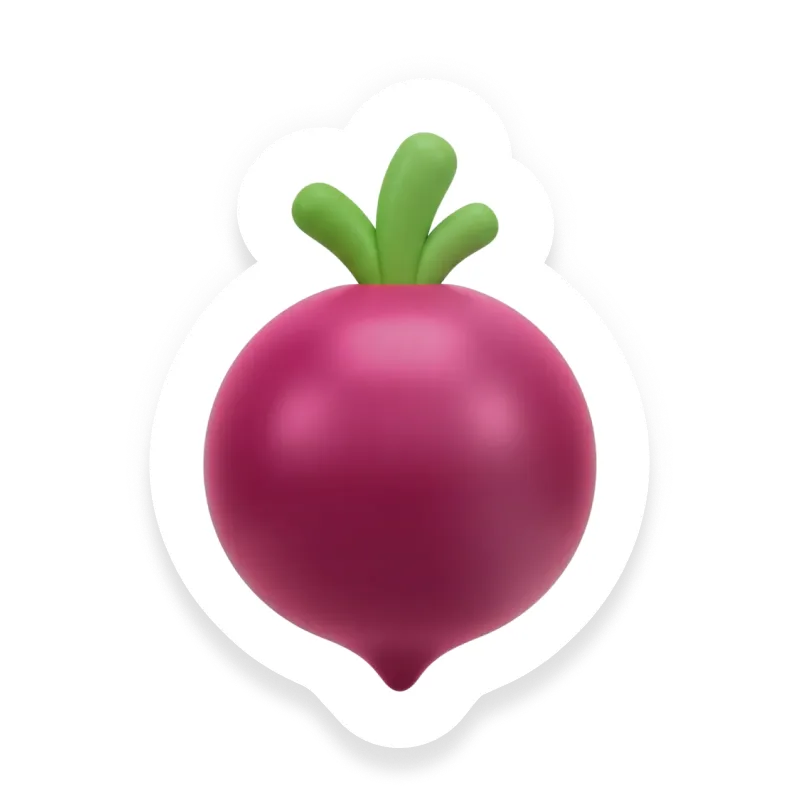
Beet (Beetroot)
Vegetable
Is Beet (Beetroot) Safe for Babies?
Yes, beets can be introduced around 6 months of age, prepared in an age-appropriate way like cooked or pureed to ensure safety and digestibility.
Yes, but there are some things to know
At a Glance
Beets are high in fiber, which adds bulk to stool and feeds friendly gut bacteria to help keep bowels regular. They also contain betalain pigments and antioxidants that reduce gut inflammation and support healthy digestion.
How Do You Serve Beet (Beetroot)?
- 1Cook the whole beet until very soft — it should mash easily when pressed between your thumb and finger.
- 2Peel and discard the skin, then mash or cut into a large half, thick wedges, or long strips so the baby can grasp and practice taking bites safely.
- 3Serve a large half or whole beet to encourage self‑feeding and chewing. Always supervise closely and check the beet is cool enough before offering.
- 4Do not add salt, sugar, or honey; refrigerate leftovers and use within 48 hours.
Is Beet (Beetroot) a Common Allergen?
Beet (beetroot) is not a common food allergen for most children, but rare allergic reactions including skin rashes and mouth/throat itching have been reported. People with pollen‑food (oral allergy) syndrome—especially sensitized to certain pollens such as Parietaria—may develop mild oral symptoms after eating raw beets. Also check how beets are prepared, since salads or dressings can include common allergens (dairy, nuts, sesame) or cause cross-contamination. If a child develops hives, swelling, difficulty breathing, or severe abdominal symptoms after eating beets, seek medical care promptly.
What Nutrients Does Beet (Beetroot) Have?
Beets are low‑calorie but nutrient-dense — good sources of fiber, folate, vitamin C, potassium, manganese and small amounts of iron, nutrients that support growth, digestion, immunity and red‑blood‑cell development. Folate is particularly important for rapidly growing infants and vitamin C helps with non‑heme iron absorption when beets are offered with other iron sources. Because beets are high in naturally occurring nitrates and fiber, serve them cooked and in moderation as part of a varied diet rather than large daily portions. Beet greens are even richer in some vitamins and minerals and can be included cooked when age‑appropriate.
Is Beet (Beetroot) a Choking Hazard?
Low Choking Risk
Beets can be a choking hazard because they’re firm and slippery, especially when raw or undercooked. This makes them riskier for younger babies or any infant still learning to chew and coordinate swallowing. Stay within arm’s reach and make sure caregivers recognize choking/gagging signs and know basic infant choking first aid.
Have More Questions?
It depends. Beets can be stored in a sealed container in the refrigerator for up to 3-5 days, but for longer storage, freezing cooked purees is recommended.
It depends. You can freeze cooked beet purees in small portions for up to 3 months, but make sure they are cooled thoroughly before freezing and use airtight containers.
It depends. When choosing beets for your baby, opt for organic if possible to reduce exposure to pesticides, but conventional beets are also safe and nutritious.
It depends. Combining beets with other baby-friendly foods can introduce new flavors and nutrients, but avoid mixing too many ingredients at once when introducing new flavors.
It depends. Standard portion sizes for babies are about 1-2 tablespoons of puree per meal, but always adjust based on your child's appetite and developmental stage.
Is Beet (Beetroot) safe for your baby?
Get personalized guidance on introducing Beet (Beetroot) — with prep tips, allergen alerts, and age-specific serving ideas.
Sources
- Anaphylaxis to beetroot (Beta vulgaris): a case report pmc.ncbi.nlm.nih.gov
- NITRATE IN LEAFY GREEN VEGETABLES AND ESTIMATED INTAKE pmc.ncbi.nlm.nih.gov
- AAP clinical report on infant methemoglobinemia (Preboth, 2005) aafp.org
- Infant Methemoglobinemia: The Role of Dietary Nitrate scispace.com
- EFSA explains risk assessment: nitrites and nitrates added to food efsa.europa.eu
What Other Vegetable Can Babies Eat?
See all →

Backed by Science
Data you can trust.
Every food, guideline, and recommendation in Tummi is sourced from leading health institutions and peer-reviewed research.
 Centers for Disease Control and Prevention
Developmental milestones, nutrition guidelines, and allergen introduction timelines.
 American Academy of Pediatrics
Evidence-based feeding recommendations from the leading pediatric authority.
 National Institutes of Health
Peer-reviewed research on infant nutrition, allergies, and food safety.