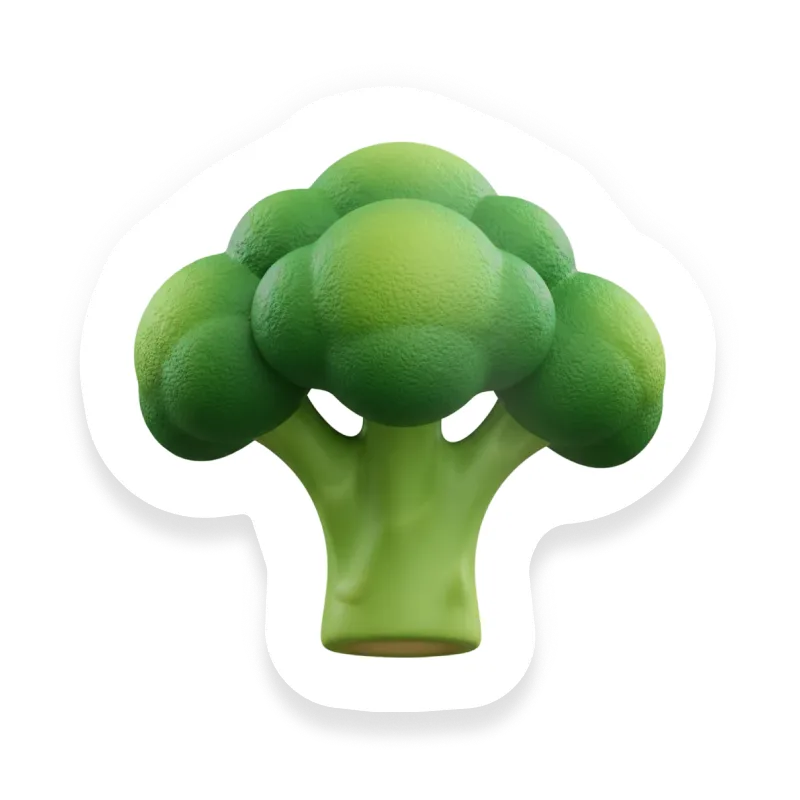
Broccoli
Vegetable
Is Broccoli Safe for Babies?
Yes, broccoli can be introduced at around 6 months when babies are ready for solids, prepared until soft for safe eating.
Yes, but there are some things to know
At a Glance
Broccoli is high in fiber and has water and resistant starch that help soften stools and make bowel movements more regular. Broccoli's prebiotic fibers and plant compounds support healthy digestion by feeding good gut bacteria.
How Do You Serve Broccoli?
- 1Peel tough skin from stalks and trim into small florets or rectangular sticks about the thickness and length of two adult fingers.
- 2Steam pieces until very soft and fork-tender so they can be mashed easily with the baby's gums.
- 3Offer a whole soft floret or a stick your baby can hold and mash; always keep the baby seated upright and closely supervised while eating.
- 4If any piece is still firm, slice the stem lengthwise to flatten the round shape or mash/finely chop it so your baby can scoop and swallow safely.
Is Broccoli a Common Allergen?
Broccoli is not a common allergen, but raw cruciferous vegetables (including broccoli) can cause oral allergy syndrome in people with pollen allergies, producing itching or tingling in the mouth or throat. Cooking reduces that risk and makes broccoli easier to digest for infants—introduce in small, well-cooked and pureed or mashed portions and watch for hives, vomiting, swelling, or breathing problems. Also check how broccoli is prepared, since added ingredients (cheese, butter, sauces, nuts, or sesame) may contain common allergens.
What Nutrients Does Broccoli Have?
Broccoli provides vitamin C, vitamin A (beta‑carotene), folate and vitamin B6 for growth and brain development, plus fiber, potassium and small amounts of iron and calcium; it’s also rich in sulforaphane, a beneficial phytochemical. For babies, vitamin C helps iron absorption, folate/B6 support development, and the fiber supports healthy digestion. Normal servings are safe—broccoli won’t cause nutrient toxicity, though introduce it gradually to monitor gas or mild digestive upset and watch for rare sensitivities.
Is Broccoli a Choking Hazard?
Low Choking Risk
Broccoli can be a choking hazard if pieces are firm—raw or undercooked florets increase that risk. Stay within an arm’s reach during meals and watch closely for signs of choking or gagging so you can respond immediately. If your baby struggles with pieces, pause and adjust what you offer to match their chewing ability, and make sure you know infant choking first aid.
Have More Questions?
Yes. Parents can store cooked broccoli in an airtight container in the refrigerator for up to 3-4 days, ensuring it remains safe and fresh for baby.
Yes. Pureed or chopped broccoli can be frozen in freezer-safe bags or containers for up to 3 months, making meal prep convenient while retaining most nutrients.
It depends. Organic broccoli is free from synthetic pesticides, but conventional broccoli is also safe; washing thoroughly is key regardless of its organic status.
Yes. Combining broccoli with other baby-friendly foods like sweet potatoes or grains can create balanced meals that introduce babies to new flavors and textures.
It depends. Typical portion sizes for babies begin at 1-2 tablespoons of cooked, chopped, or pureed broccoli per meal, adjusting as they grow and build eating skills.
Is Broccoli safe for your baby?
Get personalized guidance on introducing Broccoli — with prep tips, allergen alerts, and age-specific serving ideas.
Sources
- Effects of domestic cooking on flavonoids in broccoli and calculation of retention factors (Wu et al., Heliyon, 2019) doi.org
- Mugwort-Mustard Allergy Syndrome due to Broccoli Consumption (Sugita et al., Case Reports in Dermatological Medicine, 2016) doi.org
- The safety of cruciferous plants in humans: a systematic review (Scott et al., Journal of Biomedicine & Biotechnology, 2012) doi.org
- Brassica oleracea pollen, a new source of occupational allergens (Hermanides et al., Allergy, 2006) doi.org
What Other Vegetable Can Babies Eat?
See all →

Backed by Science
Data you can trust.
Every food, guideline, and recommendation in Tummi is sourced from leading health institutions and peer-reviewed research.
 Centers for Disease Control and Prevention
Developmental milestones, nutrition guidelines, and allergen introduction timelines.
 American Academy of Pediatrics
Evidence-based feeding recommendations from the leading pediatric authority.
 National Institutes of Health
Peer-reviewed research on infant nutrition, allergies, and food safety.