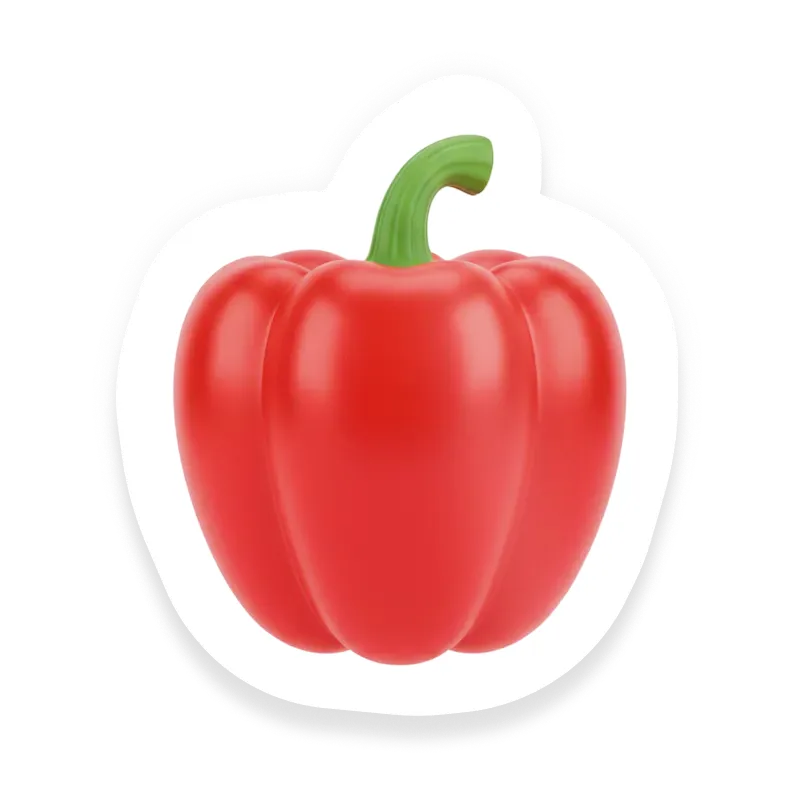
Bell Pepper
Vegetable
Is Bell Pepper Safe for Babies?
Yes, bell peppers can be introduced to babies around 6 months old, cooked and cut into age-appropriate pieces to reduce choking hazards.
Yes, but there are some things to know
At a Glance
Bell peppers are mostly water and provide fiber, so their high water content and good fiber source help soften stool and support regular bowel movements. They also supply vitamin C and antioxidants that help keep the digestive tract healthy.
How Do You Serve Bell Pepper?
- 1Cook the pepper until soft—roast, steam, or sauté—so pieces are easy to gum and swallow.
- 2Cut into a half or long strip and remove the stem, white pith, and all seeds to eliminate choking hazards.
- 3Leave the skin on unless it feels tough. Peeling helps some babies handle the texture more easily.
- 4For very young or unsure feeders, mash or puree cooked peppers, or use jarred roasted peppers; store cooked peppers in the fridge up to 3 days.
Is Bell Pepper a Common Allergen?
Bell peppers are not a common top-9 allergen and are generally safe for most children. Some individuals with pollen allergies may experience oral allergy syndrome (itching or mild swelling of the mouth/throat) after eating raw peppers. Rarely, peppers can cause contact dermatitis or true food allergy; watch for hives, vomiting, swelling, or breathing difficulties and seek emergency care for severe reactions. Introduce gradually to infants and monitor for any adverse signs.
What Nutrients Does Bell Pepper Have?
Bell peppers are low‑calorie but nutrient-dense—especially high in vitamin C (red peppers are a very rich source), plus vitamin A (beta‑carotene), B6, folate, vitamin E and fiber. For babies these nutrients support immunity and collagen formation, boost absorption of nonheme iron when served with iron-rich foods, aid vision and brain development, and help healthy digestion. Excess from normal food is unlikely, but large amounts may cause gas from the fiber and very high vitamin C intake (usually from supplements, not food) can cause loose stools, so offer age-appropriate portions and pair peppers with iron-rich foods.
Is Bell Pepper a Choking Hazard?
Moderate Choking Risk
Raw bell pepper can be a choking hazard because its firm, slippery texture is hard for babies to manage and they may bite off pieces that obstruct the airway. Be especially vigilant as your child develops biting skills—stay within arm’s reach and watch closely during meals. Know the signs of choking and gagging and have an infant/child choking first-aid plan in place.
Have More Questions?
Yes, you can store cooked or pureed bell peppers in an airtight container in the refrigerator for up to 48 hours. For longer storage, freeze in ice cube trays and transfer to a zip-top bag.
It depends. Bell peppers can be frozen, but for best texture and flavor, it's recommended to blanch and peel them before freezing, especially if serving as finger foods.
Yes, choosing organic bell peppers can reduce your baby's exposure to pesticides, but conventional ones are also safe if washed thoroughly.
It depends. Combining bell peppers with other vegetables or fruits can diversify flavors and nutrients, but introduce new foods separately to monitor for reactions.
It depends. Typical portion sizes for babies vary, but start with a few teaspoons of pureed or small pieces and adjust based on your child's appetite and age.
Is Bell Pepper safe for your baby?
Get personalized guidance on introducing Bell Pepper — with prep tips, allergen alerts, and age-specific serving ideas.
Sources
- Bell Pepper Allergy: Different Sensitization Profiles (Callero et al., 2018) doi.org
- Anaphylactic reaction to bell pepper (Capsicum annuum) in a patient with a latex-fruit syndrome (Garcia-Menaya et al., 2014) doi.org
- Allergic sensitization and clinical reactions to latex, food and pollen in adult patients (Levy et al., 2000) doi.org
- Characterization of cross-reactive bell pepper allergens involved in the latex-fruit syndrome (Wagner et al., 2004) doi.org
- Oral Allergy Syndrome: An Update for Stomatologists (Kashyap & Kashyap, 2015) doi.org
- Oral Allergy Syndrome (OAS) or Pollen Food Syndrome (PFS) — American Academy of Allergy, Asthma & Immunology aaaai.org
- The Truth About Nightshades: Are They Bad for You? — Cleveland Clinic (Health Essentials) health.clevelandclinic.org
What Other Vegetable Can Babies Eat?
See all →
Backed by Science
Data you can trust.
Every food, guideline, and recommendation in Tummi is sourced from leading health institutions and peer-reviewed research.
 Centers for Disease Control and Prevention
Developmental milestones, nutrition guidelines, and allergen introduction timelines.
 American Academy of Pediatrics
Evidence-based feeding recommendations from the leading pediatric authority.
 National Institutes of Health
Peer-reviewed research on infant nutrition, allergies, and food safety.