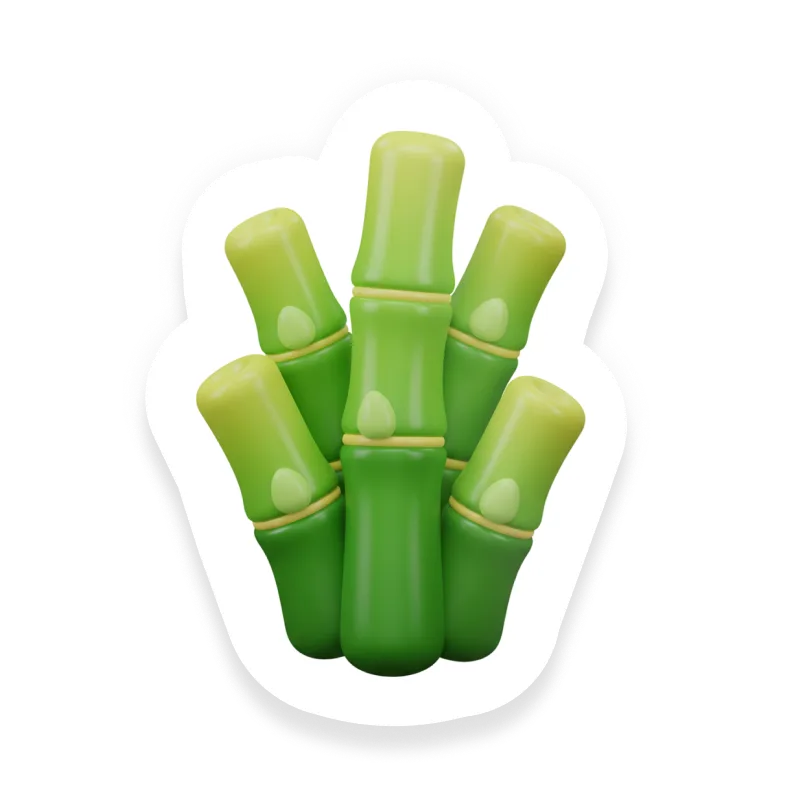
Bamboo
Vegetable
Is Bamboo Safe for Babies?
Yes, cooked and peeled bamboo shoots can be introduced around 6 months when starting solids.
Yes, but there are some things to know
At a Glance
Bamboo shoots are high in fiber and low in calories, so they help digestion and support regularity. Their fiber and plant compounds feed gut bacteria and research shows they can improve microbiome balance.
How Do You Serve Bamboo?
- 1Peel and fully cook bamboo until very soft, then pull or chop into thin, short shreds that baby can easily pick up.
- 2For canned bamboo, rinse well, remove any tough fibers, and finely chop or mash before mixing into congee, rice, or mashed vegetables.
- 3Avoid whole shoots, tapered tips, coin-shaped slices, or long stringy pieces—these shapes and fibers are high choking hazards; small, soft pieces are safest.
- 4Serve lukewarm, check texture by mashing with a fork to ensure no hard or fibrous bits remain, and always supervise closely during meals.
Is Bamboo a Common Allergen?
Bamboo (edible bamboo shoots) is not a common food allergen and does not contain typical allergens like peanuts, tree nuts, dairy, eggs, soy, wheat/gluten, fish, shellfish, or sesame. People with grass pollen allergies may rarely experience oral allergy syndrome (itching or mild mouth/throat swelling) after eating fresh bamboo. Processed or canned bamboo can contain added ingredients (soy, sulfites, or preservatives) or be exposed to cross-contact—always check labels. When introducing bamboo to infants or allergy-prone children, offer a small amount first and watch for any signs of a reaction.
What Nutrients Does Bamboo Have?
Bamboo shoots provide vitamin B6, fiber, zinc, potassium and other micronutrients that support growth, nervous‑system development, digestion, and electrolyte balance in babies. When cooked, bamboo contributes beneficial fiber for the gut microbiome and key micronutrients important for development. Preserved/canned bamboo can be high in sodium and sometimes contain sulfites, so choose low‑sodium options or rinse before serving and avoid excessive servings. Allergic reactions are rare but possible—introduce small amounts initially and monitor for any adverse reaction.
Is Bamboo a Choking Hazard?
Moderate Choking Risk
Bamboo can pose a notable choking risk because its cylindrical shape and firm, springy texture can more easily block a baby’s airway. Be especially cautious about shapes that are hard to chew or could form a plug, and always stay within arm’s reach and closely supervise while your child is eating. Have a plan for rescue maneuvers and seek immediate help if choking occurs.
Have More Questions?
It depends. When cooked and peeled to remove tough textures, bamboo shoots can be introduced around 6 months when your baby is ready for solids.
Yes, bamboo can be healthy for babies when properly prepared; it provides vitamins and micronutrients important for development.
No, bamboo is not a common allergen, but start with small portions to monitor for reactions, especially if it's preserved with sulfites.
Yes, bamboo is a choking hazard due to its firm, cylindrical shape; ensure it's cooked, shredded, or cut into small, manageable pieces for your baby.
It depends. Serve bamboo in age-appropriate forms, such as pureed, shredded, or small cooked pieces, and always supervise eating to minimize risks.
Is Bamboo safe for your baby?
Get personalized guidance on introducing Bamboo — with prep tips, allergen alerts, and age-specific serving ideas.
Sources
- Precooking processing of bamboo shoots for removal of anti-nutrients pmc.ncbi.nlm.nih.gov
- Quality improvement of bamboo shoots by removal of antinutrients using different processing techniques: a review pmc.ncbi.nlm.nih.gov
- Contact allergy caused by bamboo shoots onlinelibrary.wiley.com
What Other Vegetable Can Babies Eat?
See all →
Backed by Science
Data you can trust.
Every food, guideline, and recommendation in Tummi is sourced from leading health institutions and peer-reviewed research.
 Centers for Disease Control and Prevention
Developmental milestones, nutrition guidelines, and allergen introduction timelines.
 American Academy of Pediatrics
Evidence-based feeding recommendations from the leading pediatric authority.
 National Institutes of Health
Peer-reviewed research on infant nutrition, allergies, and food safety.