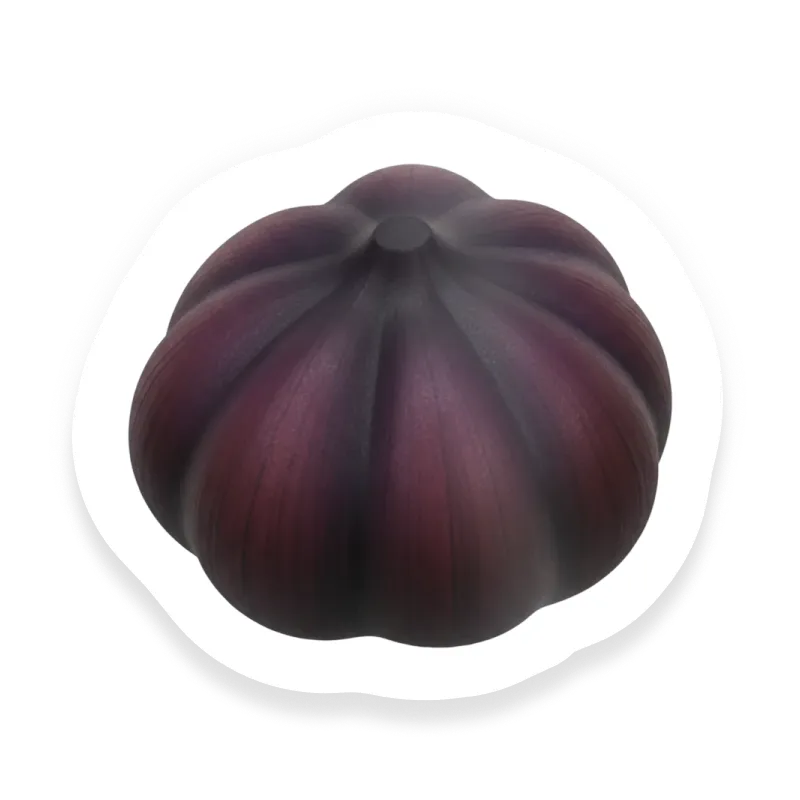
Black Garlic
Vegetable
Is Black Garlic Safe for Babies?
Yes, black garlic can be introduced around 6 months of age; ensure it is minced or mashed for safe consumption.
Yes, but there are some things to know
At a Glance
Black garlic can ease digestion because its aging raises antioxidant compounds and converts some fibers into gentler sugars, making it rich in antioxidants. Animal studies show its melanoidins and milder sugars change gut microbes and speed intestinal movement, so it supports healthy bacteria.
How Do You Serve Black Garlic?
- 1Finely mash or mince black garlic and briefly sauté in a small amount of olive oil until just warmed to soften the texture and mellow the flavor.
- 2Stir a small amount into soft foods like mashed sweet potato, cooked quinoa or rice, or a softly scrambled omelet to introduce flavor.
- 3Start with a pea-sized amount and watch for digestion or reaction. Increase slowly over several days.
- 4Store opened black garlic in the refrigerator and do not keep it submerged in oil to lower the risk of botulism.
Is Black Garlic a Common Allergen?
Black garlic is simply aged garlic and is not one of the common top-9 food allergens, so most children without garlic/allium sensitivities tolerate it. A small number of people can have an allergy or intolerance to alliums (garlic, onion, leeks), so avoid if your child has a known sensitivity. Commercial black garlic products (sauces, pastes, flavored bulbs) may contain added allergens like soy, wheat (gluten), dairy, nuts, or sesame—always read ingredient labels and check for cross-contact warnings. For young children, serve mashed or finely chopped to reduce choking risk.
What Nutrients Does Black Garlic Have?
Black garlic is nutrient-dense for babies, supplying vitamins B6 and C, calcium, copper (which aids iron absorption), manganese, phosphorus, selenium, and—compared with raw garlic—more fiber and iron; fermentation also boosts antioxidant content and nutrient bioavailability. These nutrients support growth, iron status, digestion, and immune health, and the fermentation may provide mild probiotic benefits for the gut. Use small amounts when introducing it—large quantities can cause digestive upset, and certain preparations (e.g., garlic stored in oil) pose food-safety risks; introduce gradually and watch for intolerance or rare allium allergy.
Is Black Garlic a Choking Hazard?
Low Choking Risk
Black garlic cloves can pose a choking risk for babies because they can be firm and sticky, making them easy to inhale or lodge in the throat. Stay close and watch your baby carefully during meals, and pay attention to the texture and size of any black garlic served so it’s appropriate for their developmental stage.
Have More Questions?
Yes. Black garlic can be introduced to babies once they are starting solids around 6 months, as long as it is prepared in a safe, age-appropriate manner.
It depends. Black garlic is generally healthy for babies, offering nutrients and probiotics, but always introduce it gradually and observe for any adverse reactions.
Yes. Black garlic is lower in vitamin C but richer in fiber and bioavailable nutrients, making it a nutritious addition to a baby's diet when used appropriately.
It depends. While black garlic isn’t a common choking hazard, its sticky texture means it should be minced or mashed and served carefully to prevent choking.
No. Black garlic is not considered a common allergen, but because it belongs to the allium family, it’s wise to consult a healthcare professional if your family has a history of food allergies.
Is Black Garlic safe for your baby?
Get personalized guidance on introducing Black Garlic — with prep tips, allergen alerts, and age-specific serving ideas.
Sources
- Kimura S., Tung Y., Pan M., Su N., Lai Y., & Cheng K. (2017). Black garlic: A critical review of its production, bioactivity, and application. Journal of Food and Drug Analysis, 25(1), 62-70. doi.org
- Chelule P., Mockgatle M., Zungu L., & Chaponda A. (2014). Caregivers’ Knowledge and Use of Fermented Foods for Infant and Young Children Feeding in a Rural Community of Odi, Gauteng Province, South Africa. Health Promotion Perspectives, 4(1), 54-60. doi.org
- Mennella J. & Beauchamp J. (1993). The effects of repeated exposure to garlic-flavored milk on the nursling’s behavior. Pediatric Research, 34(6), 805-808. doi.org
- Bell V., Ferrão J., & Fernandes T. (2018). Fermented Food Guidelines for Children. Foods, 6(8), 65. doi.org
What Other Vegetable Can Babies Eat?
See all →




Backed by Science
Data you can trust.
Every food, guideline, and recommendation in Tummi is sourced from leading health institutions and peer-reviewed research.
 Centers for Disease Control and Prevention
Developmental milestones, nutrition guidelines, and allergen introduction timelines.
 American Academy of Pediatrics
Evidence-based feeding recommendations from the leading pediatric authority.
 National Institutes of Health
Peer-reviewed research on infant nutrition, allergies, and food safety.