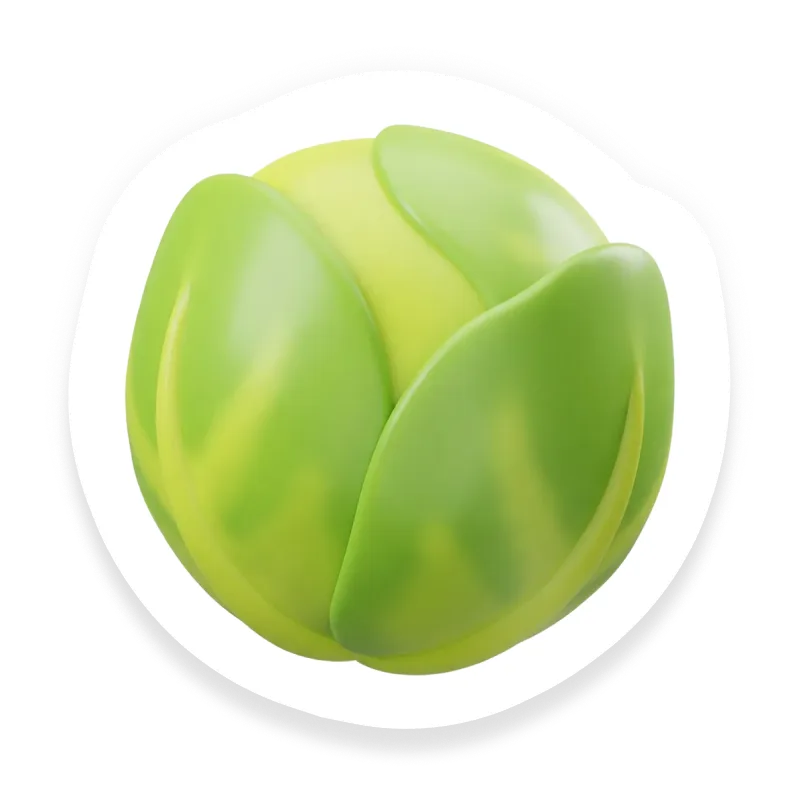
Brussels Sprouts
Vegetable
Is Brussels Sprouts Safe for Babies?
Yes, babies can eat cooked Brussels sprouts from around 6 months, ensuring they are tender and appropriately prepared to prevent choking.
Yes, but there are some things to know
At a Glance
Brussels sprouts are high in fiber, which helps make stools softer and easier to pass. They also feed gut bacteria with fiber and mild plant compounds, which supports regular, healthy digestion.
How Do You Serve Brussels Sprouts?
- 1Cook until very soft — steam or simmer whole sprouts until a fork easily squishes through; test by squashing between thumb and finger.
- 2Trim stems and halve or quarter large sprouts so each piece is bigger than the baby’s mouth but soft enough to gum; always check temperature before serving.
- 3For small, tender sprouts, shred or finely chop and mix into a scoopable food (mashed potato, porridge, or yogurt) to make handling easier.
- 4Remove any tough outer leaves or hard cores, offer only under close supervision, and watch for choking while the food has fully cooled.
Is Brussels Sprouts a Common Allergen?
Brussels sprouts are not a common food allergen, but rare allergic reactions can occur—especially as part of pollen-food (oral allergy) cross‑reactions in people with pollen sensitivities. Cooking usually reduces the risk of oral allergy symptoms. Be aware that toppings or preparations (butter, cheese, nuts) can introduce common allergens. For young children, cut or mash sprouts and cook until soft to reduce choking risk.
What Nutrients Does Brussels Sprouts Have?
Brussels sprouts are nutrient-dense for babies—especially rich in vitamin K (important for blood clotting and bone development), vitamin C (supports immune function and improves non-heme iron absorption), folate (critical for growth and brain development), and fiber (supports healthy digestion). They also provide small amounts of iron, B vitamins, potassium, calcium and plant-based ALA omega‑3s, plus antioxidants/phytonutrients that protect cells. Normal infant portions aren’t toxic, but large amounts can cause gas; ensure sprouts are served age‑appropriately and paired with iron-rich foods since they aren’t a primary iron source.
Is Brussels Sprouts a Choking Hazard?
High Choking Risk
Raw or undercooked Brussels sprouts are firm and can be hard for babies to chew, which raises the risk of choking. Small pieces may cling to the tongue or inside the mouth and can cause gagging that’s usually harmless but can be concerning. Stay within arm’s reach during meals and be familiar with the signs of choking and basic infant choking first aid.
Have More Questions?
Yes. Babies can handle blending or mashing Brussels sprouts into a smooth or chunky consistency as part of their developmental progression in eating skills.
Yes. Freezing pureed Brussels sprouts in ice cube trays allows for easy portioning and convenient storage, making it simple to serve fresh and nutritious options for your baby.
It depends. Organic Brussels sprouts are grown without synthetic pesticides and fertilizers, but both organic and conventional varieties are safe for babies; choose based on your preferences and budget.
Yes. Combining Brussels sprouts with other vegetables like sweet potatoes or carrots can introduce your baby to new flavors and textures while boosting nutrient variety in their diet.
It depends. Typical portion sizes for babies starting solids are about 1-2 teaspoons of cooked, mashed Brussels sprouts, gradually increasing as they get used to eating more.
Is Brussels Sprouts safe for your baby?
Get personalized guidance on introducing Brussels Sprouts — with prep tips, allergen alerts, and age-specific serving ideas.
Sources
- The beneficial effects of Brassica vegetables on human health pubmed.ncbi.nlm.nih.gov
- Mugwort-Mustard Allergy Syndrome due to Broccoli Consumption doi.org
- The safety of cruciferous plants in humans: a systematic review doi.org
- Brassica oleracea pollen, a new source of occupational allergens doi.org
What Other Vegetable Can Babies Eat?
See all →
Backed by Science
Data you can trust.
Every food, guideline, and recommendation in Tummi is sourced from leading health institutions and peer-reviewed research.
 Centers for Disease Control and Prevention
Developmental milestones, nutrition guidelines, and allergen introduction timelines.
 American Academy of Pediatrics
Evidence-based feeding recommendations from the leading pediatric authority.
 National Institutes of Health
Peer-reviewed research on infant nutrition, allergies, and food safety.