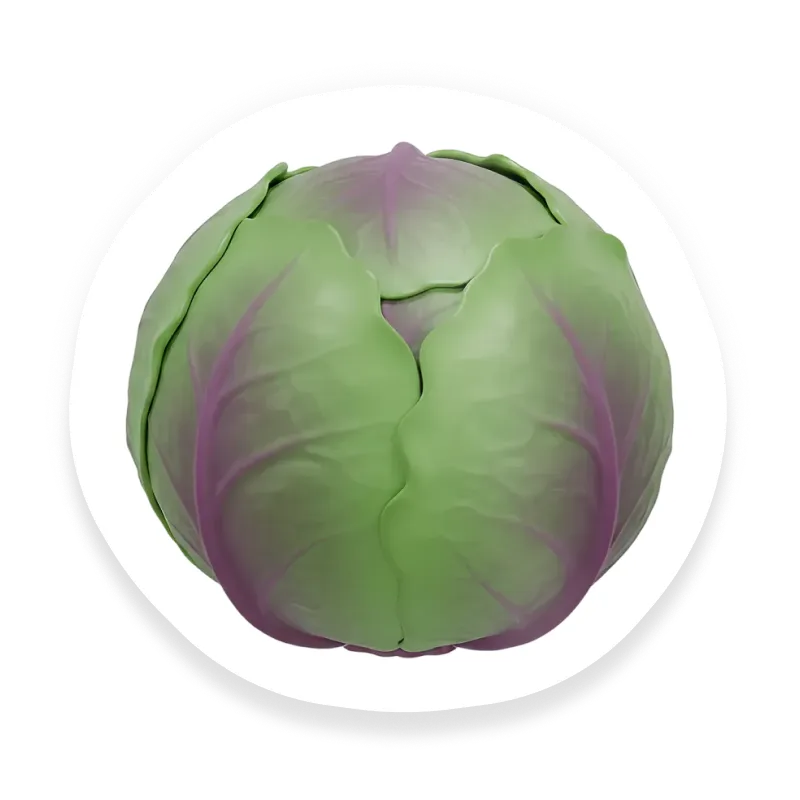
Cabbage
Vegetable
Is Cabbage Safe for Babies?
Yes, cabbage can be introduced around 6 months of age once baby is ready for solids, prepared in an age-appropriate way to reduce choking risk.
Yes, but there are some things to know
At a Glance
Cabbage is high in fiber, and its natural water content helps soften stools and keep bowel movements regular. It also contains compounds found in cruciferous vegetables that support healthy digestion by feeding friendly gut bacteria.
How Do You Serve Cabbage?
- 1Finely grate or mince raw cabbage, or cook (steam/simmer) until very soft so it blends easily into other foods.
- 2Start by stirring a small amount (about 1–2 teaspoons) of the prepared cabbage into a scoopable base such as mashed potato, porridge, or mashed avocado so baby can manage it by spoon or self-feeding.
- 3Offer a firm, unseasoned rib of raw cabbage roughly the size of two adult fingers pressed together for baby to hold and chew, and supervise closely to remove if pieces become large.
- 4If offering fermented cabbage, give only a tiny amount (pea-sized to 1 teaspoon), ensure it is low in salt and spices, and wait until baby tolerates plain cabbage.
- 5Watch for signs of intolerance (persistent gagging, rash, vomiting, or unusual stools) after first offers; stop and seek advice if you’re concerned.
Is Cabbage a Common Allergen?
Cabbage is not a common food allergen and is not among the major allergens (milk, egg, peanut, tree nuts, soy, wheat/gluten, fish, shellfish, sesame). True IgE‑mediated cabbage allergy is rare, but case reports exist. Children with pollen allergies can develop oral allergy syndrome (itchy mouth or throat) from some raw vegetables—cooking usually prevents this. If your child develops hives, swelling, difficulty breathing, or other concerning symptoms after eating cabbage, stop feeding it and seek medical care or allergy testing.
What Nutrients Does Cabbage Have?
Nutrient Snapshot: Cabbage is low in calories but nutrient-dense — especially vitamin C, vitamin K, folate, potassium, and fiber — which support immune function, iron absorption, growth and brain development, blood clotting, and healthy digestion. Fermented cabbage (kimchi, sauerkraut) can add probiotics that benefit the gut. Because cabbage is high in fiber and can cause gas, and leafy vegetables contain nitrates, serve age‑appropriate portions and prefer cooked or finely minced forms for younger infants; excessive intake is unlikely with normal baby servings.
Is Cabbage a Choking Hazard?
Very Low Choking Risk
Thick pieces of raw cabbage are firm and can be hard for young babies to chew, which raises the risk of choking. Always supervise babies closely and stay within arm’s reach during meals so you can react quickly if a problem occurs, and make sure you know the signs of choking versus gagging and basic infant choking first aid. If your baby has persistent coughing, cannot cry or breathe, or turns blue, call emergency services immediately.
Have More Questions?
Yes. When properly prepared—cooked until tender and cut into small pieces—cabbage can be safely introduced to babies starting around 6 months of age.
It depends. Raw cabbage is too tough for babies; cooking it until soft makes it easier to digest and safer for young children.
Yes. Freezing pureed cabbage is a good way to store leftovers, but ensure it is cooled completely before freezing and consume within a few months.
It depends. Organic cabbage may be more expensive but can minimize pesticide exposure; however, conventional cabbage is also safe if washed thoroughly.
Yes. Combining cooked cabbage with other baby foods, like sweet potatoes or apples, can introduce new flavors and enhance nutrient intake for your baby.
Is Cabbage safe for your baby?
Get personalized guidance on introducing Cabbage — with prep tips, allergen alerts, and age-specific serving ideas.
Sources
- Phenolic compounds as the major antioxidants in red cabbage doi.org
- IgE-mediated allergy to raw cabbage but not to cooked doi.org
- The safety of cruciferous plants in humans: a systematic review doi.org
- Brassica oleracea pollen, a new source of occupational allergens doi.org
- Nitrate in leafy green vegetables and estimated intake doi.org
- EFSA Explains Risk Assessment: Nitrites and Nitrates Added in Food efsa.europa.eu
- Oral Allergy Syndrome (OAS) and Pollen Fruit Syndrome (PFS) aaaai.org
What Other Vegetable Can Babies Eat?
See all →
Backed by Science
Data you can trust.
Every food, guideline, and recommendation in Tummi is sourced from leading health institutions and peer-reviewed research.
 Centers for Disease Control and Prevention
Developmental milestones, nutrition guidelines, and allergen introduction timelines.
 American Academy of Pediatrics
Evidence-based feeding recommendations from the leading pediatric authority.
 National Institutes of Health
Peer-reviewed research on infant nutrition, allergies, and food safety.