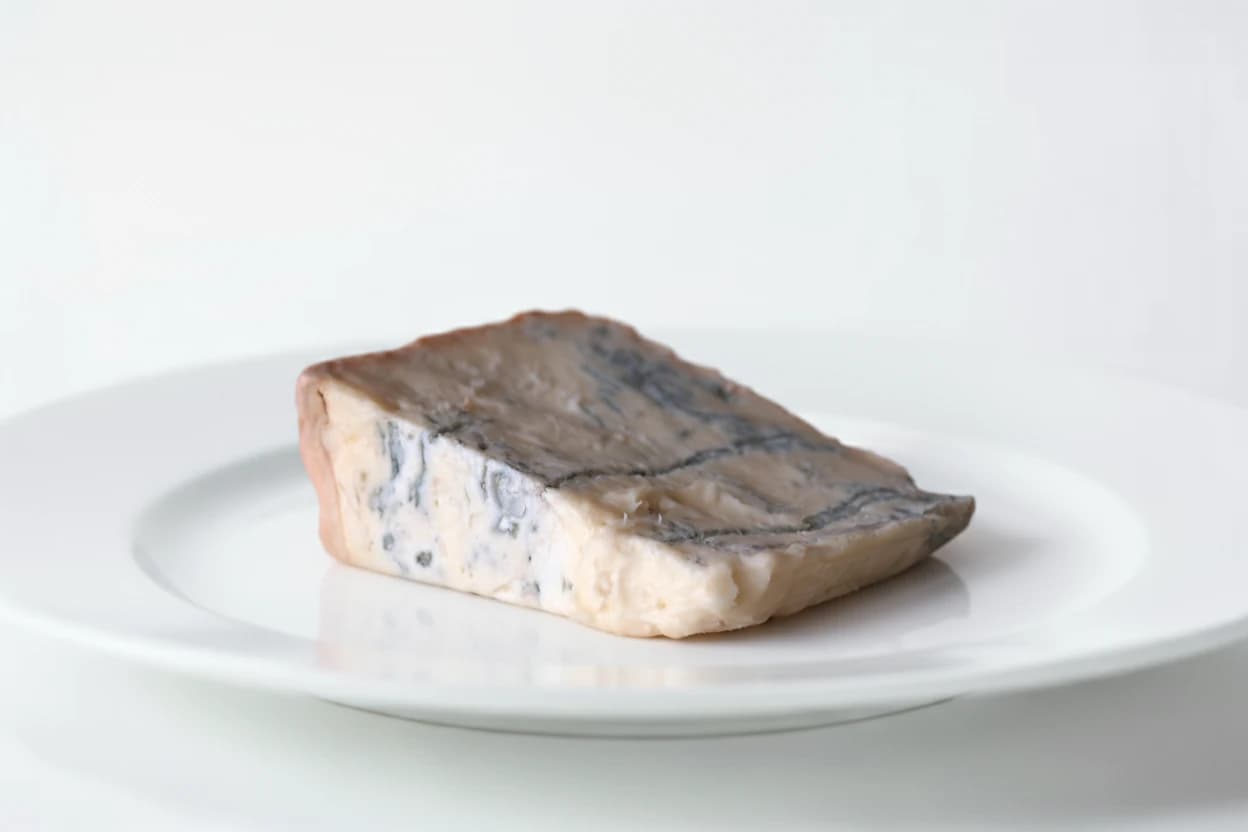
Gorgonzola
Dairy
Is Gorgonzola Safe for Babies?
No, Gorgonzola is not suitable for babies under 12 months due to potential foodborne illness risks from mold-ripened cheese.
At a Glance
Gorgonzola is made from cow’s milk and can cause allergic reactions in people sensitive to milk proteins like casein and whey. It’s also rich in protein and rich in calcium, which help support growth and strong bones.
How Do You Serve Gorgonzola?
- 1Avoid serving mold-ripened cheeses such as gorgonzola because they carry a higher risk of foodborne illness.
- 2If you choose to offer a taste, use only pasteurized gorgonzola that has been cooked to an internal temperature of at least 165°F (74°C).
- 3Serve only a very tiny amount—no more than a small smear or crumb—and avoid large or firm melted globs that can be a choking hazard.
- 4Supervise closely within arm's reach while tasting, cut into tiny pieces, and let it cool completely before offering.
Is Gorgonzola a Common Allergen?
Gorgonzola is a blue cheese made from cow’s milk, so it contains milk proteins and should be avoided by anyone with a milk allergy or severe dairy intolerance. By definition it does not contain peanuts, tree nuts, eggs, shellfish, fish, soy, sesame, or gluten, but processed or prepared dishes may include other ingredients or cross-contact—always check labels and ask about preparation. Blue cheeses use mold cultures (Penicillium), which are not typical food allergens but can be relevant for people with mold sensitivities.
What Nutrients Does Gorgonzola Have?
Gorgonzola is a nutrient-dense, aged cow’s-milk cheese that provides concentrated protein, calcium and phosphorus for growth and bone development, plus vitamin B12 and vitamin A that support neurological development and vision. It is not a meaningful source of iron and is a common milk allergen; aged cheeses may be lower in lactose but still pose allergy risk. Because it is high in saturated fat and sodium, offer only small amounts infrequently and only pasteurized (and preferably cooked to 165°F/74°C for babies 12+ months) to avoid excess sodium, calories, and food-safety risks.
Is Gorgonzola a Choking Hazard?
Very Low Choking Risk
Gorgonzola can become firm or form globby, sticky masses in the mouth, which increases the risk of choking for infants and toddlers who are still learning to chew. Melted or tightly packed pieces may be difficult to move and can block the airway unexpectedly. Closely supervise your child when introducing this cheese and be prepared to respond if a choking incident occurs.
Have More Questions?
It depends. Gorgonzola can be safe if it is pasteurized and baked to an internal temperature of at least 165°F (74°C), but it is recommended to wait until a baby is at least 12 months old to minimize risks.
Yes. Gorgonzola is made from cow's milk and is a common allergen, so consult your pediatrician before introducing it, especially if your baby has a milk allergy or sensitivities.
It depends. While pasteurized and thoroughly baked gorgonzola may be considered, mold-ripened cheeses carry a higher risk of foodborne illness, so always follow safety guidelines and wait until your baby is at least 12 months old.
Yes. Milk and dairy products like gorgonzola are common allergens and can cause reactions in some babies, so watch for any allergic symptoms when introducing new dairy foods.
Yes. Gorgonzola can be a choking hazard because of its firm, globby texture, especially if served in large or unmanageable pieces. Always serve in age-appropriate, safe pieces.
Is Gorgonzola safe for your baby?
Get personalized guidance on introducing Gorgonzola — with prep tips, allergen alerts, and age-specific serving ideas.
Sources
- Schvartzman MS et al. (2014) - Modeling the growth of Listeria monocytogenes on the surface of smear- or mold-ripened cheese frontiersin.org
- KidsHealth - Listeria infections kidshealth.org
- National Health Service - Foods to avoid giving babies and young children nhs.uk
- Choi KH et al. (2016) - Cheese Microbial Risk Assessments - A Review doi.org
- CDC - Listeria prevention cdc.gov
- European Food Safety Authority - Listeria efsa.europa.eu
- American Academy of Pediatrics (2014) - Consumption of raw or unpasteurized milk and milk products pediatrics.aappublications.org
- Warren CM et al. (2013) - The epidemiology of milk allergy in US children doi.org
- El-Agamy E. (2007) - The challenge of cow milk protein allergy doi.org
- GIKids - Cow's milk protein allergy gikids.org
- Nazar W et al. (2021) - Histamine Intolerance in Children doi.org
- Comas-Basté O et al. (2020) - Histamine Intolerance: The Current State of the Art doi.org
- Nowak-Węgrzyn A. (2015) - Food protein-induced enterocolitis syndrome and allergic proctocolitis doi.org
- National Organization for Rare Disorders - Food Protein-Induced Enterocolitis Syndrome rarediseases.org
- IQWiG / InformedHealth.org (2010) - Living with lactose intolerance ncbi.nlm.nih.gov
What Other Dairy Can Babies Eat?
See all →
Backed by Science
Data you can trust.
Every food, guideline, and recommendation in Tummi is sourced from leading health institutions and peer-reviewed research.
 Centers for Disease Control and Prevention
Developmental milestones, nutrition guidelines, and allergen introduction timelines.
 American Academy of Pediatrics
Evidence-based feeding recommendations from the leading pediatric authority.
 National Institutes of Health
Peer-reviewed research on infant nutrition, allergies, and food safety.