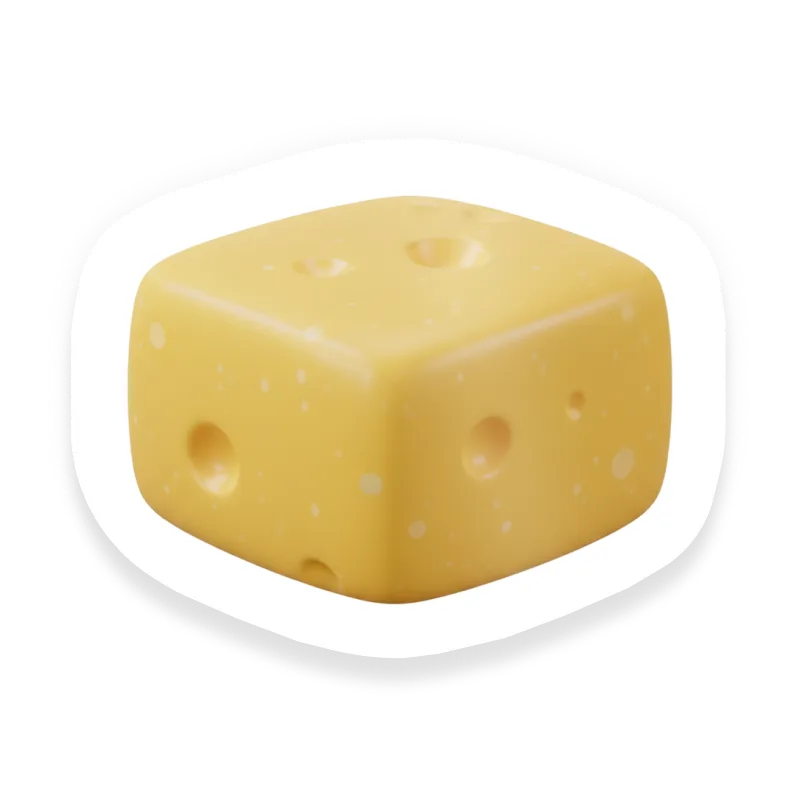
Jarlsberg Cheese
Dairy
Is Jarlsberg Cheese Safe for Babies?
Yes, babies can eat Jarlsberg cheese starting at 12 months, due to its moderate sodium content, with small amounts before that age being acceptable.
Yes, but there are some things to know
At a Glance
Jarlsberg is made from cow’s milk, so it contains milk proteins that can trigger allergic reactions in people with milk sensitivity. It is also rich in calcium and good quality protein, and contains vitamins like B12 and K2 that support bone health.
How Do You Serve Jarlsberg Cheese?
- 1Delay regular servings of Jarlsberg because it contains moderate sodium; choose lower-sodium fresh cheeses as the usual option.
- 2If offering a tiny taste, give only a very small amount — a smear or pinch about the size of a pea.
- 3Prepare to reduce choking risk by slicing extremely thin, finely grating, or shredding and sprinkling onto soft foods; avoid cubes or chunks.
- 4Use pasteurized Jarlsberg and introduce it once as a single tiny taste, then wait 48–72 hours before offering again. Watch for allergic signs such as rash, vomiting, diarrhea, or breathing changes and seek care if they occur.
Is Jarlsberg Cheese a Common Allergen?
Contains milk — made from pasteurized cow's milk and labeled as containing milk proteins. Not safe for children with a cow's milk allergy; people with lactose intolerance may tolerate some Jarlsberg varieties (some are labeled lactose-free), but check the package and consult a healthcare provider. Also inspect ingredient lists for mixed products (e.g., spreads) and look for any cross-contact or facility warnings if other allergies are a concern.
What Nutrients Does Jarlsberg Cheese Have?
Jarlsberg is nutrient-dense for a cheese—providing calcium, vitamin K, vitamin A, protein and healthy fats that support bone development, immune and vision health, and growth. Parents should limit portions because Jarlsberg is moderate in sodium and relatively high in fat; excessive intake can increase sodium exposure and contribute to constipation, so wait until about 12 months to introduce and serve small thin slices, grated, or melted thinly. Note that it’s made from cow’s milk (a common allergen) and aged cheeses contain histamines that may trigger reactions in sensitive children.
Is Jarlsberg Cheese a Choking Hazard?
Moderate Choking Risk
Jarlsberg poses a choking risk—cubes, dense pieces, and sticky melted cheese can block a baby’s airway. Parents should stay within arm’s reach and closely supervise all feeds. Be especially cautious with forms of the cheese that could form a plug in the throat.
Have More Questions?
Yes, you can store jarlsberg cheese in the fridge for up to a week once opened. Keep it in an airtight container or wrapped tightly in plastic to maintain freshness.
Yes, you can freeze jarlsberg cheese for later use, but its texture may change. It's best to freeze it in portions suited for your baby's meals.
Yes, choosing organic Jarlsberg cheese can reduce exposure to synthetic additives and support organic farming practices, but it does not significantly differ nutritionally for babies.
Yes, you can combine small amounts of Jarlsberg cheese with other baby-friendly foods to create balanced, flavorful meals tailored to your baby's preferences.
Yes, appropriate portion sizes for babies vary, but a thin slice or small grated amount is usually suitable to start introducing Jarlsberg cheese.
Is Jarlsberg Cheese safe for your baby?
Get personalized guidance on introducing Jarlsberg Cheese — with prep tips, allergen alerts, and age-specific serving ideas.
Sources
- Lundberg HE et al. (2021) - Determination of maintenance Jarlsberg cheese dose doi.org
- HealthyChildren.org (2019) - Choking Prevention healthychildren.org
- Warren CM et al. (2013) - The epidemiology of milk allergy in US children doi.org
- El-Agamy E. (2007) - The challenge of cow milk protein allergy doi.org
- Comas-Basté O. et al. (2020) - Histamine Intolerance: The Current State of the Art doi.org
- Nazar W. et al. (2021) - Histamine Intolerance in Children: A Narrative Review doi.org
- Nowak-Węgrzyn A. (2015) - Food protein-induced enterocolitis syndrome and allergic proctocolitis doi.org
- National Organization for Rare Disorders (2019) - Food Protein-Induced Enterocolitis Syndrome rarediseases.org
- IQWiG / InformedHealth.org (2010) - Living with lactose intolerance informedhealth.org
What Other Dairy Can Babies Eat?
See all →
Backed by Science
Data you can trust.
Every food, guideline, and recommendation in Tummi is sourced from leading health institutions and peer-reviewed research.
 Centers for Disease Control and Prevention
Developmental milestones, nutrition guidelines, and allergen introduction timelines.
 American Academy of Pediatrics
Evidence-based feeding recommendations from the leading pediatric authority.
 National Institutes of Health
Peer-reviewed research on infant nutrition, allergies, and food safety.