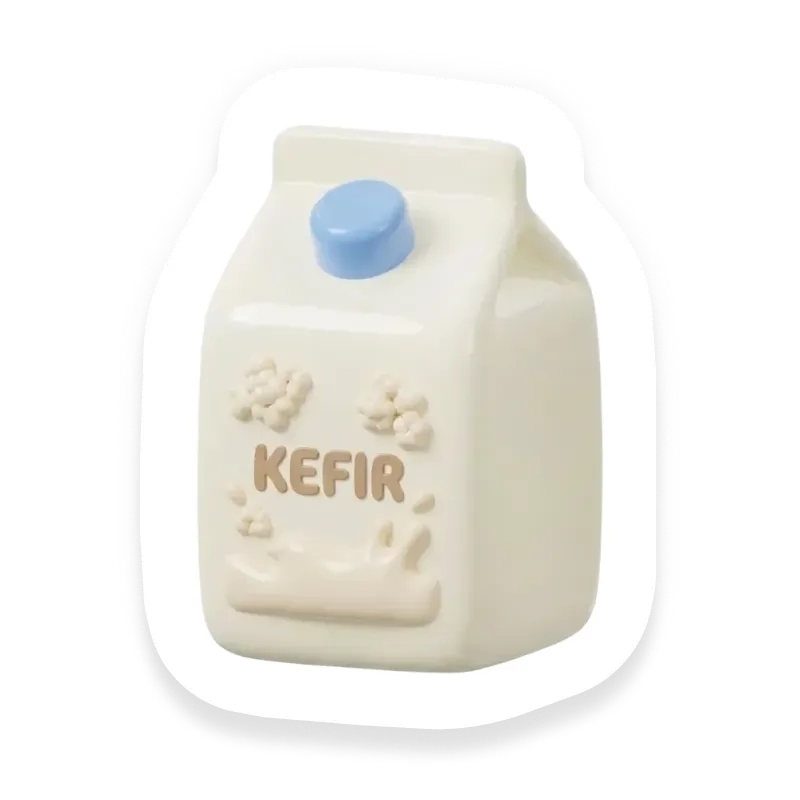
Kefir
Dairy
Is Kefir Safe for Babies?
Yes, babies can generally have kefir starting at around 6 months, once they are ready to begin solids, ensuring it contains no honey.
Yes, but there are some things to know
At a Glance
Kefir contains live probiotic cultures (Lactobacillus species and yeasts) that help rebalance gut bacteria and ease digestion. Its lactic acid bacteria and fermentation byproducts can soften stools and speed intestinal transit, helping many people have more regular bowel movements.
Because it’s made from milk and contains live yeasts and bacteria, kefir can trigger reactions in people with milk or yeast sensitivities as the immune system may respond to milk protein allergens. It also provides live probiotic cultures that can break down lactose and help digestion for some people.
How Do You Serve Kefir?
- 1Serve only pasteurized, full‑fat plain kefir mixed into thicker foods — stir into porridge, mash into cooked vegetables, or use as a spoonable topping; do not give it as a drink.
- 2To make a thicker kefir cheese: line a fine‑mesh sieve or cheesecloth over a bowl, pour in kefir and chill 1–2 hours until thickened, then scoop the thicker curd and mix into other foods.
- 3Start with very small amounts (about 1 teaspoon) and gradually increase to 1–2 tablespoons as tolerated, mixing it into other foods to create a spoonable texture rather than a thin liquid.
- 4Mix in a small amount of smooth nut or seed butter, mashed avocado, or finely chopped herbs for extra calories and flavor. Avoid whole nuts and watch closely for any allergic reaction when first offering.
Is Kefir a Common Allergen?
Kefir is a dairy product that contains milk proteins and lactose. Fermentation often reduces lactose so some people with lactose intolerance tolerate kefir, but it can still trigger a true milk allergy—avoid if your child has a milk allergy. Check labels for added ingredients (fruit, nuts) or “shared equipment” warnings, and consult your child’s allergist if unsure.
What Nutrients Does Kefir Have?
Kefir is rich in high-quality protein, full-fat calories, calcium, vitamin A, B‑vitamins, zinc, potassium and sometimes vitamin D, and it contains diverse probiotic cultures that can support gut microbiome development. These nutrients support bone growth, brain and nervous-system development, immune health and energy needs in babies. Kefir is not iron-rich; excessive dairy intake can displace iron-rich foods and contribute to iron deficiency, so keep total dairy intake moderate (about 2–2.5 servings/day) and prioritize pasteurized, full‑fat plain kefir without added sugars. Before 12 months serve kefir as a solid food (dip/strain) rather than a drink; after 12 months it may be offered as a drink.
Is Kefir a Choking Hazard?
Very Low Choking Risk
Kefir is not a common choking hazard, though any food or liquid can pose a risk. Always stay within arm’s reach and keep a calm, upright eating environment so you can quickly respond if your baby gags or chokes. Familiarize yourself with basic infant choking first-aid and keep mealtimes focused and distraction-free.
Have More Questions?
Yes—kefir can be introduced as a solid food when your baby is ready, typically around 6 months, but it should be served as a dip or part of a dish until they turn 12 months old.
It depends. Kefir is a fermented milk product rich in probiotics and nutrients, but should only be served to babies after 12 months as a drink, and in small, safe amounts initially.
It depends. Most kefir is made from cow's milk, which is a common allergen in young children, but it may be tolerated better than regular milk due to fermentation.
It depends. Raw milk kefir is not safe for babies due to bacteria and contaminants, but pasteurized kefir is safe when introduced at the right age.
It depends. Full-fat, plain, pasteurized kefir served as a dip or mixed into foods is ideal for babies; plant-based kefirs vary in nutritional content and may lack certain nutrients.
Is Kefir safe for your baby?
Get personalized guidance on introducing Kefir — with prep tips, allergen alerts, and age-specific serving ideas.
Sources
- Review of Infant Feeding: Key Features of Breast Milk and Infant Formula doi.org
- Whole cow’s milk in infancy doi.org
- Lipid Quality in Infant Nutrition: Current Knowledge and Future Opportunities doi.org
- Compositional Dynamics of the Milk Fat Globule and Its Role in Infant Development doi.org
- The Comparison of Nutritional Value of Human Milk with Other Mammals' Milk doi.org
- Whole-Fat or Reduced-Fat Dairy Product Intake, Adiposity, and Cardiometabolic Health in Children: A Systematic Review doi.org
- The impact of diet and lifestyle on gut microbiota and human health doi.org
- Microbiota regulation of the Mammalian gut-brain axis doi.org
- The Microbiota and Health Promoting Characteristics of the Fermented Beverage Kefir doi.org
- The epidemiology of milk allergy in US children doi.org
- The challenge of cow milk protein allergy doi.org
- The natural history of milk allergy in an observational cohort doi.org
- The Many Faces of Kefir Fermented Dairy Products: Quality Characteristics, Flavour Chemistry, Nutritional Value, Health Benefits, and Safety doi.org
- CDC: Raw Milk Questions and Answers cdc.gov
- Microbiological, technological and therapeutic properties of kefir: a natural probiotic beverage doi.org
What Other Dairy Can Babies Eat?
See all →

Backed by Science
Data you can trust.
Every food, guideline, and recommendation in Tummi is sourced from leading health institutions and peer-reviewed research.
 Centers for Disease Control and Prevention
Developmental milestones, nutrition guidelines, and allergen introduction timelines.
 American Academy of Pediatrics
Evidence-based feeding recommendations from the leading pediatric authority.
 National Institutes of Health
Peer-reviewed research on infant nutrition, allergies, and food safety.