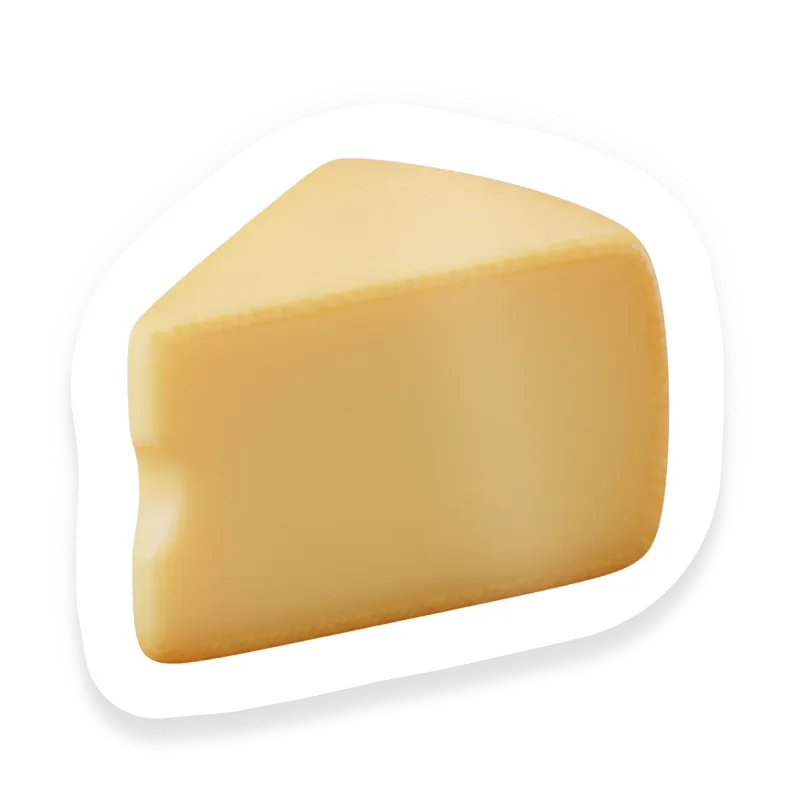
Manchego Cheese
Dairy
Is Manchego Cheese Safe for Babies?
Yes, pasteurized Manchego cheese can be introduced around 6 months as part of a varied diet, but offer in moderation due to its sodium content.
Yes, but there are some things to know
At a Glance
Made from sheep’s milk, Manchego contains milk proteins like casein and whey that can trigger allergic reactions in sensitive people. It is high in protein and rich in calcium, offering concentrated nutrients (protein, vitamin A and fats) that support growth and bone health.
How Do You Serve Manchego Cheese?
- 1Offer small tastes of pasteurized Manchego as part of a varied diet; slice the cheese into thin, long flat strips to lower choking risk and make self-feeding easier.
- 2If serving melted or grated, grate very finely and warm gently — use only a small amount so it stays soft and won’t form large, sticky clumps.
- 3Avoid cubes, large slices, or thick melted pieces that can be hard to manage or pose a choking hazard.
- 4Always supervise each bite and serve alongside soft finger foods (for example, cooked vegetables or soft bread) to encourage chewing and safer eating.
Is Manchego Cheese a Common Allergen?
Made from sheep's milk — contains dairy. Not safe for anyone with a milk allergy and may cause symptoms in those with severe lactose intolerance. Manchego is typically free of nuts, peanuts, soy, gluten, eggs, fish, shellfish, and sesame, but always check ingredient lists and cross-contamination warnings on packaged products or mixes.
What Nutrients Does Manchego Cheese Have?
Per 1‑oz (28 g) serving Manchego is calorie‑dense (~120–130 kcal) and provides about 6–7 g protein and ~10–11 g fat, supplying concentrated energy and a useful protein boost for babies learning solids. Manchego also contributes calcium and B‑group vitamins important for bone growth and development, and aged cheeses tend to be lower in lactose which some children tolerate better. Because Manchego is relatively high in sodium, offer only small tastes within a varied diet and avoid making it a daily staple; always choose pasteurized cheese and consult your pediatrician if there is a milk allergy or FPIES concern.
Is Manchego Cheese a Choking Hazard?
Low Choking Risk
Manchego can be firm and may form a sticky mass in the mouth, which increases choking risk in young children. When introducing it, stay within arm’s reach and watch closely for signs of gagging or choking so you can respond immediately. Ensure caregivers know basic choking first-aid and are prepared to act if needed.
Have More Questions?
Yes, manchego cheese can be stored in the refrigerator for short-term use, typically up to a week after opening, if properly wrapped in cheese paper or parchment.
Yes, you can freeze pureed or grated manchego cheese for longer storage, up to 3-6 months, in an airtight container or freezer bag. Thaw it in the refrigerator before serving.
Yes, organic manchego cheese is available and can be a good choice for babies, as it avoids exposure to pesticides and other chemicals found in conventional dairy products.
Yes, you can combine manchego cheese with other baby-friendly foods such as mashed fruits or vegetables to introduce new flavors and textures to your baby’s diet.
Yes, portion sizes for babies should be small, around a teaspoon to a tablespoon of grated cheese, depending on age and appetite, and always served in manageable pieces to prevent choking.
Is Manchego Cheese safe for your baby?
Get personalized guidance on introducing Manchego Cheese — with prep tips, allergen alerts, and age-specific serving ideas.
Sources
- Infants' and Children's Salt Taste Perception and Liking: A Review — Liem D. G. (2017). Nutrients. doi.org
- Does salt intake in the first two years of life affect the development of cardiovascular disorders in adulthood? — Strazzullo P. et al. (2012). Nutr Metab Cardiovasc Dis. doi.org
- The epidemiology of milk allergy in US children — Warren C.M. et al. (2013). Ann Allergy Asthma Immunology. doi.org
- The challenge of cow milk protein allergy — El-Agamy E. (2007). Small Ruminant Research. doi.org
- Allergen risk assessment for specific allergy to small ruminant’s milk — Bernard H. et al. (2021). Frontiers in Allergy. doi.org
- Histamine Intolerance: The Current State of the Art — Comas-Basté O. et al. (2020). Biomolecules. doi.org
- Histamine Intolerance in Children: A Narrative Review — Nazar W. et al. (2021). Nutrients. doi.org
- Food protein-induced enterocolitis syndrome and allergic proctocolitis — Nowak-Węgrzyn A. (2015). Allergy Asthma Proc. doi.org
What Other Dairy Can Babies Eat?
See all →
Backed by Science
Data you can trust.
Every food, guideline, and recommendation in Tummi is sourced from leading health institutions and peer-reviewed research.
 Centers for Disease Control and Prevention
Developmental milestones, nutrition guidelines, and allergen introduction timelines.
 American Academy of Pediatrics
Evidence-based feeding recommendations from the leading pediatric authority.
 National Institutes of Health
Peer-reviewed research on infant nutrition, allergies, and food safety.