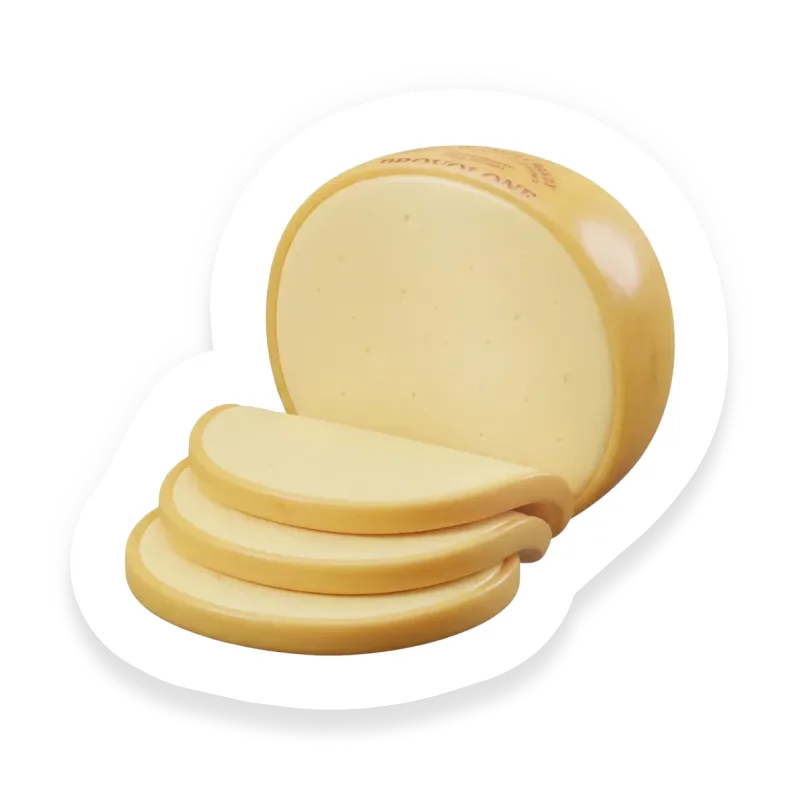
Provolone
Dairy
Is Provolone Safe for Babies?
Yes, babies can eat pasteurized provolone cheese around 6 months old, once they are ready to start solids.
Yes, but there are some things to know
At a Glance
Provolone is made from cow's milk and contains milk proteins like casein and whey, which often cause allergic reactions in sensitive people. It also supplies concentrated high quality protein and calcium that help build and maintain strong bones and muscles.
How Do You Serve Provolone?
- 1Choose pasteurized provolone only — check the label to confirm it's pasteurized for safety.
- 2Cut long, flat slices about as wide as two adult fingers pressed together and thin enough to fold easily.
- 3If serving melted, use a light sprinkle of shredded provolone and melt gently so it forms a thin, even layer. Avoid large globs, which can be sticky and pose a choking risk.
- 4Never give cubes or large chunks; offer thin strips, folded slices, or finely grated cheese and always supervise while the child is eating.
Is Provolone a Common Allergen?
Provolone is made from cow’s milk and contains milk proteins, so it is a dairy allergen. Aged provolone may be low in lactose and sometimes tolerated by people with lactose intolerance, but it can still trigger true milk allergies — avoid for children with a milk allergy. When in doubt, check labels for added ingredients and consult your pediatrician or allergist.
What Nutrients Does Provolone Have?
Provolone is a nutrient-dense cheese that provides high-quality protein, fat, calcium, selenium, zinc, and vitamins A and B12—nutrients that support growth, bone development, immune function, and brain and red‑blood‑cell formation. Protein and fat supply energy and building blocks for growth; calcium and vitamin B12 help bone and neurological development; zinc and selenium support immunity and healing. It can be moderately high in sodium and saturated fat, so serve small amounts and avoid frequent large portions. Always choose pasteurized provolone for babies and offer age‑appropriate textures to reduce food‑safety and choking risks.
Is Provolone a Choking Hazard?
Low Choking Risk
Provolone can pose a choking risk for babies because it’s relatively firm and can become sticky or globby in the mouth, making it hard to manage. Always keep your baby seated upright and within arm’s reach during meals and remain attentive and free from distractions. Learn the signs of choking and have a clear plan and basic choking first-aid knowledge so you can respond quickly if needed.
Have More Questions?
Yes. When shopping, choose pasteurized provolone cheese, as it reduces the risk of foodborne illness, making it safer for babies to consume.
It depends. Provolone is rich in nutrients beneficial for growth, but it can be high in sodium; ensure it is served in moderation and appropriate textures for your child's age.
Yes. Provolone cheese is a dairy product that contains essential nutrients like calcium and vitamin B12, which support development when included in a balanced diet for babies.
It depends. While provolone is made from cow's milk and is considered a common allergen, most children outgrow dairy allergies by age 6, but always monitor for reactions when introducing new dairy foods.
Yes. Hard cheeses like provolone can be firm and potentially pose a choking risk if not served properly; always prepare it in age-appropriate sizes and textures.
Is Provolone safe for your baby?
Get personalized guidance on introducing Provolone — with prep tips, allergen alerts, and age-specific serving ideas.
Sources
- U.S. Food & Drug Administration — Dangers of raw milk fda.gov
- Centers for Disease Control and Prevention — Raw Milk Questions and Answers cdc.gov
- American Academy of Pediatrics (Committee on Infectious Diseases; Committee on Nutrition). Consumption of raw or unpasteurized milk and milk products by pregnant women and children (Pediatrics, 2014) pediatrics.aappublications.org
- Liem DG. Infants' and Children's Salt Taste Perception and Liking: A Review (Nutrients, 2017) mdpi.com
- Strazzullo P. et al. Does salt intake in the first two years of life affect development of cardiovascular disorders in adulthood? (Nutr Metab Cardiovasc Dis, 2012) doi.org
- Comas-Basté O. et al. Histamine Intolerance: The Current State of the Art (Biomolecules, 2020) mdpi.com
- Nazar W. et al. Histamine Intolerance in Children: A Narrative Review (Nutrients, 2021) mdpi.com
- Nowak-Węgrzyn A. Food protein-induced enterocolitis syndrome and allergic proctocolitis (Allergy Asthma Proc, 2015) doi.org
What Other Dairy Can Babies Eat?
See all →
Backed by Science
Data you can trust.
Every food, guideline, and recommendation in Tummi is sourced from leading health institutions and peer-reviewed research.
 Centers for Disease Control and Prevention
Developmental milestones, nutrition guidelines, and allergen introduction timelines.
 American Academy of Pediatrics
Evidence-based feeding recommendations from the leading pediatric authority.
 National Institutes of Health
Peer-reviewed research on infant nutrition, allergies, and food safety.