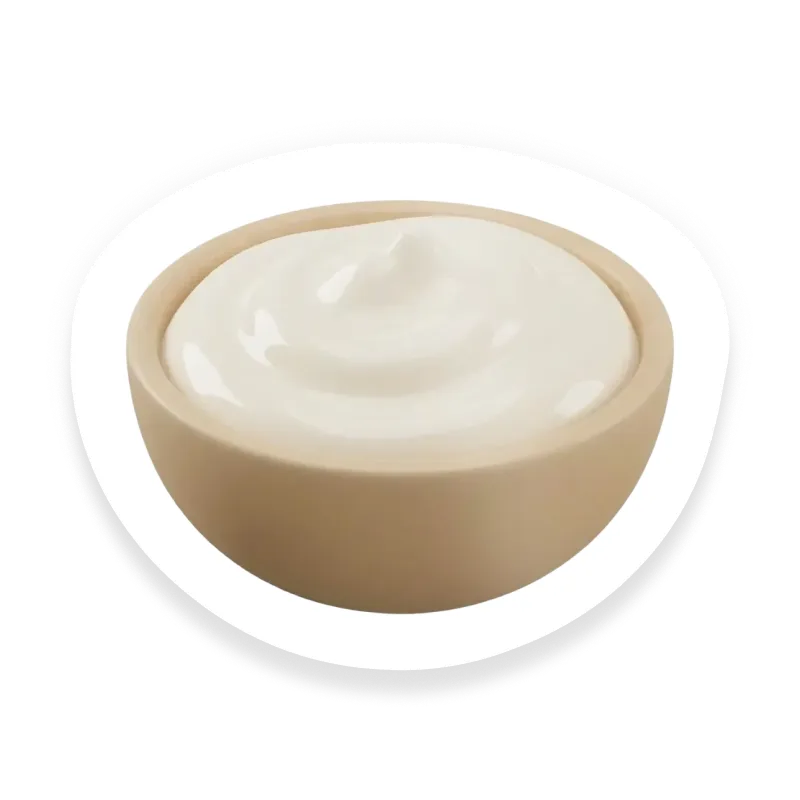
Sour Cream
Dairy
Is Sour Cream Safe for Babies?
Yes, babies can have small amounts of sour cream starting at 6 months, when they are ready to start solids.
Yes, but there are some things to know
At a Glance
Sour cream contains milk proteins and lactose that can cause reactions in people with dairy allergies. It also supplies calcium and vitamin B12 and, when cultured, contains beneficial bacteria that help support bone health and digestion.
How Do You Serve Sour Cream?
- 1Spread a thin smear of full-fat, pasteurized sour cream on soft finger foods like small pancakes, toast, cooked zucchini strips, or a soft tortilla so baby can hold and explore.
- 2Fold a spoonful into scrambled eggs or stir it into mashed vegetables and grains to add creaminess without changing the texture.
- 3Use a small dollop to thin dips or sauces; mix with a little breastmilk, formula, or water if you need a runnier consistency for drizzling.
- 4Serve small amounts and keep sour cream thinly spread—avoid large globs to reduce choking risk; avoid unpasteurized products and check the temperature before serving.
- 5Introduce sour cream when it's a new food on its own or mixed in, offering one new item at a time and watching for any signs of dairy intolerance or allergic reaction.
Is Sour Cream a Common Allergen?
Sour cream is a dairy product made from cream and contains milk proteins, so it should be avoided by children with a milk (dairy) allergy or severe lactose intolerance. Parents should check ingredient labels and look for cross-contamination warnings; non-dairy labeled alternatives may be appropriate for those avoiding milk. If unsure, consult your child’s pediatrician or allergist before offering sour cream.
What Nutrients Does Sour Cream Have?
Sour cream is a calorie-dense, full-fat dairy that supplies energy and healthy fat important for infant growth and brain development and aids absorption of fat‑soluble vitamins (A, D, E, and K). It also provides calcium, zinc, and choline to support bone health, immunity, and neurodevelopment, and some varieties contain probiotics that may benefit gut health. Because it’s made from milk, sour cream can trigger milk allergy or provoke symptoms in lactose‑intolerant infants, so introduce cautiously and consult a clinician if there’s concern. Offer full‑fat sour cream in small amounts as a complement to a varied diet—avoid excessive servings because of its saturated fat and calorie density which could displace other nutrient-rich foods.
Is Sour Cream a Choking Hazard?
Very Low Choking Risk
Sour cream is generally a low choking risk due to its soft, spoonable texture, but no food is completely without risk. Watch for gagging or difficulty swallowing when you first offer it, avoid giving large globs at once, and always keep the baby seated upright and within arm’s reach while eating. If you have concerns about your child’s swallowing or oral motor skills, consult your pediatrician or feeding specialist.
Have More Questions?
It depends. You can store sour cream in an airtight container in the refrigerator for up to 1-2 weeks after opening, but always check for signs of spoilage before serving it to your baby.
It depends. Freezing sour cream is possible but may alter its texture, making it grainy or watery once thawed. Use small portions if you choose to freeze it for later use.
It depends. Organic sour cream is made from milk from animals not treated with antibiotics or hormones, but both organic and conventional can be safe for babies if properly stored and fresh.
It depends. You can combine small amounts of sour cream with other baby foods like pureed fruits or vegetables to enhance flavor and nutrient intake, provided your baby has tolerated each food separately.
It depends. Typical portion sizes for babies are about 1-2 teaspoons of sour cream per serving, but always serve small portions at first and observe for any reactions.
Is Sour Cream safe for your baby?
Get personalized guidance on introducing Sour Cream — with prep tips, allergen alerts, and age-specific serving ideas.
Sources
- Compositional Dynamics of the Milk Fat Globule and Its Role in Infant Development (Frontiers in Pediatrics, 2018) pmc.ncbi.nlm.nih.gov
- Lipid Quality in Infant Nutrition: Current Knowledge and Future Opportunities (Journal of Pediatric Gastroenterology and Nutrition, 2015) pmc.ncbi.nlm.nih.gov
- The Comparison of Nutritional Value of Human Milk with Other Mammals' Milk (Nutrients, 2020) mdpi.com
- Whole-Fat or Reduced-Fat Dairy Product Intake, Adiposity, and Cardiometabolic Health in Children: A Systematic Review (Advances in Nutrition, 2020) advances.nutrition.org
- The epidemiology of milk allergy in US children (Annals of Allergy, Asthma & Immunology, 2013) pubmed.ncbi.nlm.nih.gov
- The challenge of cow milk protein allergy (Small Ruminant Research, 2007) sciencedirect.com
- Cow's Milk Protein Allergy — clinical overview (GI Kids) gikids.org
- Food protein-induced enterocolitis syndrome and allergic proctocolitis (Allergy Asthma Proc, 2015) pmc.ncbi.nlm.nih.gov
- Lactose content of different foods (UpToDate / Wolters Kluwer) uptodate.com
What Other Dairy Can Babies Eat?
See all →
Backed by Science
Data you can trust.
Every food, guideline, and recommendation in Tummi is sourced from leading health institutions and peer-reviewed research.
 Centers for Disease Control and Prevention
Developmental milestones, nutrition guidelines, and allergen introduction timelines.
 American Academy of Pediatrics
Evidence-based feeding recommendations from the leading pediatric authority.
 National Institutes of Health
Peer-reviewed research on infant nutrition, allergies, and food safety.