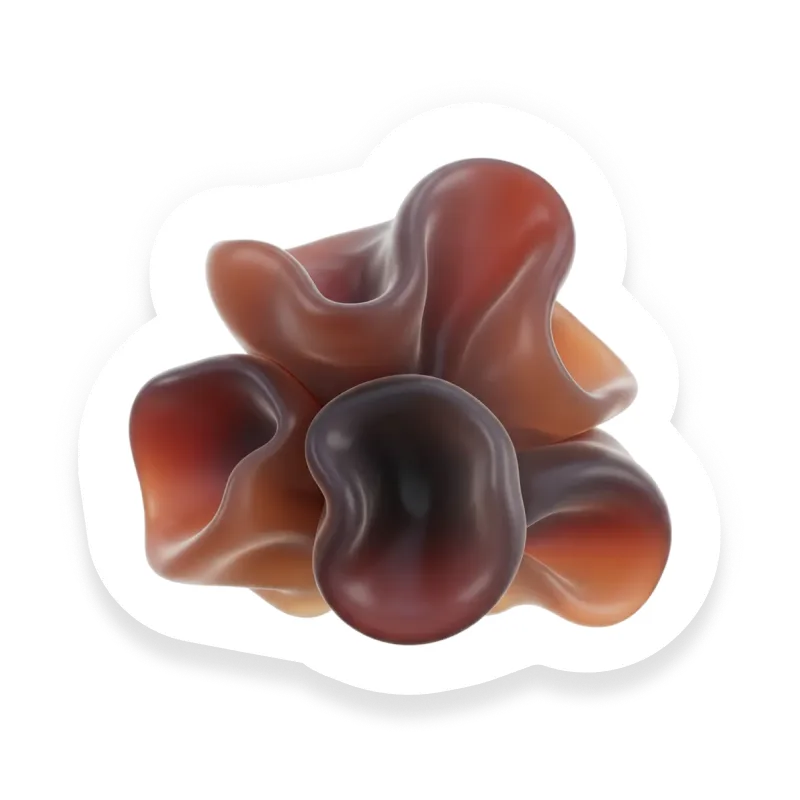
Wood Ear Mushroom
Fungi
Is Wood Ear Mushroom Safe for Babies?
Yes, cooked wood ear mushrooms can be introduced around 6 months old when starting solids, ensuring they are properly cooked and free from wild-foraged fungi.
Yes, but there are some things to know
At a Glance
Wood ear mushrooms contain soluble dietary fiber and gentle polysaccharides that add bulk and help food move through the intestines. Those fibers feed helpful gut microbes and can increase stool bulk, which supports more regular, comfortable digestion.
How Do You Serve Wood Ear Mushroom?
- 1Cook until soft — simmer mushroom caps in boiling water for 5–10 minutes until tender; discard the thick stem.
- 2Finely chop the cooked caps into pieces no larger than a grain of rice to reduce choking risk.
- 3Fold a small amount into soft, scoopable foods (yogurt, porridge, mashed vegetables) or sprinkle tiny pieces into egg strips or soft finger foods for easy pickup.
- 4Serve small portions, always supervise eating, and introduce wood ear mushroom in a small amount the first time to monitor for any reaction.
Is Wood Ear Mushroom a Common Allergen?
Wood ear mushrooms (Auricularia spp.) are not among common food allergens and are generally well tolerated, but rare allergic reactions — including case reports of anaphylaxis linked to Auricularia proteins — have been reported. Children with a known mushroom or fungal allergy should avoid them. Watch for cross‑contamination in mixed dishes and preservatives; cook thoroughly to reduce risk of GI upset. Seek medical advice if you suspect an allergic reaction.
What Nutrients Does Wood Ear Mushroom Have?
Wood ear mushrooms provide baby-friendly nutrients—notably zinc, selenium, and vitamin B6—plus fiber and some protein; these support growth, immune function, metabolism, and a healthy gut microbiome. They’re low in fat and calories and contain prebiotic fibers that can help stool bulk and gut bacteria. Don’t rely on them for iron (not iron-rich), and avoid large or very frequent servings because high fiber or additives in dried mushrooms (sulfites) can cause digestive upset or reactions in sensitive children; always cook and finely chop to reduce choking risk.
Is Wood Ear Mushroom a Choking Hazard?
Low Choking Risk
Wood ear mushrooms are rubbery, slippery, and can be difficult for young babies to chew and swallow, so they pose a notable choking risk. Always stay within an arm’s reach during meals, watch closely for gagging or signs of difficulty, and only offer them once your child demonstrates reliable chewing and swallowing — be prepared to respond quickly if a choking emergency occurs.
Have More Questions?
Yes. When properly cooked and prepared, wood ear mushrooms can be safely introduced to babies around 6 months old as part of a diverse diet.
Yes. They are grown mainly in Asia and the Pacific Islands, often cultivated for culinary use and available dried or fresh.
Yes. Wood ear mushrooms provide zinc, selenium, and vitamin B6, which support immune and overall development, as long as they are sourced and prepared safely.
Yes. Due to their slippery and rubbery texture, they can pose a choking risk; always ensure they are fully cooked, stem removed, and finely chopped.
No. Mushroom allergies are rare, but always introduce new foods gradually and monitor for any reactions, especially if your child has known food sensitivities.
Is Wood Ear Mushroom safe for your baby?
Get personalized guidance on introducing Wood Ear Mushroom — with prep tips, allergen alerts, and age-specific serving ideas.
Sources
- Mushroom allergy — Koivikko & Savolainen (1988) doi.org
- Cross-reactivity between raw mushroom and molds — Dauby et al. (2002) doi.org
- Shiitake mushroom allergen — Pravettoni et al. (2014) doi.org
- Anaphylactic reaction after ingestion of mushrooms — Gabriel et al. (2015) doi.org
- Anaphylactic reaction following oyster mushroom inhalation — Branicka et al. (2021) doi.org
- Allergic contact dermatitis caused by mushrooms — Bruhn & Soderberg (1991) doi.org
- Chitin and allergic inflammation — Lee (2009) doi.org
- Mushroom allergy: Case series — Kayode et al. (2020) doi.org
- Health benefits of edible mushrooms — Jayachandran et al. (2017) doi.org
- Edible mushrooms as source of dietary fiber — Cheung (2013) doi.org
- Closing America's Fiber Intake Gap — Quagliani & Felt-Gunderson (2016) doi.org
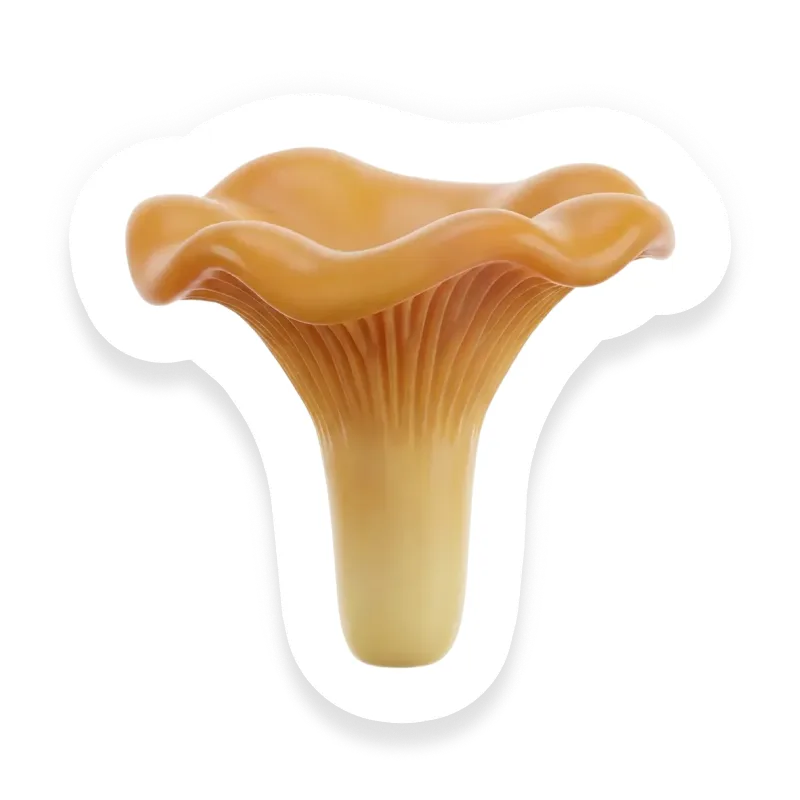
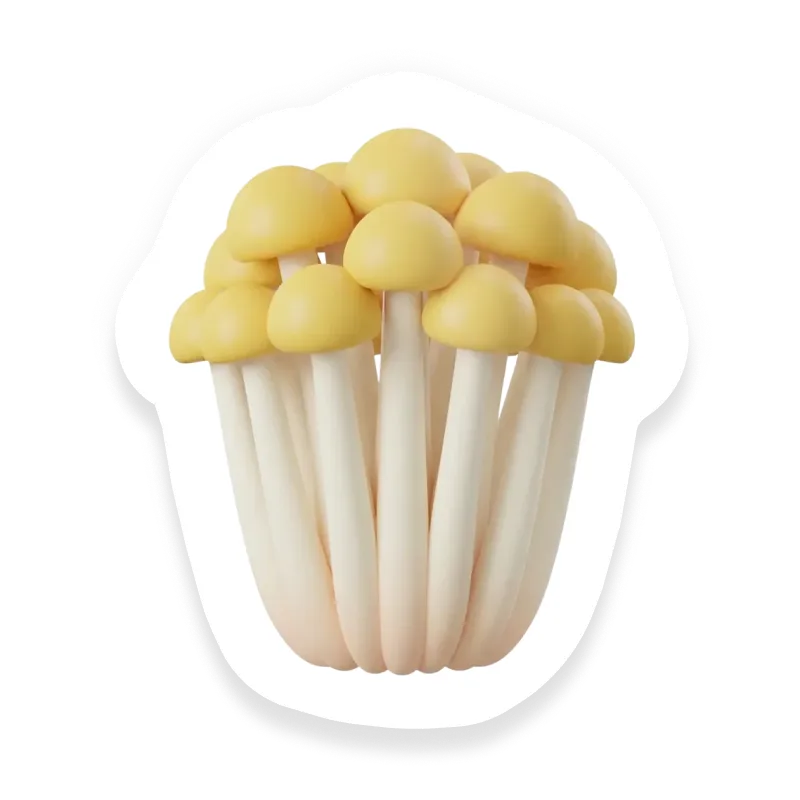
What Other Fungi Can Babies Eat?
See all →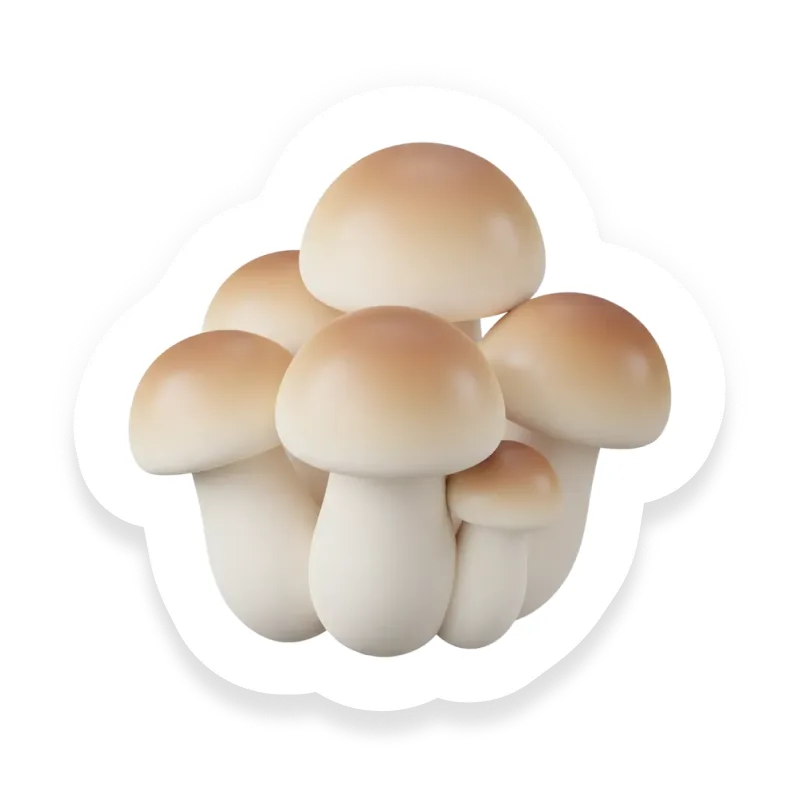

Backed by Science
Data you can trust.
Every food, guideline, and recommendation in Tummi is sourced from leading health institutions and peer-reviewed research.
 Centers for Disease Control and Prevention
Developmental milestones, nutrition guidelines, and allergen introduction timelines.
 American Academy of Pediatrics
Evidence-based feeding recommendations from the leading pediatric authority.
 National Institutes of Health
Peer-reviewed research on infant nutrition, allergies, and food safety.