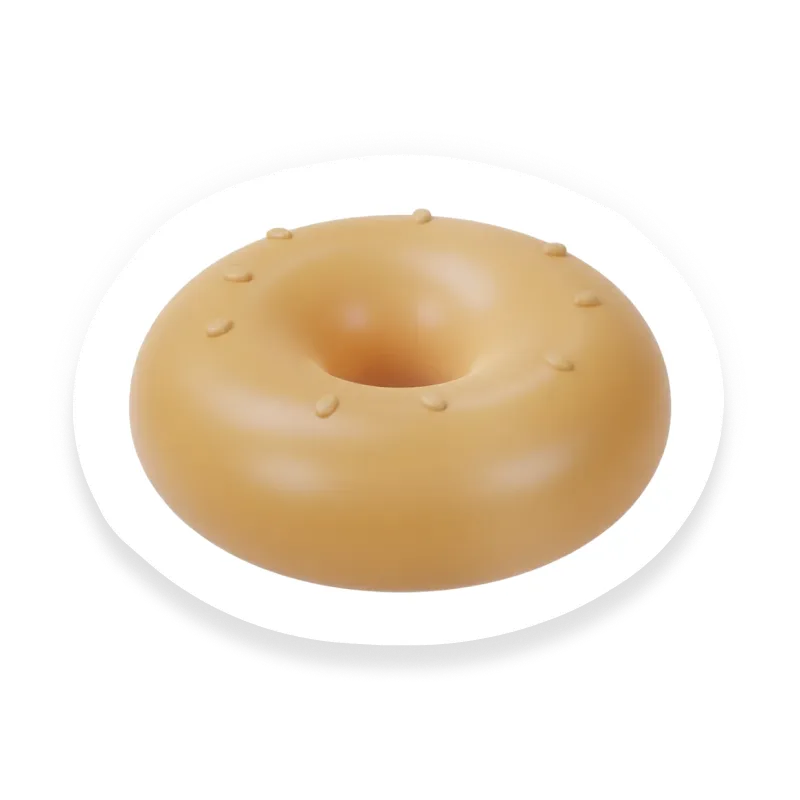
Bagel
Grain
Is Bagel Safe for Babies?
Yes, babies can eat bagels starting around 6 months, but ensure they are prepared in an age-appropriate, soft, and manageable way to reduce choking risks.
Yes, but there are some things to know
At a Glance
Bagels are a source of energy and, when made from whole grains or enriched flour, provide whole grain fiber and B vitamins that support digestion and growth. Because they typically have a wheat gluten content and are often made or topped with sesame, dairy, or eggs, they can trigger allergic reactions in people with those sensitivities.
How Do You Serve Bagel?
- 1Toast the bagel until the edges are crisp and the center is slightly firm, then cut it into a half‑moon or 1–2 finger‑wide strips to make an easy-to-hold shape.
- 2Use a very thin, spreadable topping (for example, thinned nut or seed butter, ricotta, yogurt, or whipped cream cheese). Thin nut/seed butters with a little water or milk to reduce stickiness and choking risk.
- 3Offer only the prepared piece (not a whole bagel) and remove any large or loose crumbs or chunks before serving; keep the child seated upright and closely supervised while they eat.
- 4Do not add honey or other high-risk toppings, and talk with your pediatrician if you have concerns about food allergies or choking risk.
Is Bagel a Common Allergen?
Bagels are typically made from wheat flour and therefore contain gluten; some recipes/varieties also contain eggs (e.g., egg bagels) and many bakeries use egg in dough or as a topping. Toppings and accompaniments (cream cheese, butter, seed mixes) can introduce dairy, sesame, soy, or tree‑nut allergens, and shared equipment means cross-contact is possible. Always check the specific product’s ingredient/allergen statement and tell the bakery about your child’s allergies before ordering.
What Nutrients Does Bagel Have?
Bagels are mainly a carbohydrate-rich food that provides quick energy for active babies and also supply some protein and fiber. When made with enriched flour they contribute important micronutrients—particularly iron, folate, B vitamins, and selenium—which support red blood cell production and neurodevelopment. Because bagels can be refined and relatively high in calories and sodium, serve them in age-appropriate portions so they don’t displace more nutrient-dense foods. Note common allergens (wheat, egg, milk, sesame) and choking risks; introduce cautiously and follow serving recommendations.
Is Bagel a Choking Hazard?
Low Choking Risk
Bagels can be a significant choking hazard because they’re dense, chewy and can become gummy or form sticky globs that are hard for young babies to manage. Always supervise babies closely during mealtimes and remove any large or suspicious pieces promptly. Be prepared for emergencies by knowing infant choking first aid/CPR and keeping emergency contacts handy.
Have More Questions?
No, babies under 12 months should avoid bagels, especially varieties with allergens or honey, due to choking risks and potential allergen exposure.
Yes, bagels can be a healthy part of a toddler's diet as they provide carbohydrates, fiber, and B vitamins necessary for energy and growth.
Yes, but they often contain allergens like wheat, egg, and sesame, so check labels and introduce them cautiously, especially if allergies are a concern.
Yes, due to their dense texture and size, bagels pose a choking hazard for babies and should be prepared in an age-appropriate manner, like tearing into small pieces.
Hard or brittle bagel chips should only be given to children over 24 months who have developed advanced chewing skills to reduce choking risk.
Is Bagel safe for your baby?
Get personalized guidance on introducing Bagel — with prep tips, allergen alerts, and age-specific serving ideas.
Sources
- Food Allergy Research & Education — Wheat Allergy foodallergy.org
- American College of Allergy, Asthma & Immunology — Wheat Allergy acaai.org
- Feldweg AM. (2017). Food-Dependent, Exercise-Induced Anaphylaxis. J Allergy Clin Immunol Pract. doi.org
- Kashyap RR & Kashyap RS. (2015). Oral Allergy Syndrome: An Update for Stomatologists. Journal of Allergy doi.org
- Celiac Disease Foundation — What is Celiac Disease? celiac.org
- Massachusetts General Hospital — Celiac Disease FAQ massgeneral.org
- Elli L. et al. (2015). Diagnosis of gluten related disorders. World Journal of Gastroenterology. doi.org
What Other Grain Can Babies Eat?
See all →

Backed by Science
Data you can trust.
Every food, guideline, and recommendation in Tummi is sourced from leading health institutions and peer-reviewed research.
 Centers for Disease Control and Prevention
Developmental milestones, nutrition guidelines, and allergen introduction timelines.
 American Academy of Pediatrics
Evidence-based feeding recommendations from the leading pediatric authority.
 National Institutes of Health
Peer-reviewed research on infant nutrition, allergies, and food safety.