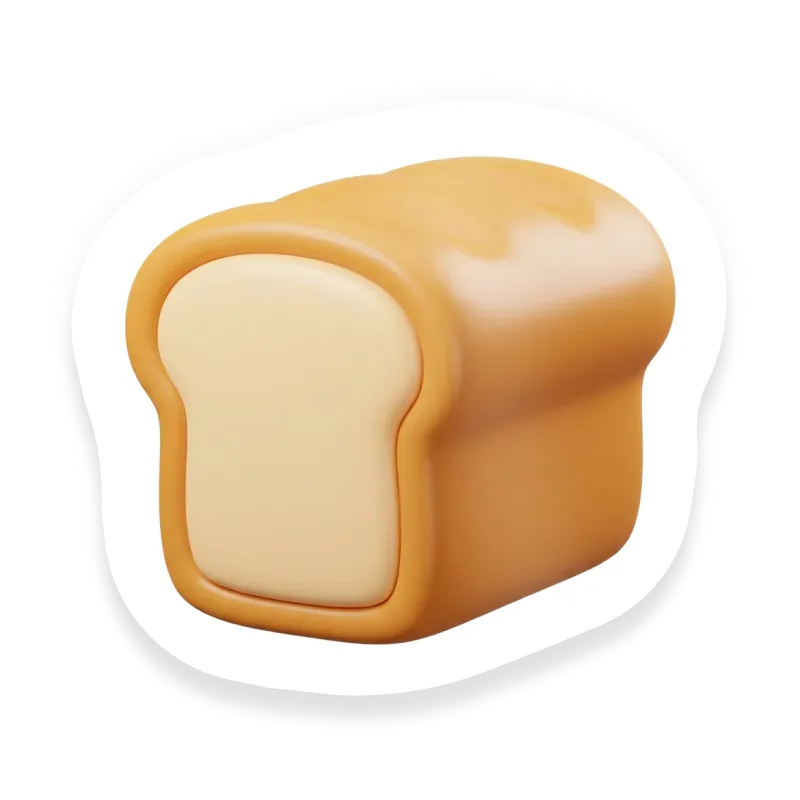
Bread
Grain
Is Bread Safe for Babies?
Yes, bread can be introduced around 6 months of age, but choose age-appropriate types and serve safely to minimize choking risks.
Yes, but there are some things to know
At a Glance
Whole-grain bread is a quick energy source and provides whole grain fiber plus B vitamins that support digestion and growth. Many breads contain wheat gluten, a protein that can trigger allergic or immune reactions in some people, so check labels if anyone has a sensitivity.
How Do You Serve Bread?
- 1Choose bread that keeps its shape when bitten — for example, the large heel of a crusty loaf or well‑toasted strips about the width of two adult fingers pressed together.
- 2Avoid very soft or sticky breads and any with dried fruit, whole nuts, or large seeds that could break off.
- 3If offering a spread, use a very thin smear of mashed avocado, ricotta, hummus, or thinned nut/seed butter. Spread thinly so it won’t clump or stick.
- 4Always supervise closely and remove any pieces that worry you, breaking bread into manageable strips if needed.
Is Bread a Common Allergen?
Most conventional bread is made from wheat flour and therefore contains gluten, so it is unsafe for children with celiac disease or a wheat allergy. Parents should check ingredient lists and choose products explicitly labeled “gluten-free” (ideally certified) if their child must avoid gluten. Be mindful of cross-contact in bakeries, shared toasters, or mixed preparation areas. For children needing to avoid gluten, use certified gluten-free breads or naturally gluten-free alternatives.
What Nutrients Does Bread Have?
Bread is primarily a carbohydrate-rich food that also provides some protein and, especially in whole-grain or sprouted varieties, beneficial fiber. Many commercial breads are fortified with iron and B‑vitamins (like folate), which support infant growth and neurodevelopment; fermented breads (sourdough) may also make minerals easier to absorb. In moderation bread can be a useful energy source and tool for oral-motor development, but too much—particularly refined, high‑salt, or sweetened varieties—can displace more nutrient-dense foods; also watch for common allergens (wheat, milk, egg, sesame).
Is Bread a Choking Hazard?
Low Choking Risk
Bread can be a choking hazard: very soft breads may soften and form sticky clumps that cling to the mouth, while very hard, cracker-like breads or breads that break into sharp pieces increase choking risk. Breads containing chunks (dried fruit, nuts, large seeds) also raise the chance of a dangerous airway obstruction. Texture matters—favor breads that hold shape and avoid those that become gummy or brittle in the mouth, and always stay within arm’s reach and watch closely during eating. Know the signs of choking versus gagging and be prepared to act quickly if your child struggles.
Have More Questions?
Yes. Bread can be introduced to babies around 6 months old, but it's important to serve it in ways that reduce choking hazards, such as toasted or appropriately sliced varieties.
Yes. Bread provides carbohydrates and some nutrients, but the healthfulness depends on the type of bread; opt for whole grain or fortified options for added benefits.
Yes. Whole grain and sprouted breads are generally more nutritious due to higher fiber and protein content, supporting growth and digestion.
Yes. Bread often contains allergens like wheat, and sometimes cross-contaminants, so check labels carefully and wait until all allergens are safely introduced.
Yes. Soft breads can be sticky and pose a choking hazard for babies, especially if they are large or dense; always serve in age-appropriate sizes.
Is Bread safe for your baby?
Get personalized guidance on introducing Bread — with prep tips, allergen alerts, and age-specific serving ideas.
Sources
- Food Allergy Research & Education — Wheat Allergy foodallergy.org
- American College of Allergy, Asthma & Immunology — Wheat Allergy acaai.org
- Feldweg AM (2017), J Allergy Clin Immunol Pract — DOI doi.org
- Kashyap RR & Kashyap RS (2015), Journal of Allergy — DOI doi.org
- Celiac Disease Foundation — What is Celiac Disease? celiac.org
- Massachusetts General Hospital — Celiac Disease FAQ massgeneral.org
- Elli et al. (2015), World Journal of Gastroenterology — DOI doi.org
What Other Grain Can Babies Eat?
See all →
Backed by Science
Data you can trust.
Every food, guideline, and recommendation in Tummi is sourced from leading health institutions and peer-reviewed research.
 Centers for Disease Control and Prevention
Developmental milestones, nutrition guidelines, and allergen introduction timelines.
 American Academy of Pediatrics
Evidence-based feeding recommendations from the leading pediatric authority.
 National Institutes of Health
Peer-reviewed research on infant nutrition, allergies, and food safety.