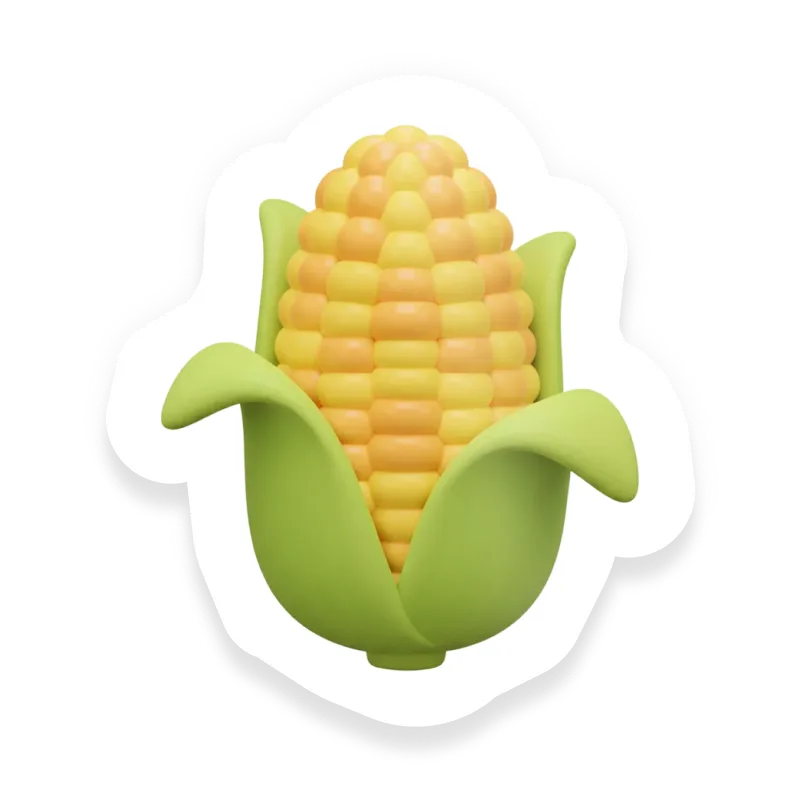
Corn
Grain
Is Corn Safe for Babies?
Yes, cooked corn can be introduced around 6 months, with whole corn on the cob preferred over loose kernels for safety.
Yes, but there are some things to know
At a Glance
Corn is high in fiber and contains resistant starch that adds bulk to stool and helps food move through the gut, making bowel movements easier. Its non-digestible fibers feed gut bacteria that make short-chain fatty acids, which support a healthy colon and regularity.
How Do You Serve Corn?
- 1Cook the corn until tender and cut the cob into 2-inch (5 cm) rounds so your baby can hold and gnaw the cob safely.
- 2Remove all loose kernels before serving — loose kernels are a choking hazard.
- 3If you want oral-motor practice, shave most of the kernels off the cob and leave a few for nibbling. They may eat little but will gain jaw strength.
- 4Always supervise closely and keep your baby sitting upright while they handle the cob; offer a small cup of water if needed.
Is Corn a Common Allergen?
Corn is not one of the common “top 9” allergens and is naturally gluten-free, so it’s generally safe for many children—but true corn allergy does exist. Corn proteins can trigger symptoms from hives and GI upset to, rarely, severe reactions, and corn appears in many hidden ingredients (corn syrup, cornstarch, dextrose, maltodextrin). If your child has a diagnosed corn allergy, avoid products listing corn-derived ingredients and follow your allergist’s advice, including carrying emergency medication if prescribed.
What Nutrients Does Corn Have?
Sweet corn is a carbohydrate- and fiber-rich food that also supplies folate, zinc, B vitamins, phosphorus, and vitamin C—nutrients that support growth, immune function, and development. Its fiber supports healthy digestion and stool patterns, while phytochemicals and antioxidants (like lutein/zeaxanthin) help promote eye health. There’s little risk of excess intake from normal servings, but corn should be offered as part of a varied diet so it doesn’t displace other important nutrient sources.
Is Corn a Choking Hazard?
High Choking Risk
Whole, loose corn kernels are small, rounded, and sometimes firm, making them a notable choking hazard—particularly for younger babies. Stay within arm’s reach, keep baby seated upright and attentive during feeding, and be prepared by learning infant choking first aid. Watch closely for signs of choking such as silent coughing, difficulty breathing, or inability to cry.
Have More Questions?
It depends. You can store cooked corn in an airtight container in the refrigerator for up to 2 days or freeze it for longer storage, ensuring it's properly cooled before freezing.
It depends. For homemade purees, you can freeze small portions in ice cube trays, then transfer to a freezer bag for up to 3 months, making quick and easy servings for your baby.
It depends. When choosing corn, opt for organic if possible to avoid pesticides, but conventional corn without additives is also safe for babies when prepared properly.
It depends. When combining foods, introduce corn separately first to monitor for allergies, then you can mix it with other baby-safe foods to diversify their diet.
It depends. Portion sizes vary with age and developmental stage; start with a few spoonfuls and observe your baby’s hunger and tolerance, then adjust accordingly.
Is Corn safe for your baby?
Get personalized guidance on introducing Corn — with prep tips, allergen alerts, and age-specific serving ideas.
Sources
- Choking Hazards | Infant and Toddler Nutrition - CDC cdc.gov
- Maize food allergy: a double-blind placebo-controlled study (2008) pubmed.ncbi.nlm.nih.gov
- Other Food Allergens - Food Allergy Research & Education foodallergy.org
- The maize major allergen is a lipid transfer protein (Pastorello et al., 2000) pubmed.ncbi.nlm.nih.gov
- Chitinases as Food Allergens (Leoni et al., 2019) mdpi.com
- Immunologic cross-reactivity among cereal grains and grasses (Jones et al., 1995) pubmed.ncbi.nlm.nih.gov
What Other Grain Can Babies Eat?
See all →
Backed by Science
Data you can trust.
Every food, guideline, and recommendation in Tummi is sourced from leading health institutions and peer-reviewed research.
 Centers for Disease Control and Prevention
Developmental milestones, nutrition guidelines, and allergen introduction timelines.
 American Academy of Pediatrics
Evidence-based feeding recommendations from the leading pediatric authority.
 National Institutes of Health
Peer-reviewed research on infant nutrition, allergies, and food safety.