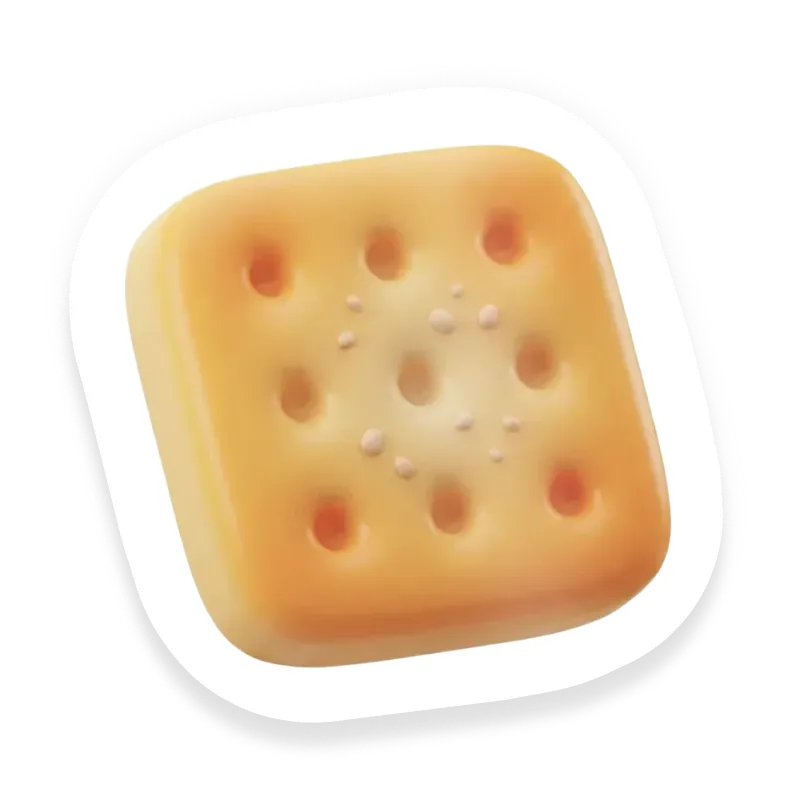
Crackers
Grain
Is Crackers Safe for Babies?
Yes, crackers can be introduced after 12 months, but serve soft, age-appropriate varieties to minimize choking risk.
Yes, but there are some things to know
At a Glance
Most crackers are made from wheat, so they can cause reactions in people sensitive to gluten or wheat proteins. Whole-grain or seed varieties provide whole-grain fiber content and quick carbohydrates that help digestion and steady energy.
How Do You Serve Crackers?
- 1Choose very thin teething rusks or thin puffed rice cakes that soften quickly in saliva, and break them into several very small pieces before offering.
- 2Spread a very thin layer of mashed avocado, pureed beans, or hummus for extra nutrition, using only a small amount to reduce gagging.
- 3Always seat the baby upright and supervise closely, giving only one small piece at a time to lower choking risk.
- 4Avoid crackers containing honey, whole nuts, or any allergens the baby hasn’t tried; always check ingredient labels first.
Is Crackers a Common Allergen?
Crackers commonly contain gluten — this product is marked as a gluten allergen. While the sheet shows no egg, dairy, peanut, tree nut, soy, sesame, fish, or shellfish allergens, flavored varieties or different brands can include those ingredients or be produced in facilities that handle them. Always read the ingredient list and look for “may contain” or “made in a facility that processes…” statements to assess cross-contact risk. If your child has celiac disease or a severe allergy, choose crackers labeled certified gluten-free or allergen-free.
What Nutrients Does Crackers Have?
Crackers are mostly refined carbohydrates that provide quick energy with small amounts of protein and fat; unless labeled "fortified" they offer few vitamins and minerals and are generally low in fiber. Some commercial crackers may be enriched with B‑vitamins or iron, but many are high in sodium and added ingredients, so choose low‑sodium or whole‑grain varieties when possible. For babies, crackers can be an easy source of energy and (if whole‑grain or nut‑based) provide some fiber and healthy fats, but they can displace more nutrient‑dense foods if given too often. Limit portions, avoid crackers with honey under 12 months, watch for allergens, and prioritize soft, age‑appropriate types to reduce choking risk.
Is Crackers a Choking Hazard?
Moderate Choking Risk
Crackers are a common choking hazard — many varieties are firm, brittle, or have sharp edges that can be hard for young children to chew and swallow. Stale crackers can be especially difficult to break down, and harder or sharp crackers remain higher-risk until a child develops more mature chewing skills. Eating while distracted or moving increases choking risk, so stay close and keep mealtime focused.
Have More Questions?
Yes, parents can store crackers in an airtight container for up to a week to maintain freshness, but it's best to follow specific storage instructions on the package.
Yes, freezing pureed crackers or homemade cracker crumbs can extend their shelf life, but be sure to thaw them properly before serving to your baby.
Yes, choosing organic crackers can reduce your baby's exposure to pesticides, but both organic and conventional crackers are generally safe if served in appropriate textures and sizes.
Yes, combining crackers with soft cheeses or spreads can add variety and nutrients, but always check for allergen compatibility before mixing.
Yes, serving appropriate portion sizes, such as a few small crackers, helps prevent overfeeding and reduces choking hazards for your baby.
Is Crackers safe for your baby?
Get personalized guidance on introducing Crackers — with prep tips, allergen alerts, and age-specific serving ideas.
Sources
- Choking Hazards cdc.gov
What Other Grain Can Babies Eat?
See all →

Backed by Science
Data you can trust.
Every food, guideline, and recommendation in Tummi is sourced from leading health institutions and peer-reviewed research.
 Centers for Disease Control and Prevention
Developmental milestones, nutrition guidelines, and allergen introduction timelines.
 American Academy of Pediatrics
Evidence-based feeding recommendations from the leading pediatric authority.
 National Institutes of Health
Peer-reviewed research on infant nutrition, allergies, and food safety.