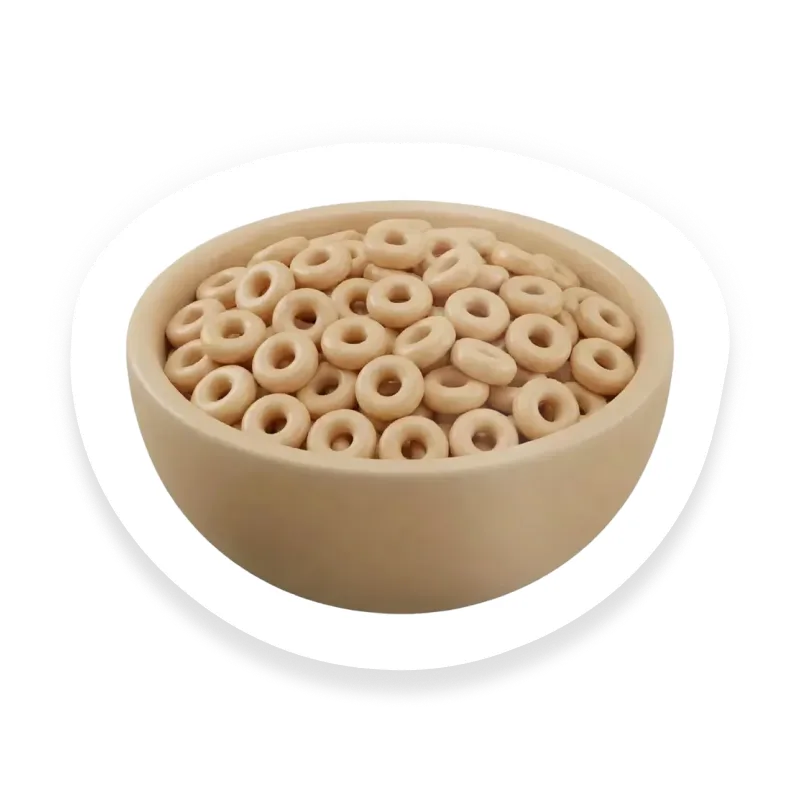
Cheerios & "O" Cereals
Grain
Is Cheerios & "O" Cereals Safe for Babies?
Yes, babies can eat honey-free Cheerios from around 9 months, as they are low in sugar and fortified with essential nutrients.
Yes, but there are some things to know
At a Glance
Cheerios are fortified with iron, giving a simple breakfast way to add this nutrient. Iron helps make hemoglobin and supports energy and growth for kids and adults.
Cheerios are made from whole grain oats, which provide soluble fiber that helps soften stool. That fiber also adds bulk to help support regular bowel movements.
How Do You Serve Cheerios & "O" Cereals?
- 1Offer plain, honey-free Original Cheerios only once the baby consistently picks up small objects and brings them to their mouth without help.
- 2Scatter 3–6 pieces on a clean highchair tray to promote pincer-grasp practice; do not place food directly into the baby's mouth.
- 3Sit the baby fully upright in a secure highchair, watch closely for coughing or gagging, and stay within arm’s reach so you can respond immediately; if coughing occurs, pause and let them clear it on their own.
- 4Use plain, fully dry Cheerios and avoid flavored or honey-sweetened varieties; discard any pieces that become soggy to reduce choking risk.
Is Cheerios & "O" Cereals a Common Allergen?
Most plain Cheerios and “O” cereals are made from oats and typically do not contain milk, eggs, fish, shellfish, peanuts, tree nuts, soy, sesame, or gluten ingredients, but formulations and manufacturing practices vary. Families with celiac disease or severe gluten sensitivity should look for a certified “gluten‑free” label because oats can be cross‑contaminated with wheat. Flavored varieties or add‑ins (e.g., chocolate, honey, or nut pieces) may contain allergens—always check the ingredient list and the package’s ‘Contains’ or ‘May contain’ statements. For severe allergies, contact the manufacturer or choose certified allergen‑free products to be safe.
What Nutrients Does Cheerios & "O" Cereals Have?
Original Cheerios are low in added sugar and fortified with iron, and the whole‑grain oats provide fiber plus calcium, folate, and zinc—nutrients that support iron stores, growth, and bowel regularity in babies. The cereal’s texture makes it easy for self‑feeding and the fiber can help with constipation, but offer Cheerios in moderation so they don’t displace more nutrient‑dense fresh foods. Note some varieties contain added phosphates (tripotassium phosphate), higher sugar/sodium, or common allergens—check labels and avoid honey‑containing varieties before 12 months.
Is Cheerios & "O" Cereals a Choking Hazard?
Low Choking Risk
Cheerios are generally low risk for choking because they dissolve easily with very little saliva, so many self-feeding babies manage them well. That said, some other O-shaped cereals don’t dissolve as readily and can be more hazardous, and frequent gagging or food sticking to the tongue are signs to watch for and discuss with your pediatrician. Never place food into a baby’s mouth and stay within arm’s reach to supervise so you can respond immediately if a problem occurs.
Have More Questions?
Yes, parents can store Cheerios in an airtight container at room temperature for up to a few months, but check the package for specific expiration info.
Yes, you can freeze Cheerios in a sealed container or bag for several months, but they are best served fresh for optimal texture and crunch.
Yes, choosing organic Cheerios can reduce exposure to pesticides and GMOs, but conventional Cheerios are also safe and fortified with nutrients; choose based on your preferences.
Yes, you can combine Cheerios with pureed fruits or vegetables to create varied, balanced meals for your baby, promoting both flavor development and nutrient intake.
Yes, portion sizes for babies typically start small, around 1-2 tablespoons of dry cereal, and increase as they grow and develop more chewing ability.
Is Cheerios & "O" Cereals safe for your baby?
Get personalized guidance on introducing Cheerios & "O" Cereals — with prep tips, allergen alerts, and age-specific serving ideas.
Sources
- Lack of Awareness of Dietary Sources of Phosphorus Is a Clinical Concern (Shimada et al., 2019) doi.org
- Nutraceutical functions of beta-glucans in human nutrition (Ciecierska et al., 2019) doi.org
- Safety of Adding Oats to a Gluten-Free Diet for Patients With Celiac Disease (Pinto-Sánchez et al., 2017) doi.org
- Oat sensitization in children with atopic dermatitis (Boussault et al., 2007) doi.org
- Emerging triggers of food protein-induced enterocolitis syndrome (Blackman et al., 2019) doi.org
- Food protein-induced enterocolitis syndrome: guidelines summary (Mehr & Campbell, 2019) doi.org
- Hyperphosphatemia (Goyal & Jialal, 2021) pubmed.ncbi.nlm.nih.gov
What Other Grain Can Babies Eat?
See all →
Backed by Science
Data you can trust.
Every food, guideline, and recommendation in Tummi is sourced from leading health institutions and peer-reviewed research.
 Centers for Disease Control and Prevention
Developmental milestones, nutrition guidelines, and allergen introduction timelines.
 American Academy of Pediatrics
Evidence-based feeding recommendations from the leading pediatric authority.
 National Institutes of Health
Peer-reviewed research on infant nutrition, allergies, and food safety.